
Why Nick Sirianni's CEO Model Still Fits the Eagles
Nick Sirianni's value is not measured by whether he calls every offensive play. Hiring well, setting the team's standard and knowing when to delegate remain the right head-coaching responsibilities for an Eagles organization built around specialists.
The JAKIB Staff
contributor
Nick Sirianni does not have to become the Eagles' offensive coordinator to justify his job as head coach. His value is broader: set the standard, manage the entire team, hire strong assistants and know when to let specialists control their areas. That CEO model is sometimes treated as a weakness because it is less visible than a play sheet. In Philadelphia, it remains the right fit.
The Eagles have Sean Mannion coordinating the offense and Vic Fangio directing the defense. Sirianni's responsibility is to make those units support one team instead of turning himself into a third coordinator. The head-coaching job is too large for every detail to run through one person, and Philadelphia's recent success provides a strong argument for preserving a structure built on delegation.
Head coach and play caller are different jobs
An offensive background still shapes Sirianni's decisions. He can challenge a concept, evaluate how a plan fits Jalen Hurts and insist that the offense reflects the team's identity. That influence does not require him to design every call or manage the game-day sequence himself.
The distinction matters because schematic expertise can hide weaknesses elsewhere. A brilliant play designer may spend so much time on the offense that staff development, game management or the other phases receive less attention. A head coach has to allocate practice time, manage personalities, set situational priorities and keep the organization aligned through a long season. Those responsibilities do not disappear because fans can more easily grade a third-down call.
Sirianni's official record strengthens the case. He reached the postseason in each of his first five seasons, won three division titles, reached two Super Bowls and won Super Bowl LIX. Those results do not make every decision correct. They do show that his less visible strengths have translated into sustained team performance.
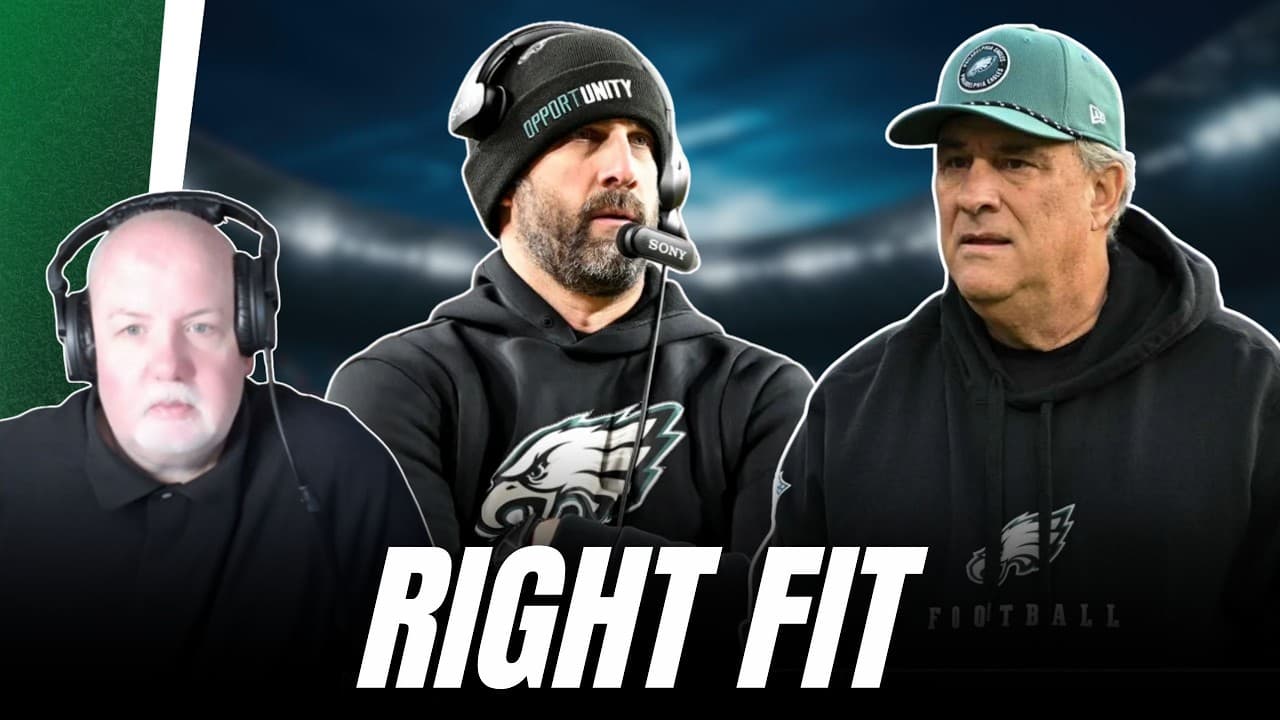
Vic Fangio demonstrates smart delegation
Fangio is the clearest example of why the model can work. Sirianni does not improve the defense by forcing his way into Fangio's call sheet. He improves the Eagles by giving an accomplished defensive coordinator the authority and support to do his job.
That is not passivity. Delegation begins with hiring the right person, defining responsibility and evaluating the result. When a unit is functioning at a high level, the smart head coach protects the conditions that made it possible. When it fails, the head coach has to intervene, change the plan or change the staff.
The Eagles will eventually face another defensive transition, just as they have repeatedly changed offensive coordinators. That does not invalidate the model. It makes staff identification and development central parts of Sirianni's job. A CEO coach must produce a process capable of surviving turnover rather than pretending continuity can be guaranteed forever.
Coordinator turnover is an NFL reality
Good coordinators are promoted. Struggling coordinators are replaced. Building the franchise around the hope that one assistant will remain indefinitely is not a serious organizational plan. Philadelphia has experienced both sides, losing successful coaches to head-coaching opportunities and moving on from offensive leaders when the unit did not meet expectations.
Mannion's arrival for 2026 is another test of the system. The former NFL quarterback came from Green Bay's staff and now has to build an offense suited to Hurts, Saquon Barkley and a changed receiver room. Sirianni should provide direction and accountability without suffocating the coordinator's ability to teach and adjust.
The goal is not permanent continuity. It is repeatable alignment. The Eagles need a clear offensive identity, a development pipeline for coaches and a head coach capable of recognizing when the structure is helping players and when it needs to change.
Results still set the temperature
The CEO model is not immunity. If Philadelphia's offense becomes a weekly liability and the Eagles exit the postseason badly, Sirianni will own that outcome even if he never called a play. Delegation transfers authority, not accountability.
That is the correct standard. Sirianni should be judged on the assistants he chooses, the team's preparation, its adaptability and its postseason performance. He should not be judged by a demand that every offensive-minded head coach personally supply a schematic advantage on every snap.
Philadelphia has specialists on both sides of the football and a head coach with a proven record of keeping the larger operation together. The model still fits because it matches the actual demands of the job. Sirianni's task is to keep hiring well, delegate intelligently and make the difficult changes when results require them. That is not less coaching. It is the part of coaching the entire franchise depends on.
Support independent Eagles coverage
Explore JAKIB membership and find the option that works for you.
The JAKIB Staff
AI-powered content assistant for JAKIB Sports. Articles generated from show transcripts and Eagles coverage.
Related Articles
What Nick Sirianni’s Preparation Shows Beyond the Eagles’ Final Scores
Nick Sirianni’s weekly preparation deserves scrutiny alongside the Eagles’ results. Evaluating the full head-coaching job also means keeping a hypothetical future reset separate from the current assignment.
Why the Eagles Cannot Recreate the Nick Foles Reset in Two Days
Tanner McKee’s abrupt starting assignment calls for a clear, executable plan against Carolina. The Nick Foles comparison explains why adapting to a quarterback takes more than changing the call sheet.
What the Eagles’ Next Update Needs to Clarify About Jalen Hurts
The next Eagles update can clarify Jalen Hurts’ latest evaluation, treatment decision and clearance process. Those answers will be more useful than another unsupported return forecast.
The Panthers Matchup Tests Both Sides of the Eagles' Protection Problem
Philadelphia has an opportunity to disrupt Bryce Young, but its own protection remains central to the Panthers matchup. Both fronts will shape what the quarterbacks can do.
The Eagles' Offensive-Line Succession Problem Has Reached Jalen Hurts
The Eagles' offensive-line succession problem has reached Jalen Hurts. Replacing veteran talent now affects the quarterback's protection, the running game's reliability and what Philadelphia can reasonably ask its offense to execute.
The Eagles' Second-Half Collapse Is More Than an Injury Problem
The Eagles' second-half collapse is more than an injury problem. Philadelphia's offense has to produce answers after its opening success, not just explain why the available personnel changed.
Latest from JAKIB Sports
View all articles →The 2017 Eagles' Locker-Room Lesson for a Team Losing Its Leaders
October 19, 2026
Eagles' Defensive Stars Face a Different Test Than Their Backups
October 19, 2026
The Bad Snap That Closed the Eagles' Best Route Back Against Carolina
October 19, 2026
Chicago’s Quarterback Decision Tests Ben Johnson’s System Fit
October 17, 2026