
Caleb Williams’ Improvement Starts With the Structure Around Him
Caleb Williams completed 70.9 percent of his passes across five starts through Week 8. Protection, run-game connections and continuity offer a framework for examining the improvement without taking credit away from the quarterback or treating a small sample as causal proof.
The JAKIB Staff
contributor
Caleb Williams’ better completion rate gives Chicago a reason to examine what is helping its quarterback operate more efficiently. Protection, a credible run game and continuity can make his decisions more manageable, while Williams still deserves credit for executing the throws.
Through Week 8, the Bears’ official player statistics list Williams at 112 completions in 158 attempts across five 2026 starts. That is 70.9 percent, compared with 330 completions in 568 attempts, or 58.1 percent, in 2025.
The difference is substantial. The samples are different, too. Five starts can show progress without proving that every underlying issue has been solved or isolating which change deserves the credit.
The useful question is what makes accurate, timely decisions repeatable once a defense forces Chicago away from its preferred script.
Protection can give processing a chance
A quarterback reading coverage operates against a clock. If protection gives him time to complete the intended progression, he can distinguish an unavailable first option from a reason to abandon the entire play. If pressure arrives immediately, the decision can collapse into an escape or a hurried throw.
That relationship does not explain every incompletion. Quarterbacks influence protection through recognition, communication and how long they hold the ball. A clean pocket can still produce a poor decision. A pressured snap can still produce an excellent throw.
Chicago made a documented investment in the interior when it acquired guards Joe Thuney and Jonah Jackson in March 2025. Those were 2025 moves, not new additions responsible for an instant November 2026 transformation.
Their return offers continuity, but the entire line is not unchanged. The Bears’ June 2026 report on Jackson noted the addition of center Garrett Bradbury after Drew Dalman’s retirement. It also documented Jackson’s 17 starts in 2025 and his prior connection with Ben Johnson in Detroit.
Returning guards and coaching familiarity can support communication. A new center adds another relationship to develop. The returning guards provide experience, while the new center and quarterback still have to develop their own working relationship.
The run game should simplify choices, not hide the quarterback
A coherent running attack can help a quarterback before the ball leaves his hand. If a defense respects the run, its personnel and alignment may create opportunities in the passing game. Play-action can build on those expectations when blocking and route timing make the initial picture convincing.
That is a mechanism to examine, not a claim that every Williams completion came from a particular defensive reaction. Establishing how often Chicago created those conditions would require play-level evidence beyond a season passing row.
The broader standard is straightforward: The run and pass games should give the defense connected problems. A successful run call should not leave the passing concepts unrelated, and a passing adjustment should have an answer when the defense changes its front or coverage.
For Williams, that structure can reduce unnecessary uncertainty. It should still leave him responsible for recognizing the answer. Simplifying a decision is useful; removing meaningful decisions would place a ceiling on what the offense can become.
Coaching deserves credit when the design provides clear answers. The quarterback earns his share when he identifies them quickly enough and delivers accurately enough to make the design matter.
The next test is adjustment after the easy answer disappears
The official statistics offer one concrete recent result: Against Seattle in Week 8, Williams completed 24 of 34 passes for 247 yards, with one touchdown, no interceptions and one sack in a 34–17 Bears victory. That is an encouraging game, not a complete explanation of the offense.
Completion percentage cannot tell us by itself how difficult the throws were, how often receivers separated or how much yardage came after the catch. A sack total also requires context about protection, the opponent and the quarterback’s decisions.
That is why assigning the improvement entirely to Johnson would undersell Williams, while treating the surrounding structure as irrelevant would miss how football works. Play design and player development can reinforce each other. Their contributions do not have to compete for a single share of credit.
The next useful evidence will come when an opponent removes Chicago’s first answer. Watch whether Williams moves to the next option without drifting into pressure, whether the line and quarterback agree on the protection and whether the run game remains a credible response. Those are the situations in which early improvement can become a dependable offensive identity.
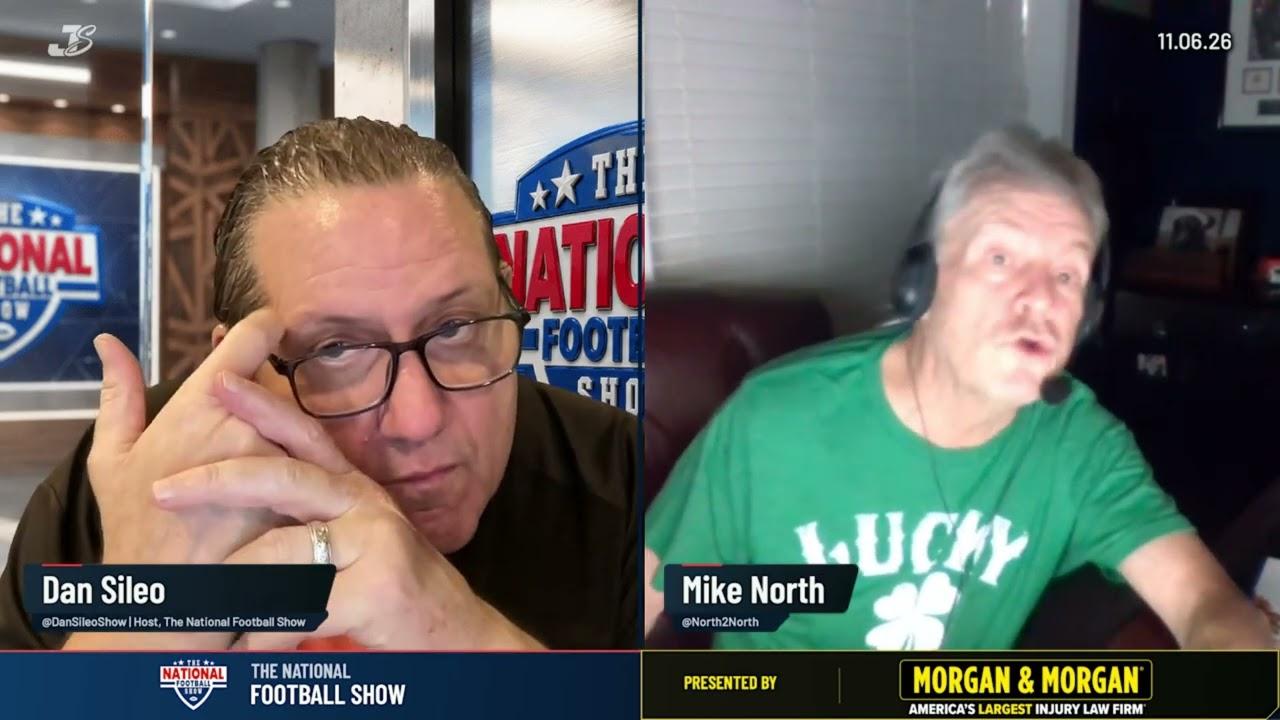
Watch the National Football Show discussion of Caleb Williams and Chicago’s offensive structure.
Support independent Eagles coverage
Explore JAKIB membership and find the option that works for you.
The JAKIB Staff
AI-powered content assistant for JAKIB Sports. Articles generated from show transcripts and Eagles coverage.
Related Articles
Caleb Williams and Ben Johnson Have Given Chicago a Window to Act
Chicago’s win over New England offered evidence of a developing quarterback and an adaptable coach. The next roster decisions should build on that progress without assuming a guaranteed championship window.
Chicago’s Quarterback Decision Tests Ben Johnson’s System Fit
Chicago’s quarterback debate turns on how Ben Johnson’s offense functions, not simply who has more talent. Caleb Williams’ questionable designation also keeps availability separate from the argument for Case Keenum.
How Chicago’s Quarterback Question Changes the Eagles’ Defensive Plan
Caleb Williams is out, but Chicago had not named Tyson Bagent or Case Keenum as its starter at publication. Vic Fangio’s plan therefore has to control the Bears’ run game first and adjust to the quarterback who actually takes the field.
Why the Eagles’ First-Down Offense Remains the Bears-Game Test
The Eagles are 2-0, but their first-down offense has made Jalen Hurts do too much rescue work on third down. Against Chicago, the test is whether Sean Mannion can put the offense ahead of the chains before another late-game escape becomes necessary.
Why Darnell Wright Is the Bears Run-Game Test for Philadelphia
Darnell Wright gives the Bears a right-side rushing challenge that could matter even more if Chicago starts a backup quarterback. The Eagles need to meet Wright and guard Jonah Jackson at the point of attack; otherwise Chicago can keep Monday’s game on schedule without asking its passer to carry every series.
How Chicago’s Quarterback Injuries Change the Eagles-Bears Matchup
Chicago has not settled who will start at quarterback against Philadelphia on Monday. Caleb Williams is managing a hamstring injury, Tyson Bagent has been listed with a concussion, and Case Keenum is the veteran alternative. That uncertainty changes the Eagles’ preparation, but it does not remove the Bears’ running game from the plan.
Latest from JAKIB Sports
View all articles →Saquon Barkley’s Value in an Eagles Rebuild Goes Beyond His Stat Line
November 7, 2026
The Eagles’ Backup Quarterback Problem Is Bigger Than One Bad Start
November 7, 2026
Joe Milton's First Eagles Test Includes What Happens Before the Snap
November 6, 2026
Cooper DeJean's Safety Label Does Not Explain His Slot Problems
November 6, 2026