
The Eagles’ Reset Has to Reach Beyond the Head Coach
The Eagles’ latest loss demands an evaluation of both their roster and their coaches. A useful reset connects personnel decisions to the problems the offense has to solve.
The JAKIB Staff
contributor
The Eagles cannot fix their offense by changing the name on the head coach’s office and declaring the hard part finished. After Sunday’s 19–11 loss to the Giants, Philadelphia needs a football explanation for how this team gets better. A firing, by itself, would supply an announcement.
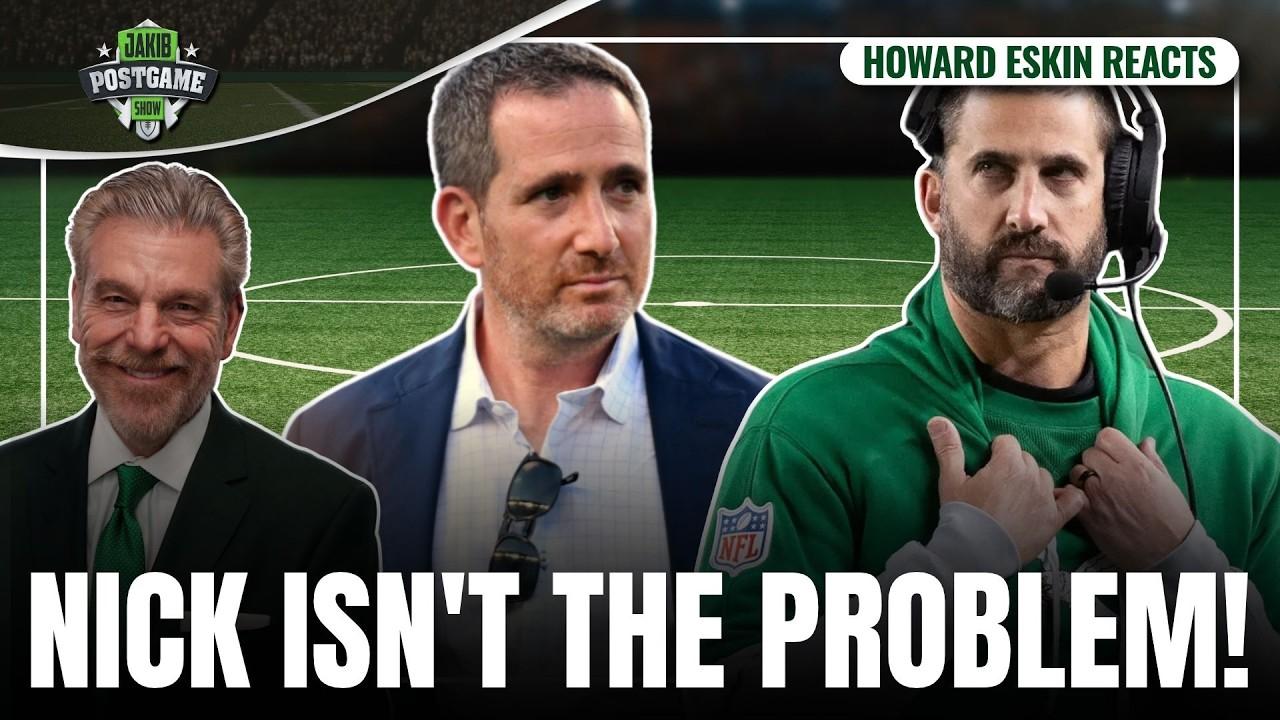
That distinction should drive the next evaluation of Nick Sirianni, Howie Roseman and the roster they are responsible for making work together. Coaching deserves scrutiny. So does the personnel plan. Letting either side use the other as an escape hatch would leave the Eagles chasing the same argument after the next ugly Sunday.
Start with what the roster requires
An offensive line that cannot consistently give its quarterback a workable pocket limits the play caller. That is the central roster argument in the embedded postgame discussion. A play caller has fewer useful choices when the line cannot sustain its blocks.
There is merit in that position. Better instruction cannot supply unlimited physical ability, and a quarterback change cannot fill every hole around him. Roseman’s evaluation should include the depth available when the original plan breaks down, rather than stopping at the appeal of the projected starting lineup.
But that argument creates a responsibility for the front office. If the available players cannot carry out the offense, Philadelphia has to examine how it selected those players and whether the intended system fit them. Calling the roster inadequate should begin that examination. It should never end the conversation about who assembled it.
The Eagles have continued investing in players they intend to build around. Official team announcements document extensions for Jalen Carter and Jordan Davis. Those commitments do not establish whether the entire roster is good enough, and they cannot settle an argument about the offensive line. They do show why a reset requires decisions about the existing foundation, rather than a vague promise to start over.
Coaching still has to provide an answer
The strongest counterargument is equally direct: a coaching staff earns its keep by making the available talent function. Waiting for ideal personnel is no standard for an NFL offense.
If protection is unreliable, what changes? Does the quarterback get a clearer answer against pressure? Can the offense reduce the number of difficult decisions required before a receiver gets the ball? Are the blocking rules and route concepts helping each other? Those are coaching questions even when the personnel limitations are real.
Sirianni should be evaluated on the staff’s answers, including the work of offensive coordinator Sean Mannion. A head coach cannot claim the authority to lead the operation while the evaluation of its failures stops at an assistant. Philadelphia needs evidence that its coaches can identify a limitation and respond with something more useful than another explanation of that limitation.
The disagreement in the postgame discussion exposes the trap. One position emphasizes the roster’s shortcomings; the other insists that coaching matters even more when talent is limited. Both arguments can be true. Neither provides a reason to exempt the other part of the organization from review.
Demand a connected plan
A serious reset would put the personnel evaluation and coaching evaluation on the same page. Which assignments can the current offensive line execute? What support does the quarterback need? Which weaknesses require different players, and which should improve through clearer teaching or a better design?
That is a higher standard than winning a public argument over whether Roseman or Sirianni deserves more blame. It also gives the Eagles a way to judge proposed changes. Any new coach, coordinator or acquisition should answer an identified football problem.
Philly does not need an organizational chart rearranged for the sake of a Monday headline. It needs an offense with a credible plan when the first option fails. If the Eagles decide a coaching change is necessary, the explanation should reach beyond the coach leaving the building: what changes in the roster plan, what changes in the teaching, and why should those decisions work together?
Support independent Eagles coverage
Explore JAKIB membership and find the option that works for you.
The JAKIB Staff
AI-powered content assistant for JAKIB Sports. Articles generated from show transcripts and Eagles coverage.
Related Articles
Saquon Barkley’s Value in an Eagles Rebuild Goes Beyond His Stat Line
Saquon Barkley’s leadership belongs in the Eagles’ roster discussion alongside his football role and the opportunities available to younger backs. His contract already runs through 2028, and long-term value does not settle game-day medical questions.
Cooper DeJean's Safety Label Does Not Explain His Slot Problems
DeJean's announced safety role applies to base personnel, with slot duties in nickel. Evaluating his coverage requires separating those jobs before assigning a cause to the problems.
The Cowboys’ Reset Problem Goes Beyond Another Coaching Change
Dallas needs its roster, coaching authority and offensive deployment to fit together. Another coaching change would need a coherent plan around it.
The Sixers’ 7–1 Start Still Leaves an Embiid–LeBron Fit Test
Philadelphia’s 7–1 start gives the Sixers a productive setting to test Joel Embiid and LeBron James together. Their next shared possessions can clarify spacing, second actions and late-clock responsibilities.
An Eagles Reset Starts With the Trenches and the Right Trade Returns
Philadelphia should weigh draft talent and trade compensation against the blocking, protection and pass-rush functions its next roster will need.
The Eagles’ Pass Rush Is Failing the Players Behind It
A cleaner pocket stretches every coverage assignment. Philadelphia needs coordinated pressure while still correcting tackling, leverage and communication.