
Cooper DeJean's Safety Label Does Not Explain His Slot Problems
DeJean's announced safety role applies to base personnel, with slot duties in nickel. Evaluating his coverage requires separating those jobs before assigning a cause to the problems.
The JAKIB Staff
contributor
Cooper DeJean's safety designation cannot explain a slot coverage problem by itself. The Eagles have to separate the assignment he is playing from the label attached to his position before deciding what needs repair.
The Eagles' July role announcement described safety duties in base personnel and slot responsibilities in nickel. That establishes the intended distinction. It does not establish his current November snap distribution or prove that changing one job caused trouble in the other.
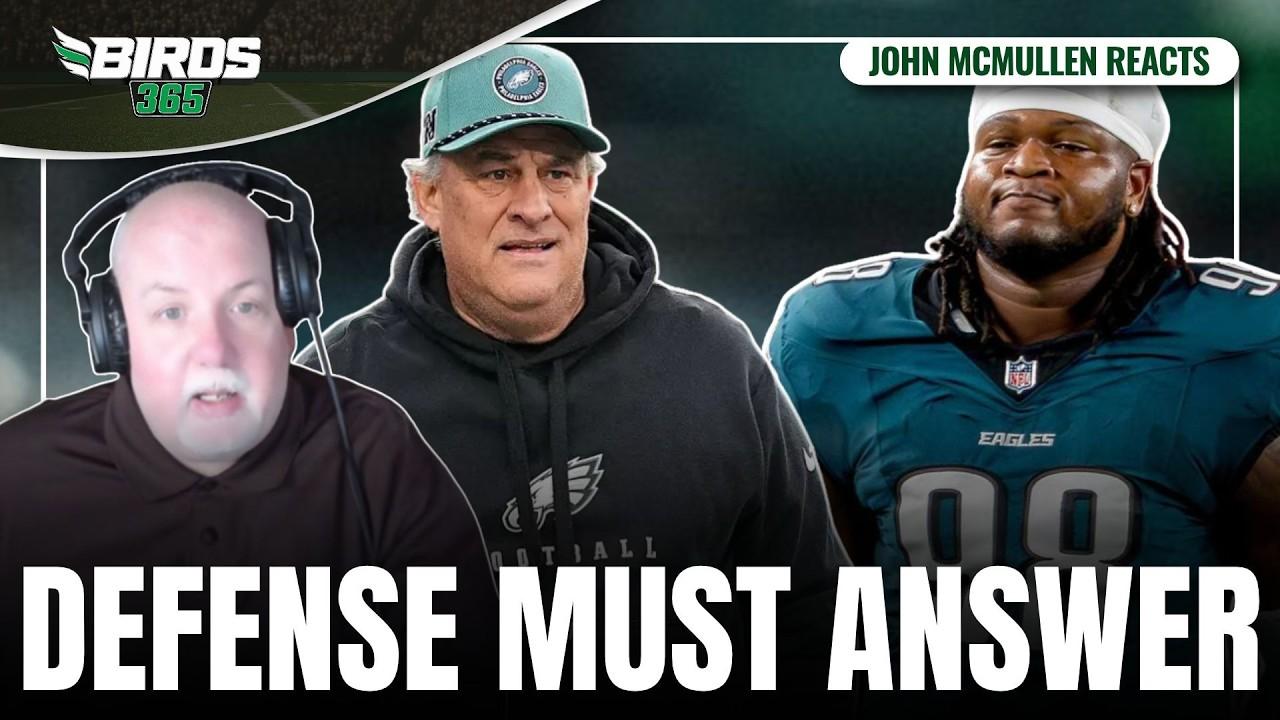
For Philadelphia, the practical question is what DeJean is being asked to recognize and defend on a particular snap. Calling him a safety does little to answer it.
Base safety and nickel slot are different jobs
Nickel personnel puts an additional defensive back on the field. A defender aligned in the slot works near receivers who can release in either direction, with more space than a receiver pinned against the sideline.
That can demand quick recognition and controlled changes of direction. The defender may have to protect against an inside break without surrendering an easy outside route, while understanding where the coverage provides help. The assignment determines which threat takes priority.
A base safety assignment can present a different starting point, different run responsibilities and a different view of the passing concept. The position name alone does not tell us whether DeJean is deep, approaching the line or matching a particular receiver.
That is why a broad claim that the safety move broke his coverage skips the essential evidence. If a disputed play comes from a nickel slot assignment, the review should begin with his leverage, reaction and responsibility on that play.
A changed role elsewhere could create preparation demands. But demonstrating that connection would require evidence about the actual teaching and assignments. It cannot be inferred simply because two developments occurred in the same season.
Coverage help does not remove individual responsibility
A slot defender's leverage works with the rest of the coverage. Playing outside a receiver can make sense when help protects the inside. The same position can become dangerous if the defender expects help that the call does not provide.
A catch therefore starts a set of questions rather than settling the evaluation. Was the receiver passed between defenders? Was DeJean responsible for carrying the route? Did he lose position immediately, or did the route develop after the quarterback extended the play?
The pass rush belongs in that last question. When the quarterback gets additional time, receivers can redirect and work beyond the original route. Maintaining position through that phase is a different challenge from defending the initial break.
But pressure cannot explain every coverage error. A defender beaten before the quarterback needs to reset still has a technique problem to address. Nor does a weak rush explain away an individual tackle once the ball arrives.
For DeJean, the useful standard is whether his footwork and eyes preserve the leverage required by the call. That makes the evaluation specific enough to coach and repeat, rather than reducing every completion to a verdict on the secondary.
Test the technique before inventing the cause
It is tempting to connect a player's appearance to a change in performance. More size might sound like an explanation for less quickness. Without reliable evidence connecting those changes, however, that remains a hypothesis.
The Eagles' evaluation should be more demanding. Does DeJean stay balanced through a receiver's release? Does he take an unnecessary step before changing direction? Does he arrive at a tackle under control, with a path that limits the runner's escape?
Those are observable football actions. They can be corrected without pretending to know a private training decision, a medical condition or a player's state of mind.
Coaching still matters. Clear rules can reduce hesitation, and focused technique work can address a repeated mistake. DeJean also carries responsibility for applying those rules consistently. A standard becomes durable when the player can execute it across different calls and opponents, not only when every surrounding condition is favorable.
The next useful comparison is between similar assignments: the same leverage, comparable help and a similar route. If the footwork improves there, the Eagles have evidence of progress. Start with that nickel rep before asking the safety label to explain it.
Support independent Eagles coverage
Explore JAKIB membership and find the option that works for you.
The JAKIB Staff
AI-powered content assistant for JAKIB Sports. Articles generated from show transcripts and Eagles coverage.
Related Articles
The Cowboys’ Run Game Must Outlast the Satisfaction of Beating Philadelphia
Dallas rushed for 204 yards in its 38–21 win over Philadelphia. Sustaining a credible running threat through tougher stretches would give the Cowboys a stronger foundation without declaring a complete turnaround.
The Eagles’ Message to Jalen Hurts Reaches the Entire Locker Room
The Eagles and Nicole Lynn have issued a health update on Jalen Hurts. A direct ownership commitment could add a message about support that reaches his teammates, without claiming to resolve private or medical questions.
Makai Lemon’s Next Opportunity Is About Where the Eagles Target Him
Makai Lemon’s next opportunity should depend on where the Eagles target him, not simply how often. Catches beyond the line can give Philadelphia a clearer way to build and evaluate his role.
Why the Eagles’ Second-Half Offense Remains Their Biggest Problem
The final kickoff decided the Jacksonville game, but Philadelphia’s 232-yard offense creates a more persistent test for Jalen Hurts and the play-calling staff.
Why the Eagles’ Run and Pass Games Aren’t Working Together
The Eagles’ run and pass games aren’t working together when one fails to make the other easier. Against Jacksonville, 22 rushing yards left Jalen Hurts carrying a passing workload that produced too little sustained offense.
Jalen Hurts’ C-Minus Game—and the Offensive Line Behind It
A C-minus is a defensible editorial grade for Jalen Hurts’ uneven afternoon against Jacksonville. But fixing the Eagles’ passing game requires examining the protection and rushing support behind him, not simply circling the quarterback’s name.
Latest from JAKIB Sports
View all articles →Joe Milton's First Eagles Test Includes What Happens Before the Snap
November 6, 2026
Sacks Cannot Cover for a Broken Eagles Run Fit
November 6, 2026
Notre Dame’s Miami Test Puts CJ Carr at the Center of the Playoff Argument
November 6, 2026
The Eagles Cannot Develop an Offense on a One-Year Coaching Clock
November 6, 2026