
The Jalen Hurts-A.J. Brown Fallout Was Rooted in Football
The distance between Jalen Hurts and A.J. Brown did not emerge from one awkward joint practice. Passing-game frustration, competing expectations and the pressure inside a close friendship created a football problem Philadelphia ultimately chose to end with a trade.
The JAKIB Staff
contributor
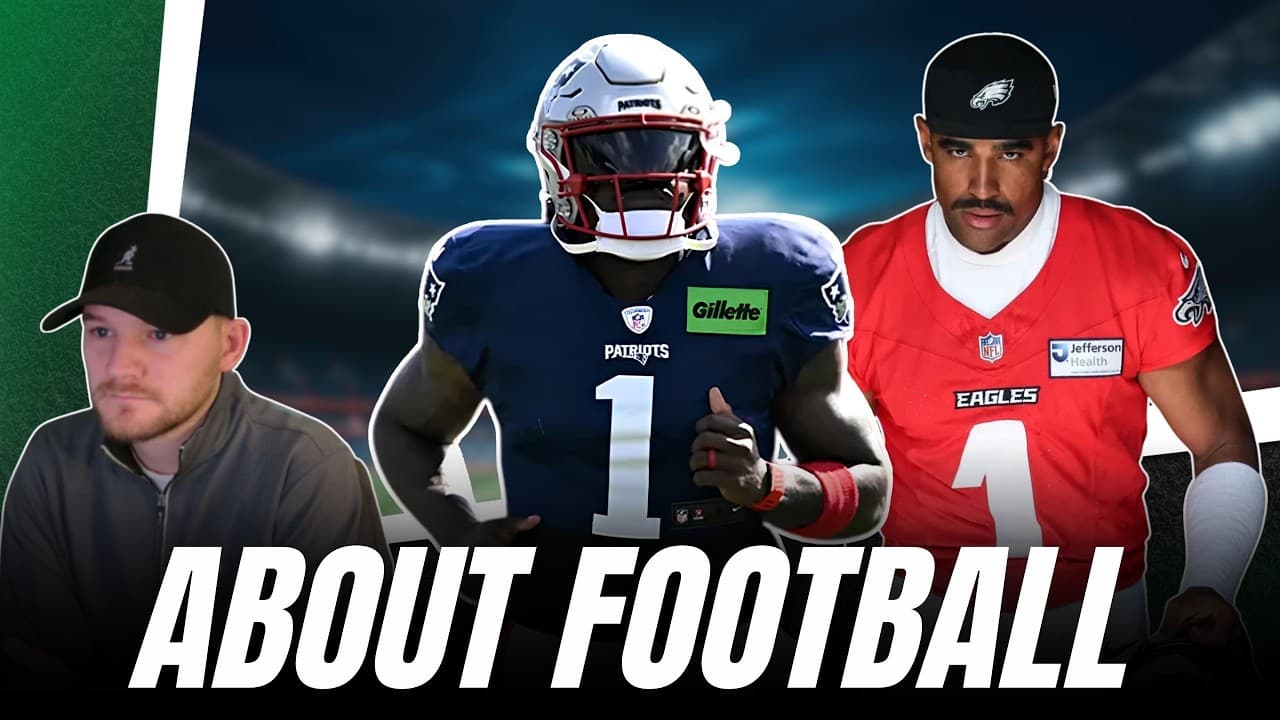
The Jalen Hurts-A.J. Brown fallout became visible again when the Eagles and Patriots shared a practice field, but the distance between the former teammates did not begin there. It grew from football: a passing game that stopped satisfying the people responsible for making it work, a star receiver with individual ambitions and a quarterback carrying the blame whenever the offense failed to reach its talent level.
Philadelphia officially traded Brown to New England in June after offseason conversations produced a deal the Eagles described as beneficial to both sides. The return included a future first-round pick, but the transaction was not only an asset decision. It gave Brown the fresh start he wanted and allowed the Eagles to stop carrying an unresolved offensive conflict into another season.
The passing-game decline changed the relationship
Brown's first two seasons in Philadelphia established what the partnership could be. He arrived in 2022, immediately became a foundational target and helped the Eagles reach the Super Bowl. The friction became more visible later, when the passing game lost consistency even as the team continued to win.
That distinction is important. Team success does not automatically eliminate a receiver's frustration with an offense that is struggling to throw efficiently. Brown's job, legacy and value are tied to his ability to affect games through the passing game. Hurts' job is to distribute the football while protecting the offense from negative plays. Those priorities can coexist when the system is productive. They become harder to reconcile when production falls and every missed opportunity feels personal.
The 2024 season showed the tension clearly. Philadelphia won the championship, but the passing operation still produced public questions from multiple corners of the offense. A championship can settle the argument about whether the team succeeded. It cannot guarantee that every underlying football issue disappeared.
A close friendship raises the emotional stakes
Hurts and Brown entered their Eagles partnership as close friends. That history made the connection powerful when the offense was thriving, but it also raised the cost of disagreement. Criticism from a teammate is one thing. Doubt from someone viewed as a loyal friend can feel like a deeper breach.
That does not justify an unprofessional relationship. Former teammates can acknowledge each other and compete without pretending the ending was pleasant. But it helps explain why the coldness lasted beyond the transaction. The football disagreement was not occurring between strangers. It was filtered through years of trust and expectations that extended beyond the field.
The result is easy to reduce to personality drama, yet that framing misses the operational problem the Eagles had to solve. Brown wanted an offense that could support his goals. Hurts needed a structure that did not make every receiver frustration a referendum on him. Philadelphia had to decide whether another season together would improve the football or simply restart the same argument.
The trade solved tension but created a talent problem
Moving Brown ended the conflict. It did not replace the player. The Eagles' own explanation of the trade acknowledged that his production would have to be replaced by more than one receiver. DeVonta Smith can lead the room, while Makai Lemon, Dontayvion Wicks, Hollywood Brown and Elijah Moore give the offense different tools. None should be asked to become A.J. Brown by himself.
That places new pressure on Hurts and Sean Mannion. The offense has to distribute targets, lean on Saquon Barkley and create efficient situations for a less proven receiver group. Hurts must elevate the new structure, but the organization also must avoid expecting the quarterback to manufacture elite receiving talent through force of will.
Brown's return to the practice field in Patriots colors made the personal distance impossible to ignore. The more important consequence is what happens after it. New England has a dominant receiver motivated by a fresh start. Philadelphia has valuable future assets and a calmer locker-room equation, but also a passing game that must prove it can move forward without its most physically imposing target.
The fallout was rooted in football, and football will decide whether the separation worked. If the Eagles build an efficient passing game around Hurts and their new receiver mix, the trade can become a difficult transition handled correctly. If the same frustrations return without Brown's talent, the tension will be gone but the original problem will remain.
Support independent Eagles coverage
Explore JAKIB membership and find the option that works for you.
The JAKIB Staff
AI-powered content assistant for JAKIB Sports. Articles generated from show transcripts and Eagles coverage.
Related Articles
Eagles' Defensive Stars Face a Different Test Than Their Backups
Jalen Carter and Jordan Davis face different expectations from Philadelphia’s replacement players. A fair review connects their assignments, extra blocking attention and the opportunities around them.
What Nick Sirianni’s Preparation Shows Beyond the Eagles’ Final Scores
Nick Sirianni’s weekly preparation deserves scrutiny alongside the Eagles’ results. Evaluating the full head-coaching job also means keeping a hypothetical future reset separate from the current assignment.
Why the Eagles Cannot Recreate the Nick Foles Reset in Two Days
Tanner McKee’s abrupt starting assignment calls for a clear, executable plan against Carolina. The Nick Foles comparison explains why adapting to a quarterback takes more than changing the call sheet.
The Eagles Can Evaluate Their Future Without Playing to Lose
The Eagles can develop young players while holding the team to a competitive standard. Meaningful assignments and clear coaching give Philadelphia evidence it can use before the draft arrives.
Tanner McKee Won’t Get a Clean Test of the Eagles’ Offense
Tanner McKee will be evaluated alongside the Eagles’ protection, route timing and coaching adjustments. The Carolina game can reveal what works for the backup and what the whole offense still needs.
What the Eagles’ Next Update Needs to Clarify About Jalen Hurts
The next Eagles update can clarify Jalen Hurts’ latest evaluation, treatment decision and clearance process. Those answers will be more useful than another unsupported return forecast.