
Nick Sirianni's 48-Hour Quarterback Reversal Creates a Credibility Problem
Sirianni backed Tanner McKee on Monday before the reported switch to Joe Milton on Wednesday. Explaining the football purpose now carries consequences for his next public commitment.
The JAKIB Staff
contributor
Nick Sirianni can defend changing quarterbacks. Explaining why his public commitment changed from Monday to Wednesday is the harder part, because the next endorsement will be heard through this one.
On Monday, Sirianni said: “Tanner's our guy. We're not making any changes there.” The official Eagles transcript records an unambiguous commitment to Tanner McKee. By Wednesday, The Philadelphia Inquirer reported that Joe Milton would replace him against the Giants.
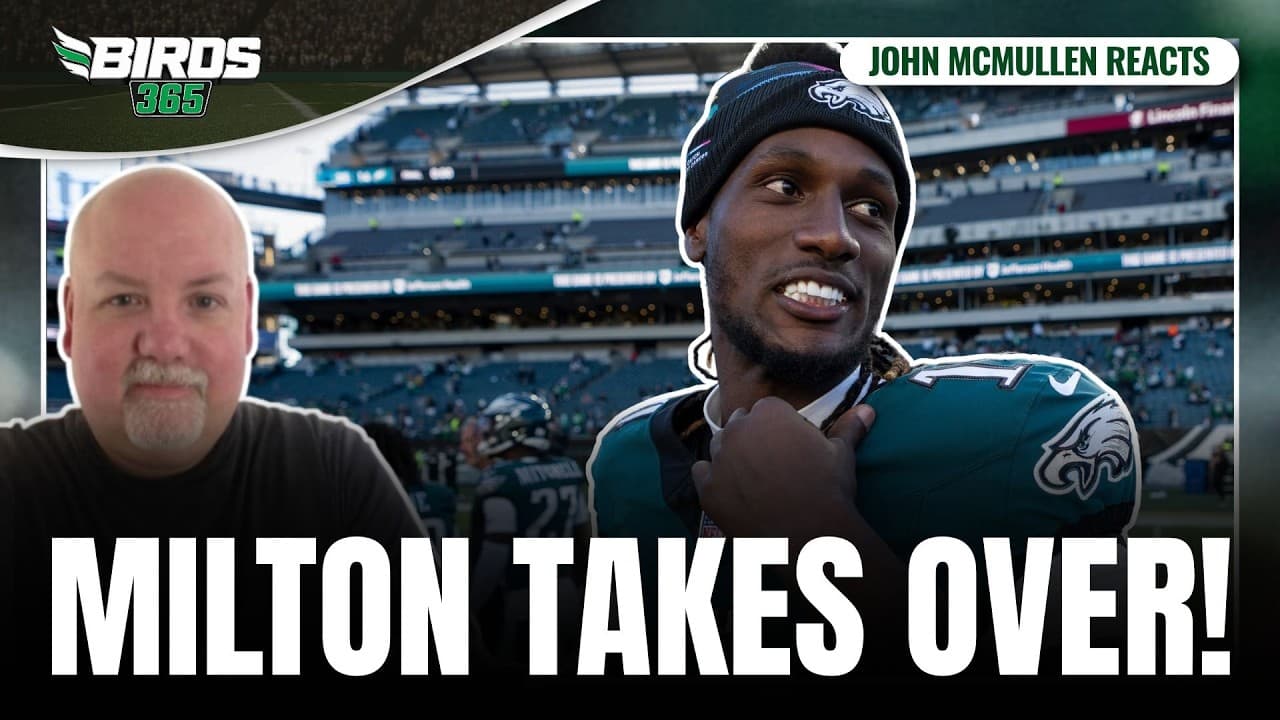
Within two days, a firm commitment had become a quarterback change. That gap makes Sirianni's next assurance harder to take at face value.
Changing course deserves an explanation
A coach should reconsider a decision when the football evidence warrants it. Sticking with a quarterback merely to preserve a press-conference answer would put the appearance of consistency ahead of the team.
The problem is choosing absolute language while leaving room to make an immediate change. An assessment that remains open can be described honestly without exposing the playbook or embarrassing a player. A coach can protect a quarterback's dignity while acknowledging that the offense is being evaluated.
Sirianni's Wednesday press conference praised Milton's development and work learning the offense. It preceded the starter report and did not announce the switch. The Eagles' Wednesday transcript establishes that sequence alongside the Inquirer's reporting.
That distinction matters. The public did not hear Sirianni explain a newly announced choice in that appearance. Praise for a player's preparation can support a later explanation, but it does not supply the missing account of why the position changed.
A clear answer would identify the football reasoning at a useful level: what Milton offers, what the staff intends to ask him to do and why that combination gives the offense a better chance. None of that requires publishing the opening script.
Credibility reaches beyond the podium
The consequences of this reversal extend to future assurances about players and coaches. When a firm commitment is followed quickly by a different action, another firm commitment carries less information. Fans have reason to ask whether it describes a settled judgment or simply the preferred answer for that afternoon.
That is an assessment of the public message. It does not establish dishonesty, and it cannot reveal when the private decision was made. Nor does it prove that Howie Roseman or Jeffrey Lurie ordered the change. Filling those gaps with a convenient story would add speculation to an already unclear sequence.
Sirianni can take responsibility without providing a transcript of every internal conversation. The head coach presents the football plan and explains its purpose. If the plan changes, acknowledging the change gives people something concrete to assess.
The alternative is allowing the unexplained gap to dominate the discussion. Then Milton's first start becomes an argument about organizational authority before it becomes an evaluation of his play. That is an avoidable burden to place on the quarterback.
The next answer comes on the field
Milton's mobility gives Philadelphia a plausible reason to try something different. It also creates a useful test of the coaching staff: can the Eagles give him calls he can operate cleanly, protect the basic structure and use his athletic ability without depending on emergency escapes?
A quarterback change should come with a coherent offensive plan. If the same communication failures recur, the new starter will have changed the face of the problem while leaving its mechanics untouched. Cleaner execution would provide a stronger defense of the decision than any argument about withholding information from an opponent.
Sirianni's future should remain an evaluation, not a verdict presented as reporting. Competitive performances, player development and evidence that the staff can correct recurring mistakes would support one case. Repeated breakdowns without visible improvement would support a different one. Neither case can be settled by this quarterback announcement alone.
A win would help, but one result would not answer every coaching question. The more revealing evidence will be whether the offense can repeat successful calls and recover when the defense takes away its first answer.
At Sirianni's next explanation, listen for ownership of the choice and a clear football purpose. Then watch whether Milton is given an offense that makes that purpose visible.
Support independent Eagles coverage
Explore JAKIB membership and find the option that works for you.
The JAKIB Staff
AI-powered content assistant for JAKIB Sports. Articles generated from show transcripts and Eagles coverage.
Related Articles
Joe Milton Gives the Eagles a New Test, Not a Clean Slate
Joe Milton changes the Eagles’ options against the Giants. Protection, clear answers and adjustments after the opening script will determine whether the plan holds up.
Nick Sirianni’s Résumé Is Only Part of the Eagles’ Coaching Decision
Nick Sirianni’s championship experience belongs in the Eagles’ coaching evaluation. So does a specific plan for correcting the offense and supervising the assistants who teach it.
The Eagles’ Offensive Fix Starts With Clear Assignments
The Eagles’ offensive repair begins with clear assignments and a shared response to pressure. Nick Sirianni’s staff should be judged on whether those answers reach the field.
Tanner McKee’s Evaluation Has to Account for How Backups Prepare
Tanner McKee’s practice role belongs in his evaluation alongside protection and individual execution. Philadelphia can account for preparation without excusing mistakes or inventing repetition totals.
The Eagles’ Bye Week Leaves the Door Open for Changes
The Giants game gives Philadelphia another evaluation before the bye. Any quarterback or play-calling change should solve a defined football problem.
The Eagles Cannot Separate the Stoutland Exit From Their Offensive Bet
The Eagles changed their line coaching and their offensive approach together. Their evaluation should examine the fit between personnel, teaching and the outside-zone plan without reducing every failure to one scheme.
Latest from JAKIB Sports
View all articles →The Eagles Trade Deadline Is About Value, Not a Roster Fire Sale
November 5, 2026
Joe Milton Adds Mobility. The Eagles Still Have to Solve the Play Clock.
November 5, 2026
The DeVonta Smith Trade Question Starts With the Eagles’ Next Quarterback
November 5, 2026
The Cowboys’ Reset Problem Goes Beyond Another Coaching Change
November 5, 2026