
The Eagles’ Backup Quarterback Problem Is Bigger Than One Bad Start
The Eagles invested in backup quarterbacks. The harder question is whether practice work, scheme fit and a usable replacement plan prepared the offense to function when the quarterback changed.
The JAKIB Staff
contributor
Joe Milton’s opportunity gives the Eagles another test of their backup quarterback plan. Philadelphia should judge that plan by whether the offense can function through a replacement, including the protection calls, timing and available answers when the first option disappears.
For an offense changing quarterbacks, the practical questions come quickly: Which protections can the replacement manage? Which throws can he execute on time? How much of the call sheet still gives the Eagles a realistic chance to stay ahead of the chains?
Those questions make backup investment broader than a contract or a draft pick. Acquiring a player starts the work. Preparing an offense that can operate through him is the harder test.
The Eagles made investments. Readiness is the question.
Philadelphia did not ignore the position. The Eagles’ training-camp quarterback preview documented the acquisition of Andy Dalton from Carolina for a 2027 seventh-round pick and the selection of Cole Payton in the fifth round of the 2026 draft. Tanner McKee entered his fourth season after being drafted in the sixth round in 2023.
That is personnel investment. Whether it produced adequate replacement readiness is a separate argument.
The team’s August account of the backup competition described Dalton and McKee splitting second-team training-camp repetitions in a room that also included Jalen Hurts and Payton. Multiple candidates receiving work can help coaches compare options. It also creates a practical preparation question: How do those opportunities become enough usable experience for the quarterback eventually asked to run the offense?
The published account does not settle that question. It does not tell us the current distribution of practice work, the content of individual meetings or why any later decision was made. Declaring that the Eagles deliberately neglected a player would go beyond the evidence.
The fair criticism is narrower and more demanding: A roster investment should produce an executable replacement plan. The presence of several quarterbacks does not demonstrate that the plan works.
Preparation includes the offense around the backup
A backup cannot duplicate every strength of the starter. Trying to preserve every call can leave a replacement carrying more decisions than he can handle efficiently. Cutting the offense too aggressively can create another problem, allowing defenders to crowd the small set of concepts they expect.
The useful middle ground is a defined menu with connected answers. If a defense takes away the first read, where does the ball go? If pressure changes the protection, does the quarterback have an answer the receivers recognize? If an early run gains little, can the offense still reach a manageable third down?
Those are standards for evaluating preparation, not claims about a particular Eagles practice. They also explain why repetitions and scheme fit belong in the investment discussion. Repeating a play against one look is different from recognizing when that play requires an adjustment.
A staff can help by emphasizing concepts the replacement understands and pairing them with credible counters. The quarterback still has responsibilities: identify the situation, communicate the call, deliver the available throw and avoid turning a difficult possession into a damaging one.
Neither side receives a blanket excuse. Coaching cannot make every throw, and a quarterback cannot call protections or route adjustments that the group has not established together.
Judge the replacement plan possession by possession
Joe Milton’s November 5 Eagles press-conference page identifies his first career NFL start, playbook knowledge and comfort in the offense as discussion topics. That puts readiness at the center of the current conversation without establishing exactly how his preparation was allocated.
The next evaluation should separate different kinds of failure. A missed open throw points toward execution. A free rusher can involve protection, recognition or communication. A route and a throw arriving at different expectations calls for context before assigning responsibility.
The score alone cannot distinguish those problems. Neither can the quarterback’s résumé.
Philadelphia should be looking for an offense that gives its replacement repeatable decisions while retaining enough variety to punish predictable defensive responses. That does not require pretending the backup is the starter. It requires knowing which parts of the offense remain dependable after the change.
Watch the next meaningful third-down sequence: the protection call, the outlet when pressure arrives and the timing of the throw. Those connected decisions will reveal more about the Eagles’ backup plan than another debate over whether they acquired enough names.
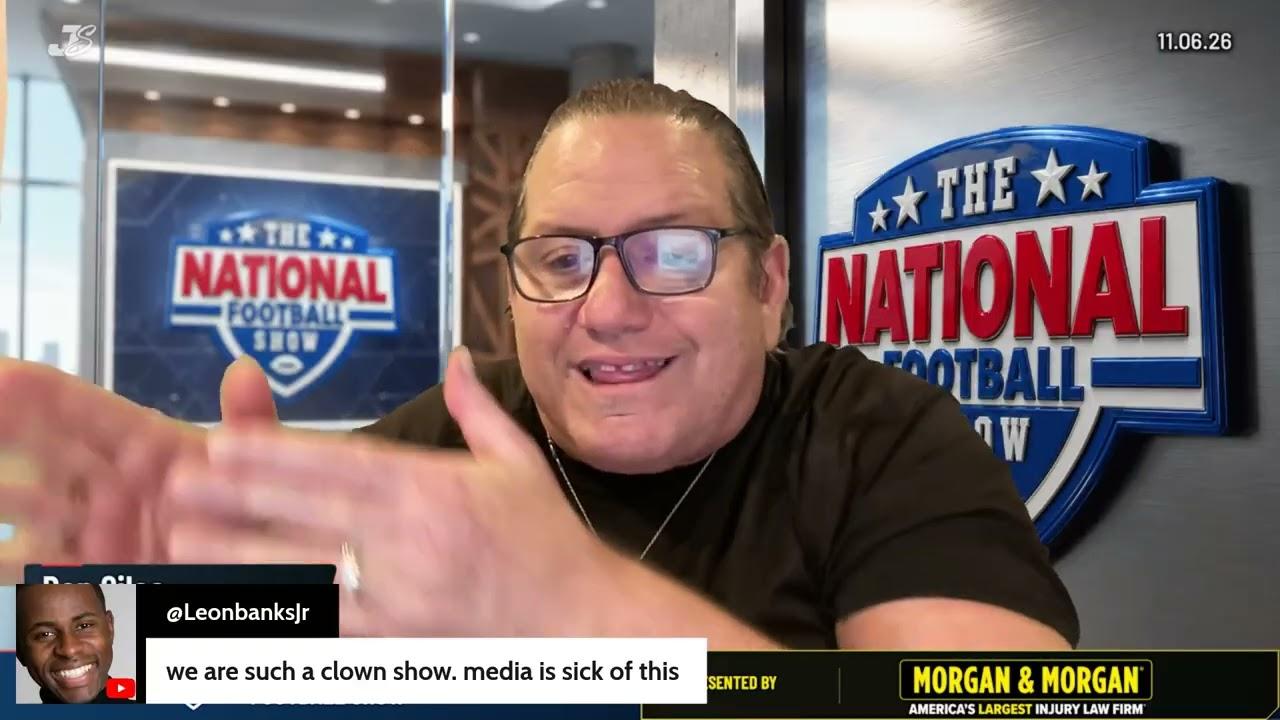
Watch the National Football Show discussion of the Eagles’ backup quarterback plan.
Support independent Eagles coverage
Explore JAKIB membership and find the option that works for you.
The JAKIB Staff
AI-powered content assistant for JAKIB Sports. Articles generated from show transcripts and Eagles coverage.
Related Articles
Cooper DeJean's Safety Label Does Not Explain His Slot Problems
DeJean's announced safety role applies to base personnel, with slot duties in nickel. Evaluating his coverage requires separating those jobs before assigning a cause to the problems.
Nick Sirianni's 48-Hour Quarterback Reversal Creates a Credibility Problem
Sirianni backed Tanner McKee on Monday before the reported switch to Joe Milton on Wednesday. Explaining the football purpose now carries consequences for his next public commitment.
The DeVonta Smith Trade Question Starts With the Eagles’ Next Quarterback
Keeping DeVonta Smith should be the starting position. The case for a trade depends on the next quarterback, the rebuilding timeline and an actual return.
The Cowboys’ Reset Problem Goes Beyond Another Coaching Change
Dallas needs its roster, coaching authority and offensive deployment to fit together. Another coaching change would need a coherent plan around it.
Tanner McKee’s Evaluation Has to Account for How Backups Prepare
Tanner McKee’s practice role belongs in his evaluation alongside protection and individual execution. Philadelphia can account for preparation without excusing mistakes or inventing repetition totals.
The Eagles’ Backup Plan Has to Fit the Offense
The Eagles should evaluate their backup quarterbacks by what each allows the offense to keep doing. Dallas provided productive Tanner McKee possessions, while leaving a larger question about continuity behind Jalen Hurts.