
Sacks Cannot Cover for a Broken Eagles Run Fit
An interior defender can escape a block and still expose his linebacker. The Eagles run-fit discussion turns on leverage, coordinated assignments and what happens before the runner reaches the hole.
The JAKIB Staff
contributor
A defensive tackle can threaten the quarterback and still make a run defense easier to block. For the Eagles, the right evaluation separates the splash play from the assignment: did the tackle's movement disrupt the offense, or did it open a lane another defender could not reasonably close?
That distinction is especially useful when discussing Jalen Carter. Pass-rush ability does not answer every question about interior run defense. Neither does a running lane establish that Carter ignored an assignment. Before assigning blame, the review has to identify the front, the intended gap exchange and the blockers' movement.
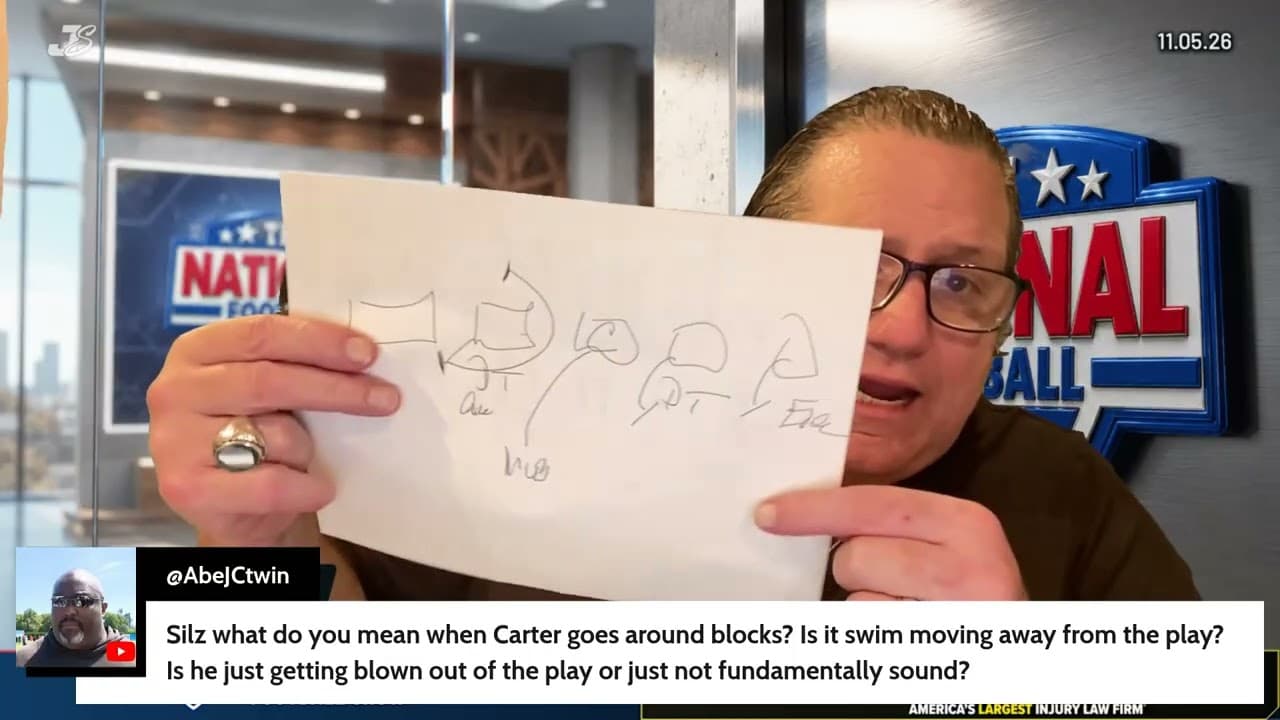
A reach block makes leverage the central question. If an offensive lineman is trying to work across a tackle's face, what happens when the defender takes a route around the block instead of controlling the space the defense needs protected?
The free defender still needs a fit
Imagine a run flowing toward the offense's right. A blocker attempts to gain position on the defensive tackle while an adjacent lineman helps before climbing toward a linebacker. The tackle wants to disrupt that sequence. But getting free of a blocker and defeating the run are not necessarily the same thing.
If the tackle circles away from his assigned gap, the ball might reach that space before he can recover. The blocker may no longer need assistance, allowing a second lineman to reach the next level sooner. The linebacker then confronts both a moving runner and an offensive lineman with room to establish leverage. The tackle's apparent escape can become the offense's advantage.
The baseline principle is control before release. USA Football's defensive-line teaching emphasizes maintaining the required control and responding to the type of block before disengaging as the ball commits. That principle helps distinguish purposeful penetration from movement that merely changes where a defender gets blocked.
There is no universal command to stand still and absorb contact. A called slant might require a tackle to cross a blocker's face. An attacking front might deliberately send him through one gap while another defender fills behind him. A quick win can destroy the handoff before the runner finds a track. Aggression becomes a problem when the surrounding defense cannot account for the space it leaves.
That is why the linebacker is so important to the picture. If the tackle spills the ball toward help, the help has to be there. If the tackle penetrates inside, the linebacker may have a corresponding outside fit. The review should ask whether both players executed the same call before declaring that either one freelanced.
Judge the whole front
The edge defender belongs in that review, too. USA Football's force and cutback guidance describes coordinated responsibilities, including directing the runner inside when the force player cannot make the tackle himself. A sound interior fit can still fail if the runner escapes its boundary. A firm edge can still be wasted if an interior lane gives the runner an easy cut.
For an interior pairing such as Carter and Jordan Davis, the coaching objective should be complementary movement. In a hypothetical call where one tackle attacks a gap, the other defenders need clear rules for the runner's next choice. If everyone chases the initial flow, a cutback can punish the entire front. If everyone waits, the offense can dictate contact and carry the run downhill.
The sack total cannot settle that argument. A sack records a valuable result on a passing play. It does not show whether the same front handled reach blocks, held its leverage or prevented a lineman from climbing on earlier rushing downs. The Eagles can value disruptive talent while evaluating those jobs separately.
Nothing in that schematic explanation establishes a medical cause, an effort problem or a frequency of mistakes by an individual player. Those claims require evidence beyond a diagram. A fair film review follows multiple plays from the snap through the runner's decision and checks whether the same assignment problem actually repeats.
On the next outside run, follow the tackle and the climbing blocker before following the ball. Watch who controls the gap, where the linebacker enters and whether the runner is forced toward the intended help. That sequence will explain more about the Eagles' run defense than the most memorable sack on the highlight reel.
Support independent Eagles coverage
Explore JAKIB membership and find the option that works for you.
The JAKIB Staff
AI-powered content assistant for JAKIB Sports. Articles generated from show transcripts and Eagles coverage.
Related Articles
The Eagles Cannot Develop an Offense on a One-Year Coaching Clock
The Eagles should judge Sean Mannion and the quarterbacks by how quickly they solve recurring defensive problems. Continuity earns its value through clearer answers, not another year on the calendar.
The Eagles’ Pass Rush Is Failing the Players Behind It
A cleaner pocket stretches every coverage assignment. Philadelphia needs coordinated pressure while still correcting tackling, leverage and communication.
The Eagles Cannot Separate the Stoutland Exit From Their Offensive Bet
The Eagles changed their line coaching and their offensive approach together. Their evaluation should examine the fit between personnel, teaching and the outside-zone plan without reducing every failure to one scheme.
Joe Milton Offers a Different Test for the Eagles’ Broken Offense
Joe Milton would give the Eagles another set of tools, but a quarterback change still requires a workable plan. The next Giants game and the bye provide a decision point, not proof that a switch is coming.
Makai Lemon’s Role Cannot Disappear When DeVonta Smith Returns
Makai Lemon’s seven catches and first NFL touchdown give the Eagles a designed receiving role to develop. His motion and middle-field opportunities should remain part of the plan when DeVonta Smith is available again.
The Eagles’ Defensive Depth Bill Is Coming Due
Philadelphia’s defensive investments still require reliable players around them. The current injury report puts the value of specific replacement roles back in focus.