
Sean Mannion's First Eagles Season Is a Career-Defining Test
Sean Mannion enters his first Eagles season with a contender, a new system and no prior NFL play-calling experience. Philadelphia does not need instant perfection, but it does need early proof that the offense is organized, adaptable and ready for meaningful games.
The JAKIB Staff
contributor
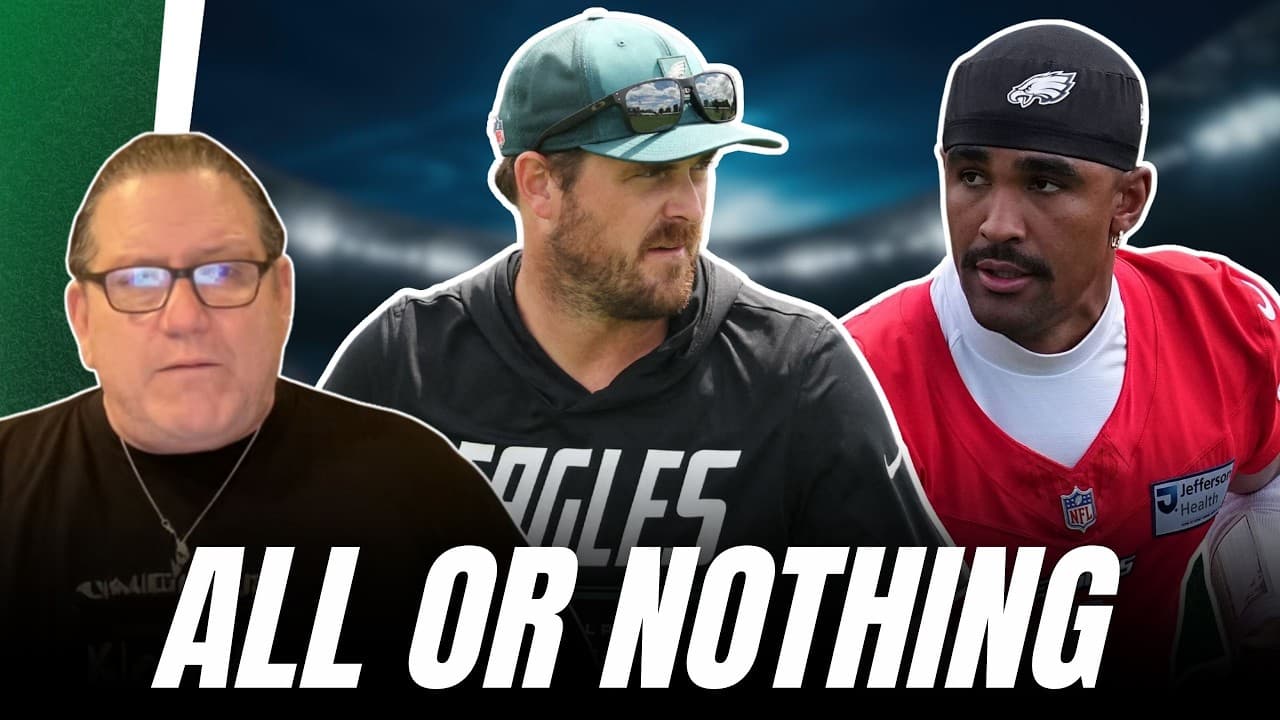
Sean Mannion's first Eagles season will define how the NFL views him as a coach. Philadelphia handed a first-time play caller a contender, an established quarterback and an offense that cannot afford another year of searching for its identity.
That combination creates opportunity and pressure in equal measure. Mannion does not need to unveil a revolutionary system in September. He does need to show that the Eagles can line up with answers, communicate cleanly and give Jalen Hurts a structure that holds up after the first adjustment from a defense.
Philadelphia Is Betting on Projection
Mannion arrived after two seasons on Green Bay's coaching staff, first as an offensive assistant and then as quarterbacks coach. The Eagles clearly valued the ideas and quarterback perspective he gained there. They also accepted the uncertainty that comes with a coordinator who has never called an NFL game.
Play calling is more than choosing a good concept from a sheet. It is sequencing, clock awareness, down-and-distance discipline and anticipating how the opponent will respond. A coordinator can understand offense deeply and still need time to master the pace and pressure of making those decisions live.
The roster shortens that learning curve. Hurts is entering his seventh NFL season, the line still carries veteran experience and the skill group gives the staff multiple ways to attack. Mannion is not inheriting a rebuild where basic competence would count as progress. He is inheriting a team built to win now.
The First Test Is Operational
Early success should be measured by how the offense functions before it is measured by style points. Can Philadelphia avoid wasted downs? Can it move between personnel groups without advertising the call? Can Mannion find a dependable answer when pressure disrupts the original plan? Those details reveal whether the system is becoming playable.
The relationship with Hurts will sit at the center of every answer. The coordinator should demand faster decisions and cleaner execution while preserving the quarterback's ability to threaten defenses with movement. A rigid system that ignores Hurts' best traits would make the offense easier to defend, not more sophisticated.
Mannion also needs a response when the opening script ends. Many offenses look coherent through their first set of prepared calls. The real evaluation begins once a defense takes away the featured concept, forces longer third downs or changes its pressure picture. Adjustment speed will tell Philadelphia more than one explosive opening drive.
The Stakes Reach Beyond One Season
A productive year would put Mannion on the league's fast track. Coordinators who organize winning offenses around established quarterbacks quickly become head-coaching candidates. Philadelphia offers him a national stage and enough talent to prove that his ideas can survive beyond a meeting room.
Failure would carry a different label. The questions would focus on whether the promotion came too early and whether Mannion could manage a veteran offense under pressure. That is the risk of taking a major job before building a longer coaching résumé: the opportunity is enormous, but there is little insulation if the operation breaks down.
The Eagles share that risk. They chose upside over experience after another offensive reset, so the staff and front office own the environment around their new coordinator. Clear responsibilities, honest self-scouting and experienced voices in the room can help Mannion learn without turning every difficult series into a crisis.
The evaluation should also separate growing pains from recurring dysfunction. A missed protection in Week 1 can be corrected. Confusion that returns after the same pressure look is a warning about the teaching process. Progress will appear when mistakes become narrower, communication becomes faster and the offense stops losing snaps before the ball is thrown.
The verdict will not come from one clever play or one rough afternoon. It will come from the offense's ability to solve the same problems that return every week. If Philadelphia plays with clarity and improves when opponents counter, Mannion will have proved he was ready. The first three games will show whether that process has already begun.
Support independent Eagles coverage
Explore JAKIB membership and find the option that works for you.
The JAKIB Staff
AI-powered content assistant for JAKIB Sports. Articles generated from show transcripts and Eagles coverage.
Related Articles
Jeff Stoutland’s Absence Raises a Bigger Eagles Continuity Question
Jeff Stoutland’s departure puts the Eagles’ offensive-line continuity under scrutiny. The current staff’s task is to transfer knowledge and build reliable combinations without treating retirement and trade counterfactuals as facts.
The Eagles’ Second-Half Plan Is Shrinking Jalen Hurts’ Options
The Eagles need a second-half approach that protects the ball without removing their best answers. Coaching design and Jalen Hurts’ decisions both shape whether a lead becomes another possession or another defensive burden.
Eagles' Offensive Line Problems Make the Sean Mannion Verdict Harder
Philadelphia's blocking problems complicate the evaluation of Sean Mannion and Jalen Hurts. Personnel limitations matter, but they do not erase questions about the offense's responses.
The Eagles’ Bigger Problem Beyond the Final Kickoff
The kickoff decision deserves scrutiny, but Philadelphia’s recurring offensive breakdown matters more. Hurts, the staff and the line all face a more durable test.
How the Eagles’ Run-Game Collapse Exposes Their Offensive Line
Philadelphia’s rushing collapse exposed more than a missing run call. The Panthers game will show whether its line can restore manageable downs and a credible run threat.
Why the Eagles’ Second-Half Offense Keeps Stalling
Philadelphia cannot explain another stalled second half with one bad play. The Eagles need a repeatable early-down plan and real counters when a defense adjusts.