
Why the Eagles' Passing Game Is Still Playing Catch-Up
Philadelphia is blending Sean Mannion's Green Bay background with ideas from the Eagles' existing offense. The challenge is turning borrowed concepts into one coherent passing game before defenses force the new staff into reactive football.
The JAKIB Staff
contributor
The Eagles' passing game is still playing catch-up because Philadelphia is installing answers that established NFL systems have refined for years. Sean Mannion can borrow useful Green Bay and Sean McVay concepts, but the offense will only advance when those pieces become a language the entire unit can speak at game speed.
Borrowing is normal in the NFL. Every modern playbook carries ideas from other coaching trees. The concern is not where a concept began. It is whether Philadelphia understands how to sequence it, teach its adjustments and connect it to the strengths of Jalen Hurts and the players around him.
A Collection of Plays Is Not a System
A coherent passing game makes different calls look related. The same formation can produce a quick throw, a run answer, a play-action shot or a protection adjustment. That connection slows defenders because one pre-snap picture can lead to several outcomes.
Philadelphia has too often looked like it was selecting isolated solutions. One concept might work, but the next call does not punish the defense for how it reacted. The result is an offense that depends on individual execution without consistently creating the leverage that makes execution easier.
Mannion's task is to build those relationships between calls. His Green Bay background gives him exposure to a passing game that paired formations, motion and quarterback-friendly answers. The Eagles have also described the new offense as a blend, keeping successful elements from Philadelphia while adding lessons from Mannion's playing and coaching experience.
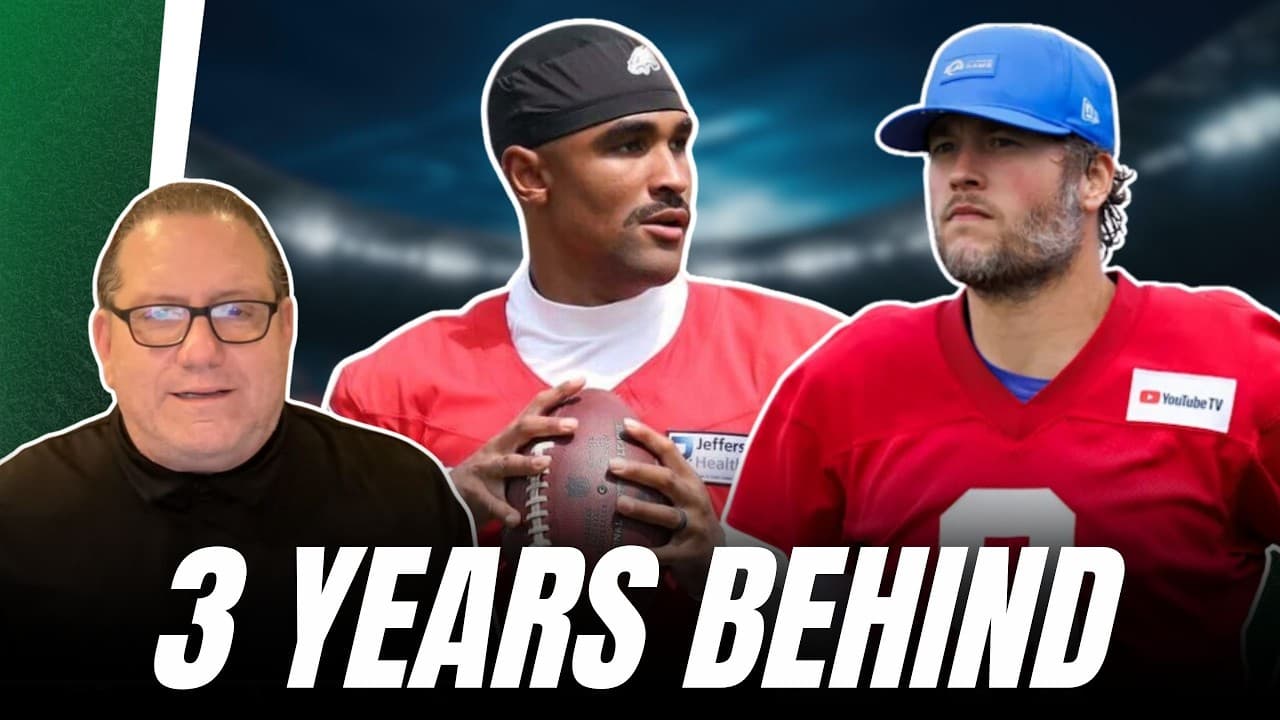
Hurts Needs Answers, Not Decoration
Motion and new formations will attract attention, but movement alone does not fix a passing game. Each shift should reveal coverage, change a defender's responsibility or create a cleaner release for a receiver. If the same problems remain after the window dressing, the offense has changed its appearance rather than its function.
Hurts benefits most from defined information. Give him a clear conflict defender, a reliable hot answer and a progression that matches the protection. That structure can speed his decisions without asking him to become a different quarterback. It can also leave room for movement when the pocket changes or a defender wins early.
The offensive line belongs in that equation. Play action and under-center looks can alter the rush, but only if the run threat remains credible and protection rules stay clean. The passing game cannot become advanced by asking the line to hold longer while receivers work through slow-developing routes.
Catch-Up Ends When Counters Appear
The best sign of progress will be a counter that appears before a problem becomes a trend. When opponents crowd an early-down concept, Philadelphia should have the complementary call ready. When defenses pressure a protection, the quarterback and receivers should know where the immediate space opens.
That is how a borrowed concept becomes an Eagles concept. The staff adapts it to its personnel, connects it to another answer and gives every player the same reason for why the call works. Repetition then creates speed, and speed makes the scheme look more original than any diagram can.
There will be uneven moments because the coordinator, terminology and teaching process are new. That cannot become a season-long excuse. Philadelphia chose this direction early enough to install it through the offseason and training camp. Regular-season defenses will now test whether the details survived contact.
Personnel usage will provide another clue. DeVonta Smith, Dallas Goedert and the backs should create different matchup problems, not occupy interchangeable spots in disconnected calls. The system is gaining ground when each player's assignment forces a defender to choose, and the next route attacks the space that choice leaves behind.
The Eagles do not need to outrun every offense in September. They need to stop chasing solutions after the problem has already arrived. Watch the first defensive adjustment, then watch Philadelphia's reply. That exchange will reveal whether the passing game is finally building forward or still borrowing time.
Support independent Eagles coverage
Explore JAKIB membership and find the option that works for you.
The JAKIB Staff
AI-powered content assistant for JAKIB Sports. Articles generated from show transcripts and Eagles coverage.
Related Articles
The Late-Game Decisions Driving the Eagles-Cowboys Blame Game
The Eagles and Cowboys reached painful last-second losses through different breakdowns. Reviewing offensive timing, kickoffs and defensive instructions together offers a clearer answer than choosing a single scapegoat.
Four Games Could Decide Howie Roseman's Trade-Deadline Approach
Four games could decide how Howie Roseman approaches the trade deadline. The Eagles' next stretch should clarify whether a valuable offer serves a realistic playoff push or a roster that needs a faster reset.
How the Eagles’ Run-Game Collapse Exposes Their Offensive Line
Philadelphia’s rushing collapse exposed more than a missing run call. The Panthers game will show whether its line can restore manageable downs and a credible run threat.
Why the Eagles’ Run and Pass Games Aren’t Working Together
The Eagles’ run and pass games aren’t working together when one fails to make the other easier. Against Jacksonville, 22 rushing yards left Jalen Hurts carrying a passing workload that produced too little sustained offense.
Jalen Hurts’ C-Minus Game—and the Offensive Line Behind It
A C-minus is a defensible editorial grade for Jalen Hurts’ uneven afternoon against Jacksonville. But fixing the Eagles’ passing game requires examining the protection and rushing support behind him, not simply circling the quarterback’s name.
The Eagles’ Screen Game Starts With Fitting the Quarterback
The Eagles’ screen game will not improve just because the play sheet contains more screens. Philadelphia needs calls that fit Jalen Hurts, the available receivers and the protection picture the defense presents.