
What Jalen Hurts Must Prove Before His Next Eagles Contract
Jalen Hurts' next contract decision should turn on whether he drives Philadelphia's offense when the supporting formula breaks. The Eagles also have to preserve room for the young defensive core that can define their next championship window.
The JAKIB Staff
contributor
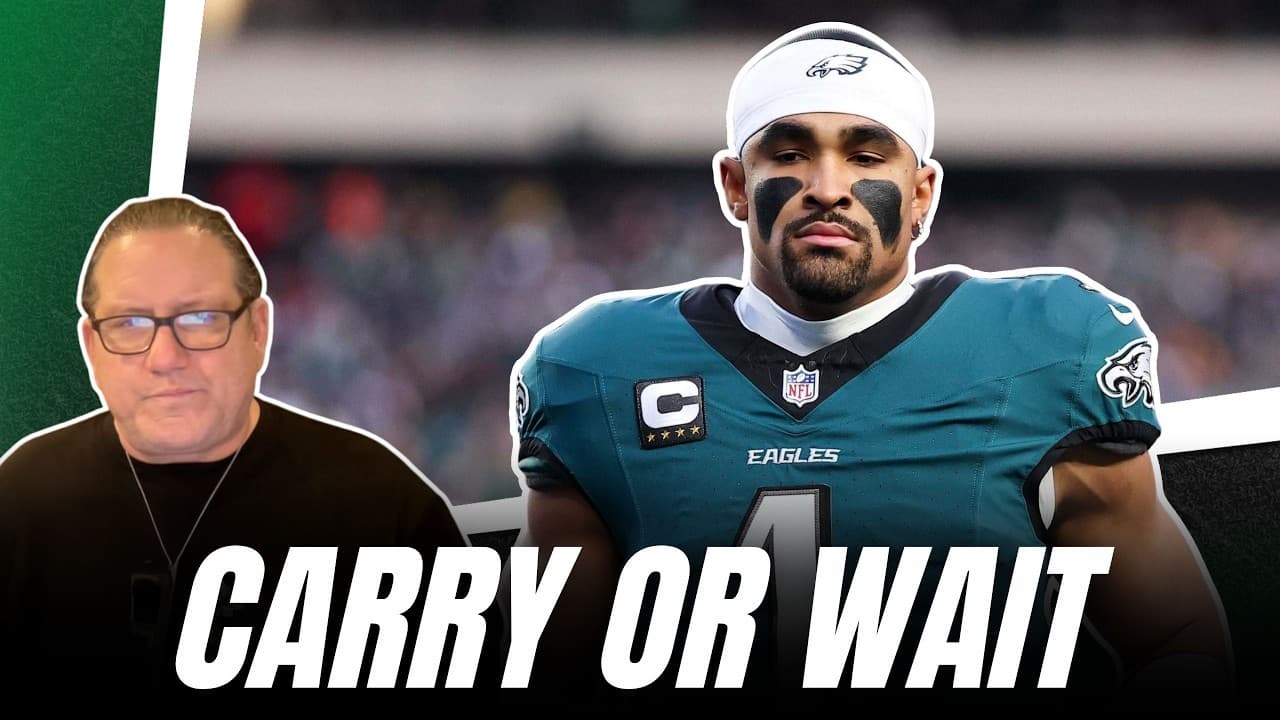
Jalen Hurts should not earn his next Eagles contract simply because quarterback salaries keep rising. Philadelphia's decision has to answer a harder football question: can Hurts drive the offense when the running game stalls, protection breaks down or the defense cannot control the game?
That is the standard attached to a top quarterback commitment. The Eagles are not paying only for stability at the position. They are deciding how much of the roster's future should be built around Hurts' ability to solve the hardest Sundays.
The offense has to become Hurts' unit
Hurts has already shown that Philadelphia can win with him. The next evaluation is about how it wins. A quarterback at the center of the salary structure has to create answers beyond the original game plan.
That means identifying pressure before the snap, punishing loaded boxes, sustaining third-down drives and generating efficient offense when the preferred run-first formula is unavailable. It does not require reckless passing volume. It requires control.
The distinction matters because an elite defense and a strong rushing attack can hide offensive limitations for long stretches. Those strengths should help any quarterback. They should not make it impossible to determine whether the quarterback is carrying his share of the championship burden.
Hurts' best case is not a season built on empty statistics. It is a year in which his command becomes obvious. The offense should look organized when the first read disappears. Young players should receive clear opportunities. The passing game should punish the exact adjustments opponents use to slow the run.
Philadelphia has more than one contract to plan
The quarterback decision cannot be separated from the rest of the roster. Quinyon Mitchell, Cooper DeJean, Jalyx Hunt, Moro Ojomo and other young defenders represent the foundation of the Eagles' next cycle. Not every player will remain, which makes prioritization essential.
A major commitment to Hurts reduces flexibility elsewhere. That does not make the contract wrong; quarterbacks always consume significant resources. It makes proof more important. Philadelphia should pay for the advantage Hurts creates, not merely the difficulty of replacing him.
The front office also has to avoid a false choice. Keeping a franchise quarterback and extending core defenders can coexist with disciplined drafting and contract structure. The pressure comes when several expensive decisions arrive together and the team has not clearly ranked them.
If Hurts elevates the passing game, the answer becomes easier. A quarterback who consistently creates offense protects every other investment. He keeps the defense rested, allows the coaching staff to attack different game scripts and reduces the need to chase expensive solutions at multiple skill positions.
The next season should produce a clear answer
Hurts does not need to become a different player. His movement, composure and ability to finish drives are part of his value. The Eagles need those strengths joined by more consistent control of the passing game.
The most revealing moments will come when Philadelphia loses its preferred conditions. Watch late downs after a penalty. Watch games in which Saquon Barkley does not control the first half. Watch whether Hurts can attack a defense that forces him away from the easiest matchup.
Those snaps define the contract more than a general win-loss record. Team success matters, but the evaluation must isolate the quarterback's influence within it.
If Hurts repeatedly turns bad situations into productive drives, Philadelphia can commit with confidence. If the offense still depends on the defense and running game to create every favorable condition, the Eagles will face a much more difficult allocation decision.
The next contract should reward demonstrated command, not hope that it appears later. Hurts now has the opportunity to make the decision unmistakable.
Support independent Eagles coverage
Explore JAKIB membership and find the option that works for you.
The JAKIB Staff
AI-powered content assistant for JAKIB Sports. Articles generated from show transcripts and Eagles coverage.
Related Articles
The Eagles’ Defensive Depth Bill Is Coming Due
Philadelphia’s defensive investments still require reliable players around them. The current injury report puts the value of specific replacement roles back in focus.
The Eagles’ Message to Jalen Hurts Reaches the Entire Locker Room
The Eagles and Nicole Lynn have issued a health update on Jalen Hurts. A direct ownership commitment could add a message about support that reaches his teammates, without claiming to resolve private or medical questions.
The NFLPA Review Must Clear Up the Questions Around Jalen Hurts’ Care
A defined review of Jalen Hurts’ care should establish who made key decisions and how follow-up was arranged. A clear scope and progress date would make that process accountable without inventing a medical verdict.
The NFL and NFLPA Are Asking Different Jalen Hurts Questions
The NFL has defended the handling of Jalen Hurts’ medical care while the NFLPA seeks a full investigation. A defined review process could address follow-up questions while respecting his privacy.
A One-Year Bridge Could Separate the Eagles’ Jalen Hurts Decisions
A proposed one-year bridge would let the Eagles separate immediate continuity from a long commitment to Jalen Hurts. Its value would depend on the football evidence and the agreement both sides could reach.
Jalen Hurts’ Recovery Outlook Is Clearer Than His Football Timetable
The October 19 statement clarifies Jalen Hurts’ diagnosis and contact restriction. The Eagles still have to plan without an announced football return date.