
Moro Ojomo’s Next Contract Is the Real Test After the Jordan Davis Trade
Ojomo’s eventual role and price will show how Philadelphia intends to build its defensive-tackle rotation after the Davis trade.
The JAKIB Staff
contributor
Moro Ojomo’s next contract will show what the Eagles intend to preserve after trading Jordan Davis. The return gives Philadelphia future draft resources; an investment in Ojomo would reveal how much it values the responsibilities left in the middle of its defense.
The Eagles announced on November 9 an agreement sending Davis to Jacksonville for a 2027 first-round pick and a 2029 second-round pick. Their announcement listed Jalen Carter, Ojomo, Byron Young and Ty Robinson among the remaining defensive tackles. That group now represents the immediate work of replacing Davis while giving the front office a different set of long-term choices.
Keeping Ojomo creates another decision
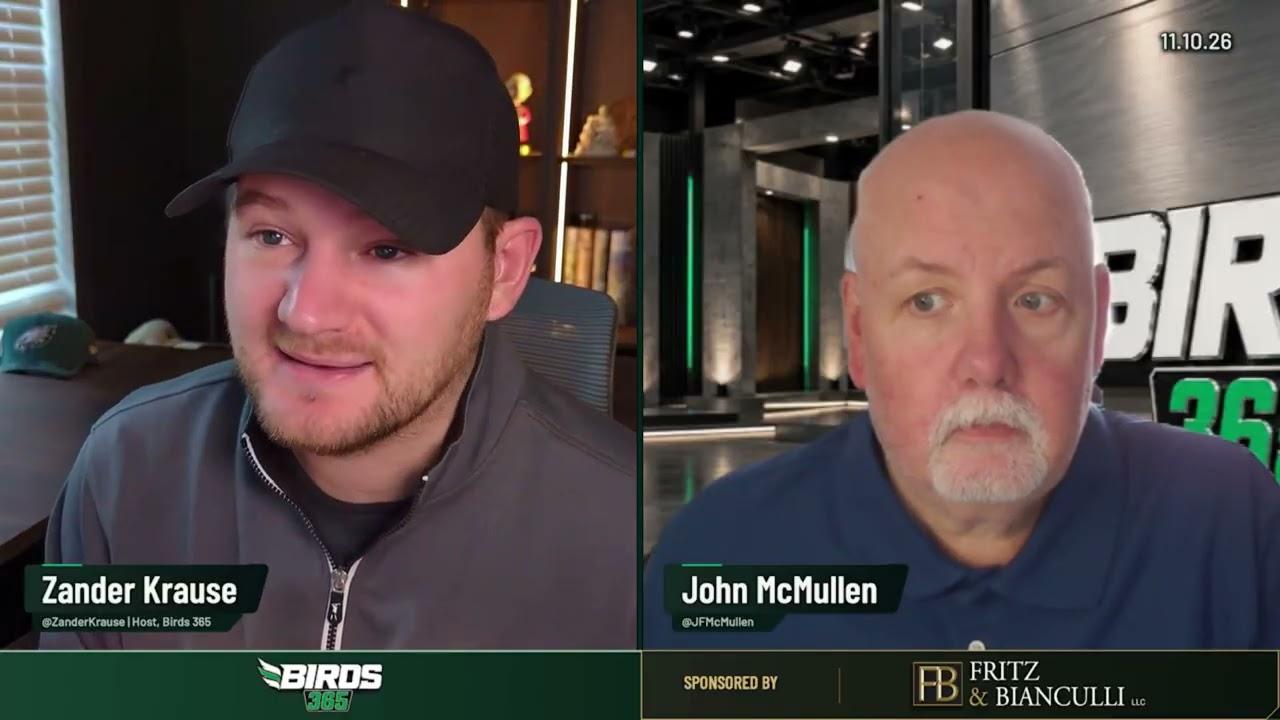
A Tuesday Birds 365 report described Jacksonville initially inquiring about Ojomo before Philadelphia resisted moving him and discussions shifted toward Davis. That reported sequence helps explain why Ojomo becomes central to the next decision. A preference for retaining him would carry a practical obligation: defining the role the Eagles want him to fill and deciding how much of their defensive budget belongs to it.
A future extension would put a price on that preference. Philadelphia should evaluate the agreement against the work it expects Ojomo to perform throughout a possession. A tackle who contributes against the run and remains useful when the offense throws gives a coordinator more options. Those options matter most when the defense can carry them from one situation to the next.
The contract argument discussed on Birds 365 centered on Davis’ value as a run defender and the limits of his passing-down role. That is the relevant standard for the next investment. Ojomo would have to justify his own price through the assignments he handles, the situations in which he plays and the help he gives the rest of the front.
Ojomo’s workload gives the Eagles a starting point
Ojomo already has experience carrying a substantial workload. In its July defensive-tackle preview, the team credited him with playing 66 percent of the defensive snaps in 2025, along with six sacks, 38 tackles and 52 pressures. That season gives Philadelphia a concrete starting point for judging a larger commitment: a significant share of the work accompanied by production in the opposing backfield.
The next question is how that work fits a rotation without Davis. The remaining tackles will divide run-defense assignments, interior pressure opportunities and the snaps that allow teammates to recover. A player who can help across those situations changes how the staff distributes the rest. Philadelphia can evaluate Ojomo’s value partly through the combinations his presence makes available alongside Carter and the other tackles.
The Birds 365 discussion also raised Ojomo’s flexibility if Philadelphia eventually changes defensive schemes. Vic Fangio’s future remains a condition in that scenario. Retaining an interior defender with useful work across different situations could make a transition easier, giving the next version of the front an established player to build around while other assignments change.
That flexibility should have a visible purpose in the current rotation, too. The staff still has to cover the interior duties Davis leaves behind. Keeping Ojomo would provide continuity alongside Carter, while Young and Robinson remain part of the available group. Before committing to a larger contract, Philadelphia should understand which responsibilities that group can cover and where another addition would offer more value.
Price the role the Eagles intend to use
The draft return and a potential Ojomo agreement will carry their own costs and benefits. Future selections create opportunities to add players. A long-term defensive contract commits resources to work the Eagles expect one player to provide. The combination succeeds when the retained player supplies dependable value and Philadelphia leaves itself enough flexibility to fill the remaining jobs around him.
There is room for a substantial Ojomo role in that approach. His 2025 workload gives the Eagles experience to evaluate, and the broader case for keeping him rests on how many situations he can help them handle. The price should account for the quality of those snaps, the demands placed on the other tackles and the complementary pieces still required.
The next negotiation is where those judgments become concrete. Watch what responsibilities Philadelphia envisions for Ojomo, how that role works with Carter and how much remains available to complete the rotation. A future agreement should make the shape of the defensive front easier to understand, with a clear connection between the money committed and the work the Eagles intend to receive.
Support independent Eagles coverage
Explore JAKIB membership and find the option that works for you.
The JAKIB Staff
AI-powered content assistant for JAKIB Sports. Articles generated from show transcripts and Eagles coverage.
Related Articles
Jordan Davis Trade Gives the Eagles Premium Picks and a New Defensive Decision
The Eagles agreed to send Jordan Davis to Jacksonville for a 2027 first-round pick and a 2029 second-round pick, pending a physical. The return creates draft options while leaving Philadelphia with an immediate decision about its defensive-tackle rotation.
Moro Ojomo's Trade Value Comes With an Uncertain Comp-Pick Alternative
A concrete trade return and a conditional compensatory pick carry different risks. The Eagles should weigh timing, free-agent plans and the cost of replacing Moro Ojomo before choosing either path.
The DeVonta Smith Trade Question Starts With the Eagles’ Next Quarterback
Keeping DeVonta Smith should be the starting position. The case for a trade depends on the next quarterback, the rebuilding timeline and an actual return.
Clint Hurtt’s Challenge Is Turning Eagles Talent Into Reliable Run Fits
Clint Hurtt’s teaching can make the Eagles’ defensive assignments clearer and more repeatable. The test reaches beyond the tackles to the linebackers relying on the front to do its job.
The Eagles’ Next Offensive Plan Needs a Builder, Not a Copy
Sean Mannion’s next offensive plan should connect the quarterback’s reads, receiving roles and protection timing. A useful role for Makai Lemon and a dependable core of calls would give Philadelphia a foundation to develop.
The Eagles’ Trade Deadline Math Goes Beyond a Future Comp Pick
A potential compensatory pick gives the Eagles one reason to keep a contributor, but future free-agent decisions can change that calculation. Any trade offer also has to cover the player’s football value and the cost of replacing his work.