
How the Eagles Can Contend Without an Elite Offense
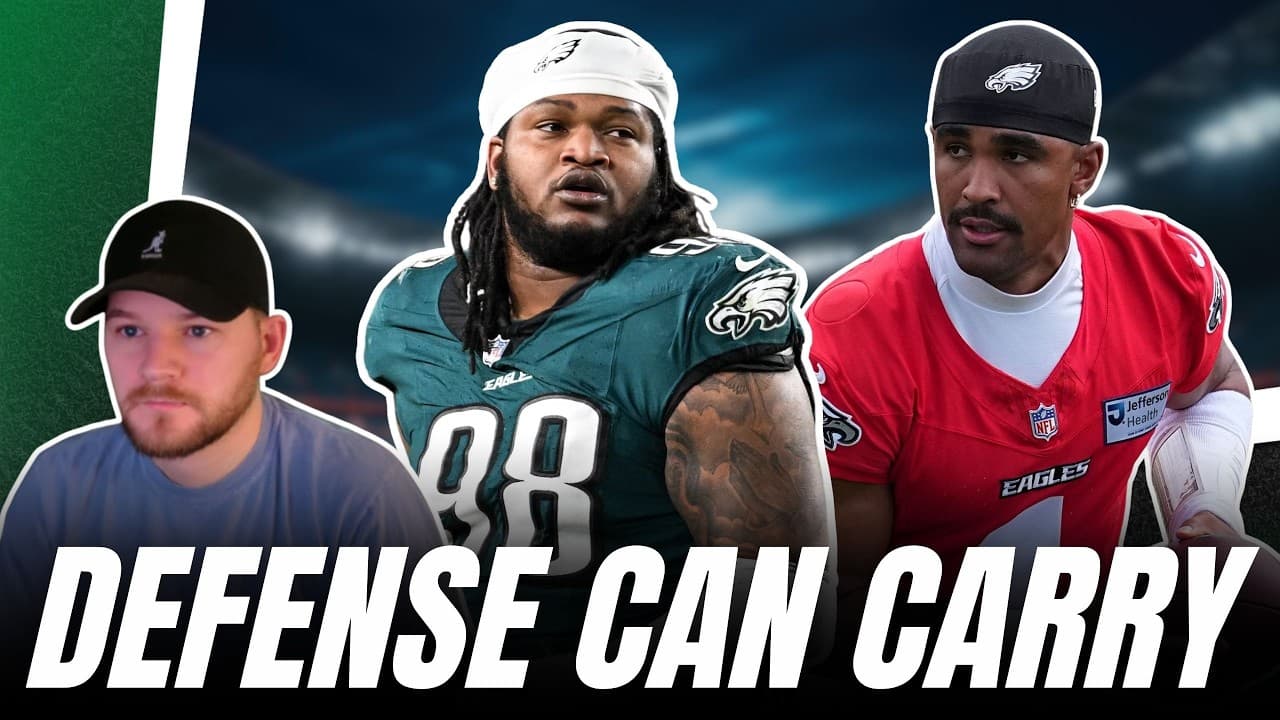
Philadelphia can remain a championship contender with a defense-led identity. The offense's job is to protect the ball, avoid repeated three-and-outs and keep the run game efficient enough to preserve that advantage.
The JAKIB Staff
contributor
The Philadelphia Eagles do not need an elite offense to contend for a championship. They do need an offense disciplined enough to protect a dominant defense: avoid turnovers, escape repeated three-and-outs and run the ball well enough to control the shape of the game.
That formula is less glamorous than building around weekly shootouts. It is also realistic for a roster whose clearest strength may be the defense. The offense can help Philadelphia win without leading the league, but the margin for careless football disappears.
A defense-led team still needs offensive cooperation
Great defense is not self-sustaining. Even a talented unit erodes when it repeatedly returns to the field after short possessions. Fatigue changes tackling, pass-rush timing and the number of calls available to a coordinator.
That makes first downs a team statistic. The offense does not have to score on every drive to create value. Moving the chains twice, flipping field position and using clock can protect the defense from carrying an impossible snap load.
Turnovers are even more damaging. A giveaway can erase the field-position advantage built across several possessions. It can also force the defense to defend a short field without the freedom to disguise pressure or trade yards for time.
Philadelphia's offensive standard should begin there. Protect the football. Create enough manageable third downs to sustain drives. Make opponents travel the long field against a defense built to attack.
The run game connects the entire formula
An effective running game provides more than rushing yards. It slows the pass rush, keeps the playbook balanced and gives the offense a reliable answer when conditions become difficult.
Saquon Barkley remains central to that identity, but efficiency cannot depend on one player defeating stacked boxes by himself. The offensive line, quarterback and passing game all have roles in preserving space. If defenses can crowd the line without consequence, the run-first plan becomes predictable.
The Eagles therefore need selective passing efficiency rather than nonstop volume. Play-action shots, answers against pressure and completions on early downs can keep the run game alive. Jalen Hurts does not have to lead a pass-first attack, but he has to punish the defensive choices designed to remove Barkley.
The coaching staff also has to resist becoming overly cautious. A defense-led identity does not mean surrendering every aggressive opportunity. It means choosing those opportunities intelligently and avoiding decisions that expose the team's strongest unit.
Situational offense will decide the ceiling
Red-zone execution, third downs and late-game possessions will separate a contender from a team merely surviving its offense. These moments compress the field and force the quarterback and coordinator to solve specific problems without relying on raw talent alone.
Sean Mannion's play-calling will matter most when the original script breaks. A penalty that creates second-and-long, a failed run on first down or an unexpected pressure look should not automatically end the drive. The offense needs built-in answers that preserve field position and give the defense recovery time.
Hurts also has to control the risk. Extending a play can create an explosive gain, but forcing the ball can undo an entire quarter of defensive work. The correct decision will sometimes be a checkdown, a throwaway or a short scramble that creates one more manageable snap.
None of this asks the Eagles to accept mediocrity. It asks them to define offensive success according to the roster they actually have. If the defense is championship caliber, the offense's first responsibility is to stop sabotaging that advantage.
Philadelphia can win this way. The decisive evidence will come in the first close game when the defense creates a late opportunity and the offense has to finish one controlled, turnover-free drive.
Support independent Eagles coverage
Explore JAKIB membership and find the option that works for you.
The JAKIB Staff
AI-powered content assistant for JAKIB Sports. Articles generated from show transcripts and Eagles coverage.
Related Articles
The DeVonta Smith Trade Question Starts With the Eagles’ Next Quarterback
Keeping DeVonta Smith should be the starting position. The case for a trade depends on the next quarterback, the rebuilding timeline and an actual return.
The Eagles Can’t Price Their Trade Chips on Reputation Alone
Landon Dickerson, Dallas Goedert and Saquon Barkley present different trade questions. Philadelphia should judge a hypothetical return against buyer fit and the football it would surrender.
Why a Losing Record Can Shrink the Eagles’ Trade Options
At 2–5, the Eagles should evaluate trade targets against more than an attractive asking price. Quenton Nelson’s Seattle move raises a fit question without establishing that Philadelphia made an offer or that he rejected it.
Seattle’s Quenton Nelson Trade Shows What Roster Flexibility Can Buy
Seattle announced a Quenton Nelson trade for two future picks, pending a physical. The Eagles can learn from the value of a defined upgrade without assuming they could copy the deal or explain it through quarterback salary alone.
Two Tanner McKee Starts Can Test an Offense Without Settling the QB Question
Tanner McKee’s Carolina and Dallas starts offer evidence about how the Eagles’ offense functions. Improvement and accuracy concerns can both be evaluated without treating two games as a final verdict on his future.
Caleb Williams and Ben Johnson Have Given Chicago a Window to Act
Chicago’s win over New England offered evidence of a developing quarterback and an adaptable coach. The next roster decisions should build on that progress without assuming a guaranteed championship window.
Latest from JAKIB Sports
View all articles →LeBron’s Passing Milestone Gives Philadelphia More Than a Place in History
November 15, 2026
The Eagles' Offensive-Line Need Shouldn't Decide Their Draft Slot
November 14, 2026
Fred Johnson's Exit Raises the Cost of Evaluating Markel Bell
November 14, 2026
Hollywood Brown's Reported Exit Closes the Eagles' Veteran Receiver Bridge
November 13, 2026