
The Eagles' Offensive-Line Need Shouldn't Decide Their Draft Slot
Philadelphia can prioritize its offensive line without forcing a lineman at its earliest pick. The better decision matches the player grade, the selection price and the alternatives.
The JAKIB Staff
contributor
An offensive-line problem can make a draft priority obvious. It cannot tell the Eagles which selection a particular lineman is worth.
That distinction should guide Philadelphia's next draft. The team needs a plan for improving protection, but choosing a position first and working backward toward a player invites an expensive mistake. A prospect should earn the value attached to the pick through the evaluation of his actual game.
The Eagles' announcement of the Jordan Davis trade says Philadelphia has two first-round selections in 2027. That creates more than one opportunity to address the line. It also creates several ways to match a prospect to an appropriate price.
A need can shape the board without rewriting the grade
Treating a hypothetical No. 5 pick as an automatic offensive-line selection skips the core comparison: whether the available linemen deserve that investment compared with players at other positions.
Public discussion of private scouting rankings cannot answer that question for Philadelphia. Those rankings are not independently authenticated team evaluations, and they should not become a declaration that no lineman belongs in the top five. The Eagles' own evaluations could differ.
The useful principle survives those limits. If the Eagles genuinely grade a tackle among the best choices at their selection, taking him can serve both value and need. If they grade him substantially lower, the urgency of fixing the line should not quietly raise his evaluation.
Imagine a hypothetical fifth pick with one lineman available whom Philadelphia considers a strong starter but places below several remaining prospects. Selecting him could still require an argument about scarcity, fit and the alternatives. Simply pointing to the current line would leave the most important part of that argument unfinished.
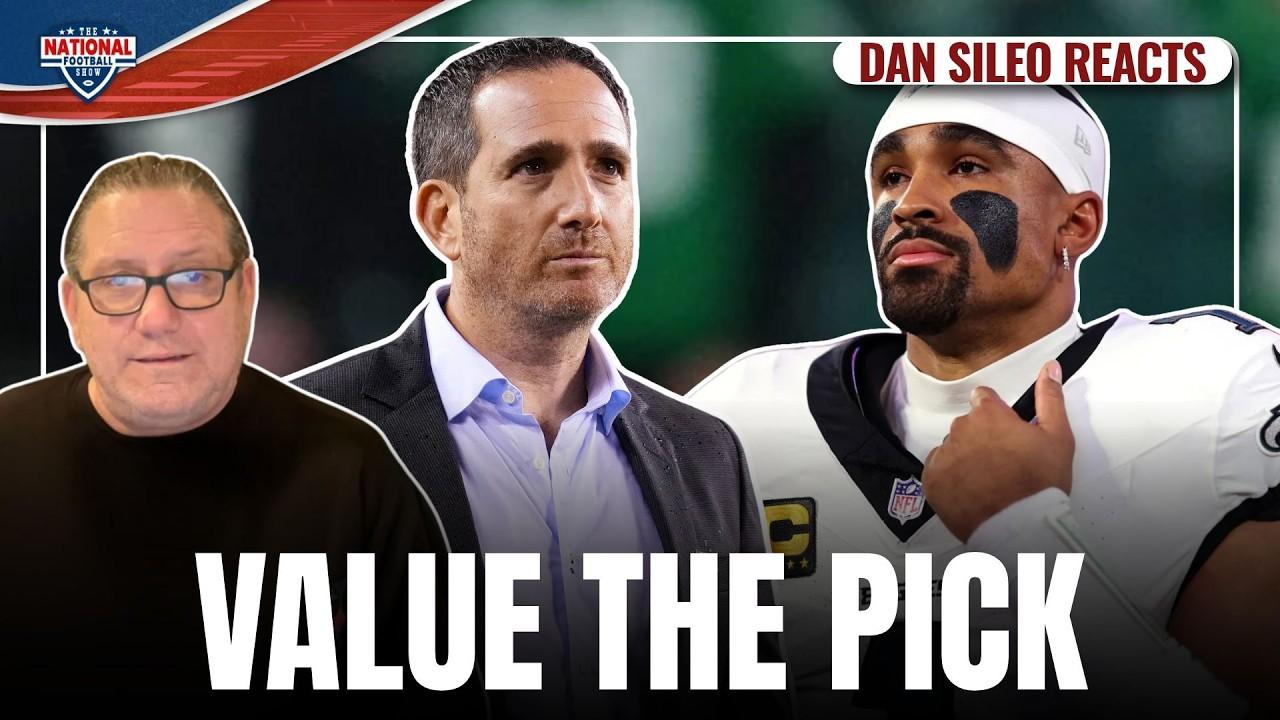
<!-- youtube-embed: https://www.youtube.com/watch?v=tNksW_KPu7M -->
Staying put should require a convincing player comparison
A high selection gives the Eagles access to players who may be unavailable later. Trading away that access has a cost, even when the return includes more picks.
If Philadelphia identifies a player whose grade separates him from the remaining group, staying can be the stronger choice. That player could be a lineman. It could also be a player at another position who offers enough value to justify addressing the line through a different selection.
The comparison should include the intended job. A tackle evaluated for immediate work on the edge and an interior blocker projected for a different responsibility do not solve the same problem. Calling both offensive linemen is too broad to explain why either deserves a particular pick.
Philadelphia should know what it expects the prospect to handle, what needs teaching and which existing responsibilities would change around him. That makes the grade meaningful to the roster rather than an abstract ranking detached from the role.
Moving down needs a return and an acceptable landing
Trading down becomes attractive when the likely players at the new position remain close enough in value to the original options. The extra compensation then gives Philadelphia another chance to improve the roster.
But a lower pick cannot be treated as a reservation for a favorite lineman. Another team can select that player first. The Eagles would need several outcomes they could accept after moving, along with a willing partner offering enough compensation.
Consider a hypothetical move from the top five into the middle of the round. If Philadelphia would remain comfortable choosing among multiple suitable prospects there, the deal could match its evaluations more efficiently. If only one player makes the move worthwhile, the risk is much greater.
There is no verified trade offer attached to that example. It illustrates the decision the team would face, rather than predicting a deal or a precise return.
The other first-rounder is part of the same plan
Two selections allow the Eagles to compare combinations. Taking a highly graded player early and a lineman later could produce a better overall result than forcing the line first and accepting whatever remains at the next pick.
The reverse could also be true if the lineman carries the stronger early grade. Each route needs a credible second step, including what happens if a preferred prospect disappears before the later selection.
No. 5 and a later first-round slot remain planning examples here, not final draft positions. The board and available choices can change before April. Philadelphia should prepare several combinations and keep testing the assumptions behind them.
The offensive line deserves serious investment. The best expression of that priority is a player whose role, grade and price make sense together, followed by a development plan that gives the investment a chance to work.
Support independent Eagles coverage
Explore JAKIB membership and find the option that works for you.
The JAKIB Staff
AI-powered content assistant for JAKIB Sports. Articles generated from show transcripts and Eagles coverage.
Related Articles
The Eagles Still Need an Evaluation Window for Keyshawn James-Newby
Keyshawn James-Newby has already played NFL snaps. With Arnold Ebiketie staying after a called-off trade, the Eagles still have a developmental rotation choice.
The Giants’ Free Rushers Put the Eagles’ Offensive-Line Coaching Under Scrutiny
Two documented Arvell Reese sacks expose different protection questions after the Eagles’ 19–11 loss. Chris Kuper’s evaluation should distinguish an unblocked rush from a lost matchup and show whether the staff can teach the correct response.
Joe Milton’s First Start Exposed an Offense That Needs to Get Simpler
Joe Milton’s first start put the Eagles’ protection and teaching under scrutiny. A simpler offense can give an inexperienced quarterback clearer answers without hiding the tradeoffs.
The Eagles Need an Evaluation Plan for Their Young Players
The Eagles should give young players defined jobs and meaningful opportunities to show progress. Availability, clear teaching and comparable assignments matter more than an empty snap total.
The Eagles’ Next Offensive Plan Needs a Builder, Not a Copy
Sean Mannion’s next offensive plan should connect the quarterback’s reads, receiving roles and protection timing. A useful role for Makai Lemon and a dependable core of calls would give Philadelphia a foundation to develop.
Tanner McKee Needs a Pocket Before the Eagles Can Judge This Offense
Tanner McKee needs protection and a receiving answer he can use against Dallas pressure. The Eagles should give him those opportunities Monday, then hold him accountable for the available throws.
Latest from JAKIB Sports
View all articles →Fred Johnson's Exit Raises the Cost of Evaluating Markel Bell
November 14, 2026
Hollywood Brown's Reported Exit Closes the Eagles' Veteran Receiver Bridge
November 13, 2026
The Eagles' Special-Teams Grade Is About More Than the Kicking Game
November 13, 2026
Quinyon Mitchell Gives the Eagles a Standard for Rebuild Cornerstones
November 13, 2026