
The Eagles' Quarterback Search Still Depends on Who Enters the Draft
Philadelphia can evaluate college quarterbacks now. A credible replacement plan still depends on which prospects enter the draft and how they weigh another college season against an NFL start.
The JAKIB Staff
contributor
Philadelphia can fall in love with a college quarterback this November. It cannot put him on the Eagles' roster by winning the argument about Jalen Hurts.
That gap should shape the entire quarterback search. A list of intriguing prospects offers possibilities. The players who actually enter the draft determine whether any of those possibilities becomes a workable plan.
The Eagles should scout aggressively and challenge every assumption about their future. They should also resist promising a replacement before knowing whether the preferred player wants an NFL job next spring. College return decisions can change the choices without changing a single scouting grade.
A scouting list is bigger than the available class
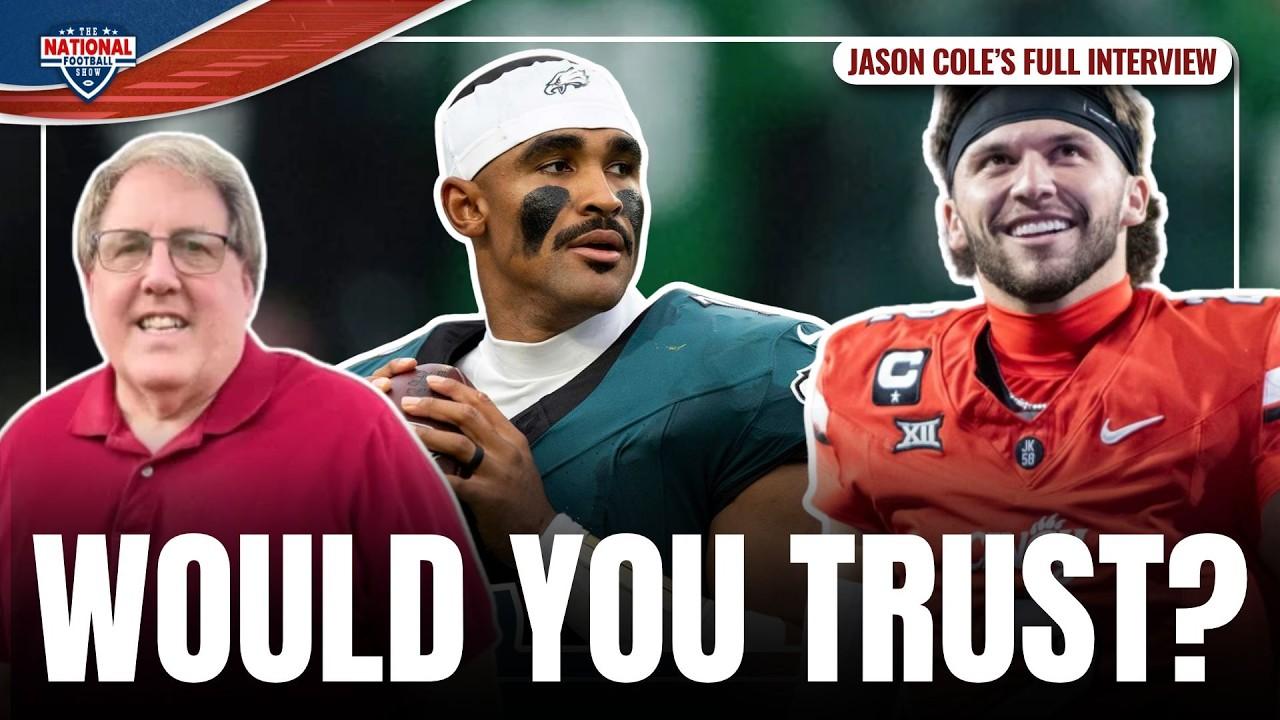
Oklahoma State lists Drew Mestemaker on its current roster, and Oregon lists Dante Moore. Those official pages establish their college affiliations. Neither roster listing should be treated as a draft declaration.
That distinction gets lost when a quarterback ranking becomes a proposed Eagles depth chart. An evaluator can prefer one passer's upside and still have no certainty that Philadelphia will get a chance to draft him.
The NFL's eligibility rules require players to be at least three years out of high school. Underclassmen and graduates with eligibility remaining can request early entry. Meeting the eligibility threshold and choosing to enter are separate steps.
Imagine Philadelphia grades three quarterbacks as potential long-term answers. If two return to college, the remaining prospect does not automatically become a better player. He becomes the only available member of that preferred group. Paying more attention to him is reasonable; raising his grade simply because the alternatives disappeared is dangerous.
The same applies if several prospects enter. A deeper class could expand the choices, but it would not establish that every quarterback suits the Eagles. Availability opens the evaluation. It does not finish it.
College money and the NFL clock pull in different directions
Consider a hypothetical quarterback weighing a substantial college compensation offer against entering the draft. Another season could bring immediate income, more starts and a chance to improve the weaknesses NFL evaluators identify. There is a serious argument for staying when the development plan is convincing.
There is also a serious argument for leaving. A player can begin learning NFL protections, practicing against professional defenders and adjusting to the speed of an NFL week. Those experiences have value even when his first season includes more learning than playing.
The contract clock belongs in that comparison. Under the NFL's rookie-contract rules, drafted players receive four-year deals, with a club fifth-year option for first-round selections. Starting that contract sooner can move a player toward later career decisions sooner, although it guarantees neither a second contract nor success.
A college offer and an NFL contract therefore cannot be compared by placing two annual dollar figures beside each other. The player must weigh development, role, contract length and the risk that his projected draft position changes. Philadelphia should expect different quarterbacks to reach different conclusions.
A prospect's best personal decision may remove him from the Eagles' immediate plans, whatever the compensation offer.
Keep a quarterback plan for each possible class
Philadelphia should prepare distinct paths while those choices remain unsettled. One could involve a rookie the organization genuinely wants to develop. Another could involve a suitable veteran, if available. Keeping Hurts in the longer-term discussion also requires its own football evaluation rather than serving as the leftover answer after other ideas fail.
Each path needs a purpose. If the Eagles pursue a rookie, what responsibilities would he be taught first, and who would handle the position while he learns? If they pursue a veteran, is the goal continuity, competition or time to develop another player? Those questions can be answered before a final draft pool exists.
Philadelphia should avoid committing to a replacement before confirming that the player will enter the draft. Frustration with the present does not make a preferred college quarterback available.
The scouting work should continue now. The commitment should follow the actual choices. Before the Eagles can decide which prospect changes their future, that prospect has to choose an NFL future of his own.
Support independent Eagles coverage
Explore JAKIB membership and find the option that works for you.
The JAKIB Staff
AI-powered content assistant for JAKIB Sports. Articles generated from show transcripts and Eagles coverage.
Related Articles
Keeping Nick Sirianni Would Shape the Eagles’ Next Coordinator Search
Keeping Nick Sirianni would also shape the job the Eagles could offer an offensive coordinator. A future search would require clear answers about authority, expectations and the head coach’s uncertain footing.
The Eagles’ Extra Draft Picks Create a Quarterback Trade-Up Decision
Philadelphia has more flexibility to pursue a quarterback, but spending that flexibility carries a roster cost. The Eagles should settle the football and coaching requirements before choosing between a trade-up, their existing draft position, a veteran or more help around the position.
The Eagles’ Backup Quarterback Problem Is Bigger Than One Bad Start
The Eagles invested in backup quarterbacks. The harder question is whether practice work, scheme fit and a usable replacement plan prepared the offense to function when the quarterback changed.
Nick Sirianni's 48-Hour Quarterback Reversal Creates a Credibility Problem
Sirianni backed Tanner McKee on Monday before the reported switch to Joe Milton on Wednesday. Explaining the football purpose now carries consequences for his next public commitment.
The DeVonta Smith Trade Question Starts With the Eagles’ Next Quarterback
Keeping DeVonta Smith should be the starting position. The case for a trade depends on the next quarterback, the rebuilding timeline and an actual return.
A First-Round Quarterback Wouldn’t Fill the Eagles’ Other Roster Holes
A first-round quarterback would leave Philadelphia with important work at other positions. Separating starting upgrades from competition and depth gives the Eagles a more useful plan than treating one selection as a complete reset.
Latest from JAKIB Sports
View all articles →The Eagles Still Need an Evaluation Window for Keyshawn James-Newby
November 12, 2026
Jalen Carter’s Next Test Is the Work Jordan Davis Leaves Behind
November 12, 2026
Moro Ojomo Is the Eagles’ Next Defensive-Line Price Test
November 12, 2026
Dallas’ Coaching Problem Runs Deeper Than Replacing Brian Schottenheimer
November 12, 2026