
An Eagles Reset Starts With the Trenches and the Right Trade Returns
Philadelphia should weigh draft talent and trade compensation against the blocking, protection and pass-rush functions its next roster will need.
The JAKIB Staff
contributor
An Eagles reset should begin with a clear picture of the team they want to build. Draft excitement and trade-deadline frustration are understandable, but neither supplies a roster plan on its own.
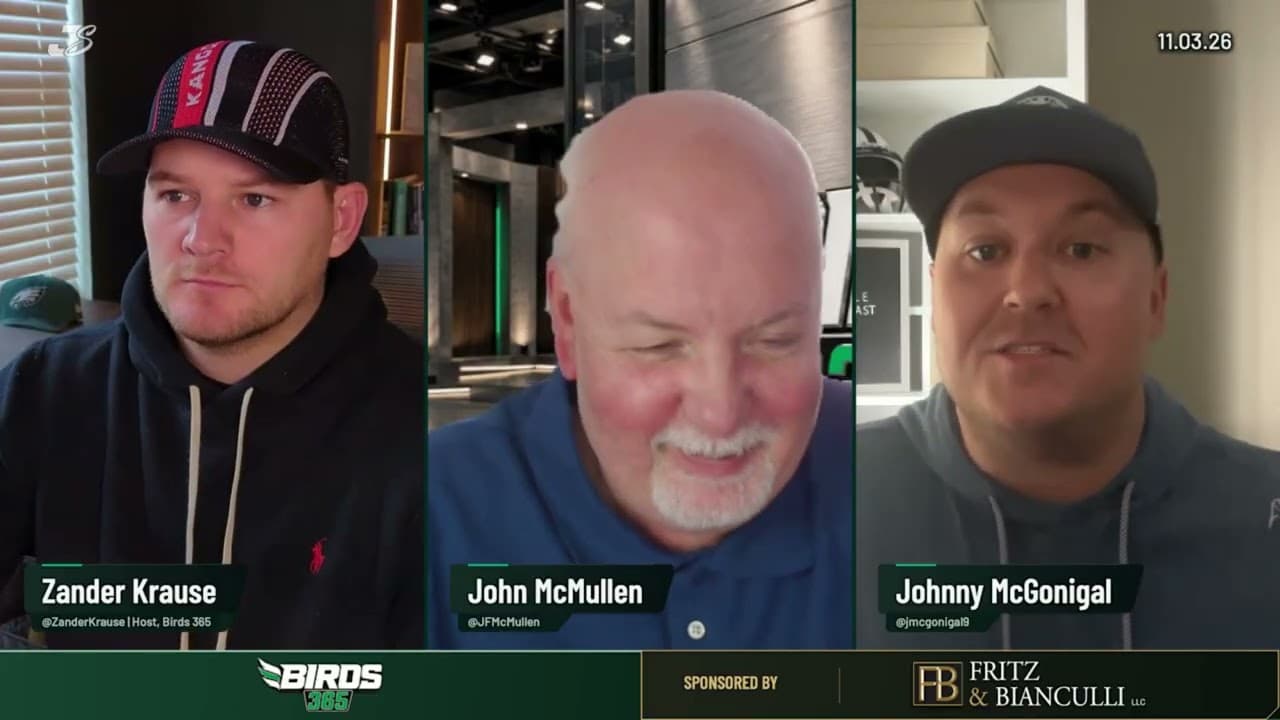
The Birds 365 debate put the offensive and defensive fronts at the center of that plan. It also raised a harder question about selling veterans: what does Philadelphia gain, and what useful work would leave with the player?
The NFL trading deadline is November 10 at 4 p.m. Eastern. That creates a decision window. It does not require the Eagles to dismantle their roster, accept the first available offer or pretend that every future pick has the same value.
Draft talent still needs a functioning offense
The show's draft discussion weighed the appeal of an exceptional receiving talent against the need for offensive linemen and pass rushers. That is a worthwhile argument without assuming where Philadelphia will pick or which prospects will be available.
An explosive receiver can change how defenses allocate attention. He can create easier throws for the quarterback and space for teammates. Those are real reasons to consider a highly graded skill player, even for a team with problems elsewhere.
But an offense still needs enough protection to use those advantages. A receiver's separation loses value if the quarterback has already been forced off his spot. A creative route combination cannot rescue every snap that breaks down before the throwing window arrives.
The same reasoning applies on defense. A secondary benefits when the front prevents a quarterback from waiting comfortably for a second opportunity. Improving the trenches can therefore raise the usefulness of players already on the roster.
Philadelphia should resist turning that principle into an inflexible draft commandment. Reaching for an inferior lineman would create another problem. The goal is to understand the difference between the best individual prospect and the best opportunity to improve the whole team, then weigh both honestly.
Trade returns must account for the next roster
The trade discussion distinguished between moving a player who remains part of a future core and considering an offer for someone who might not fit the next roster. The distinction matters more than the emotional appeal of declaring a selloff.
If the Eagles believe a player will remain valuable in their next competitive window, trading him should require a return that reflects the cost of replacing him. A struggling season does not make dependable talent disposable.
If the organization expects to move on from a player, an available return deserves serious consideration. Even then, the useful question is what that return buys. Philadelphia would be exchanging a known contribution for a future opportunity, with all the uncertainty that accompanies it.
That evaluation should include the remaining lineup. Removing one capable blocker can make it harder to judge a quarterback or younger receiver. Taking away a dependable defensive assignment can increase the workload on developing teammates. Those consequences belong beside the offered compensation.
The current level of play is already forcing difficult roster questions. The Eagles should answer them by comparing real offers with the team they could field afterward. Trading a useful player simply to signal a new direction would be a poor substitute for that work.
Goedert makes the replacement question concrete
Dallas Goedert supplied the strongest counterpoint to an automatic sell-now argument. The discussion considered moving him for a return, then pushed back: the Eagles would still need tight ends who can perform the work their offense requires.
That is a more demanding question than whether another tight end can catch a pass. The position can affect run blocking, protection and the credibility of a formation. A receiving option who cannot handle a blocking assignment may restrict the calls available when he enters the game.
The show's criticism of the tight-end room focused on that fit. It questioned whether the collection of skills matches the offense's demands, rather than treating one late reception as proof that the construction works.
If Philadelphia entertains a Goedert offer, it should compare the return with the cost of replacing those functions. Keeping him could be reasonable if the alternatives would leave the offense less coherent. Moving him could be reasonable if the compensation and replacement plan support the next roster. Neither conclusion follows automatically from the team's record.
The broader lesson reaches Howie Roseman's entire evaluation. Adding talent is only part of building an offense; the players' assignments have to complement one another. The draft board, trade decisions and coaching approach should reflect the same football plan.
A reset would be easier to defend if Philadelphia could explain how its next group will block, protect and pressure more consistently. The strongest return is the one that helps build that team, rather than simply making deadline day look busy.
Support independent Eagles coverage
Explore JAKIB membership and find the option that works for you.
The JAKIB Staff
AI-powered content assistant for JAKIB Sports. Articles generated from show transcripts and Eagles coverage.
Related Articles
The Eagles’ Pass Rush Is Failing the Players Behind It
A cleaner pocket stretches every coverage assignment. Philadelphia needs coordinated pressure while still correcting tackling, leverage and communication.
Joe Milton Offers a Different Test for the Eagles’ Broken Offense
Joe Milton would give the Eagles another set of tools, but a quarterback change still requires a workable plan. The next Giants game and the bye provide a decision point, not proof that a switch is coming.
Jalen Carter’s Dallas Matchup Shows the Cost of Losing With Strength
Jalen Carter’s Dallas matchup raises a specific technique question: what happens when the first surge fails? A timely counter offers a more useful correction than unsupported claims about effort or emotion.
A First-Round Quarterback Wouldn’t Fill the Eagles’ Other Roster Holes
A first-round quarterback would leave Philadelphia with important work at other positions. Separating starting upgrades from competition and depth gives the Eagles a more useful plan than treating one selection as a complete reset.
Two Tanner McKee Starts Can Test an Offense Without Settling the QB Question
Tanner McKee’s Carolina and Dallas starts offer evidence about how the Eagles’ offense functions. Improvement and accuracy concerns can both be evaluated without treating two games as a final verdict on his future.
The Eagles’ Defensive Reset Starts in Front of the Linebackers
Dallas rushed for 204 yards in a 38–21 win, putting the Eagles’ defensive front at the center of the correction. Better interior execution and coordinated pressure alternatives address different parts of the same failure.