
Tanner McKee’s Evaluation Has to Account for How Backups Prepare
Tanner McKee’s practice role belongs in his evaluation alongside protection and individual execution. Philadelphia can account for preparation without excusing mistakes or inventing repetition totals.
The JAKIB Staff
contributor
The Eagles should judge Tanner McKee on the decisions and throws he controls while accounting for how he prepared to run their offense. Protection, play design and practice work all shape the job Philadelphia is asking him to do.
That distinction matters whenever Philadelphia weighs a backup’s performance against a starter’s expectations. A quarterback can know the playbook and still have less experience delivering its calls, timing and adjustments with the players around him. Understanding that gap should sharpen the review. It should not erase a missed read or turn every bad possession into someone else’s fault.
Scout-team work serves a different purpose
In an October 15 Eagles report, McKee described starter practice repetitions and meetings as a benefit compared with backup preparation. He also explained that backup and third-string work includes substantial scout-team duty, while starting brings more opportunities to run Philadelphia’s own huddle.
Scout-team work helps prepare a defense for an opponent. Running the installed Eagles offense prepares a quarterback to operate Philadelphia’s calls with Philadelphia’s players. Both involve football decisions, but they do not rehearse the same job.
Consider a hypothetical pressure look. Recognizing an extra rusher is one step. Communicating the answer, knowing which receiver will adjust and delivering the ball on that timing are additional steps. A quarterback’s general understanding can outpace his familiarity with that exact sequence alongside the starting offense.
That is a reason to examine preparation closely. It is not evidence that McKee received a particular number of repetitions. An estimate cannot establish his actual practice workload.
The Eagles also provide their own offensive work
Philadelphia builds its own offensive work into a backup’s week, too. In his October 16 press conference, Nick Sirianni described daily developmental periods and situational work involving the first offense against the second defense. He distinguished scout-team assignments from hearing and executing Philadelphia’s own calls.
The relevant question is therefore how the available work prepares a quarterback for his responsibilities. Saying a backup gets no work in his own offense would discard the coach’s description of the process.
An October 22 Eagles report described McKee receiving more full-week repetitions and meeting work ahead of Dallas. McKee emphasized earning teammates’ trust, leading the huddle, operating efficiently and avoiding negative plays.
Those comments identify useful standards for an evaluation. Does the call reach the huddle clearly? Does the offense line up with enough time to handle a change? Can the quarterback deliver a routine completion without turning it into a more difficult play? Coaches can assess those details even when the final result of a possession disappoints.
More preparation should also raise the standard over time. A limitation that deserves context in an initial opportunity should become a coaching target, with progress judged against the specific mistake.
Separate the protection problem from the quarterback’s answer
A fair review starts by asking what each player was responsible for on a particular snap. If protection loses immediately, the evaluator should identify whether the quarterback had a realistic answer before treating the result as a simple failure to execute.
If the protection gives him the required opportunity and the correct receiver is available, preparation cannot excuse an inaccurate throw. If an adjustment was his responsibility, the review should establish whether he recognized and communicated it. A receiver’s route error and a quarterback’s late decision can produce similar-looking incompletions while demanding different corrections.
The actual call determines how to assign responsibility. A protection review should establish who identified the rush, who owned the extra defender and whether the receiver supplied the expected route adjustment. Changing quarterbacks leaves those blocking and receiving jobs on the field.
Philadelphia should make that review useful to its next practice plan. Identify the pressure answer, timing concept or communication sequence that requires more work, then give the quarterback a clear opportunity to demonstrate improvement.
The next meaningful McKee evaluation should ask whether those specific corrections survive game speed. That gives the Eagles something firmer to act on than either a blanket excuse about repetitions or a verdict that ignores how backups prepare.
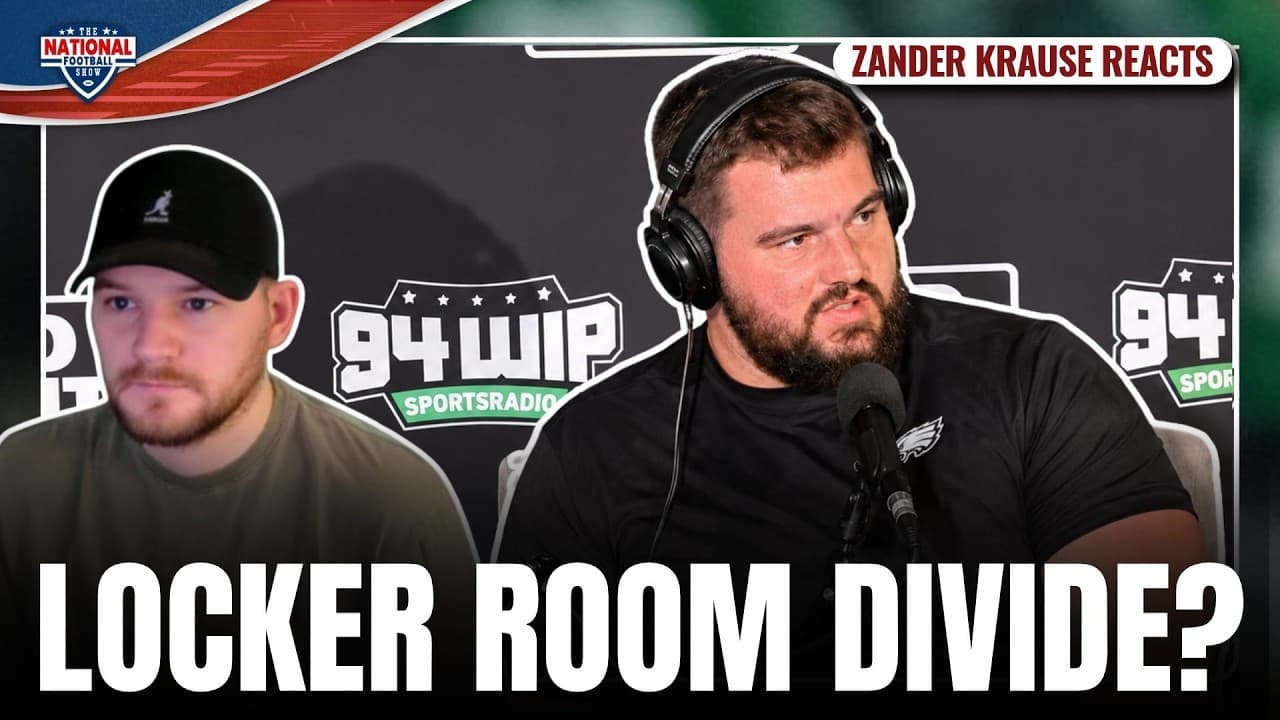
Watch the full National Football Show discussion.
Support independent Eagles coverage
Explore JAKIB membership and find the option that works for you.
The JAKIB Staff
AI-powered content assistant for JAKIB Sports. Articles generated from show transcripts and Eagles coverage.
Related Articles
The Eagles’ Bye Week Leaves the Door Open for Changes
The Giants game gives Philadelphia another evaluation before the bye. Any quarterback or play-calling change should solve a defined football problem.
Joe Milton Offers a Different Test for the Eagles’ Broken Offense
Joe Milton would give the Eagles another set of tools, but a quarterback change still requires a workable plan. The next Giants game and the bye provide a decision point, not proof that a switch is coming.
The Eagles’ Backup Plan Has to Fit the Offense
The Eagles should evaluate their backup quarterbacks by what each allows the offense to keep doing. Dallas provided productive Tanner McKee possessions, while leaving a larger question about continuity behind Jalen Hurts.
A First-Round Quarterback Wouldn’t Fill the Eagles’ Other Roster Holes
A first-round quarterback would leave Philadelphia with important work at other positions. Separating starting upgrades from competition and depth gives the Eagles a more useful plan than treating one selection as a complete reset.
Two Tanner McKee Starts Can Test an Offense Without Settling the QB Question
Tanner McKee’s Carolina and Dallas starts offer evidence about how the Eagles’ offense functions. Improvement and accuracy concerns can both be evaluated without treating two games as a final verdict on his future.
Makai Lemon’s Role Cannot Disappear When DeVonta Smith Returns
Makai Lemon’s seven catches and first NFL touchdown give the Eagles a designed receiving role to develop. His motion and middle-field opportunities should remain part of the plan when DeVonta Smith is available again.