
Why the Eagles Still Have a Receiver Problem After DeVonta Smith
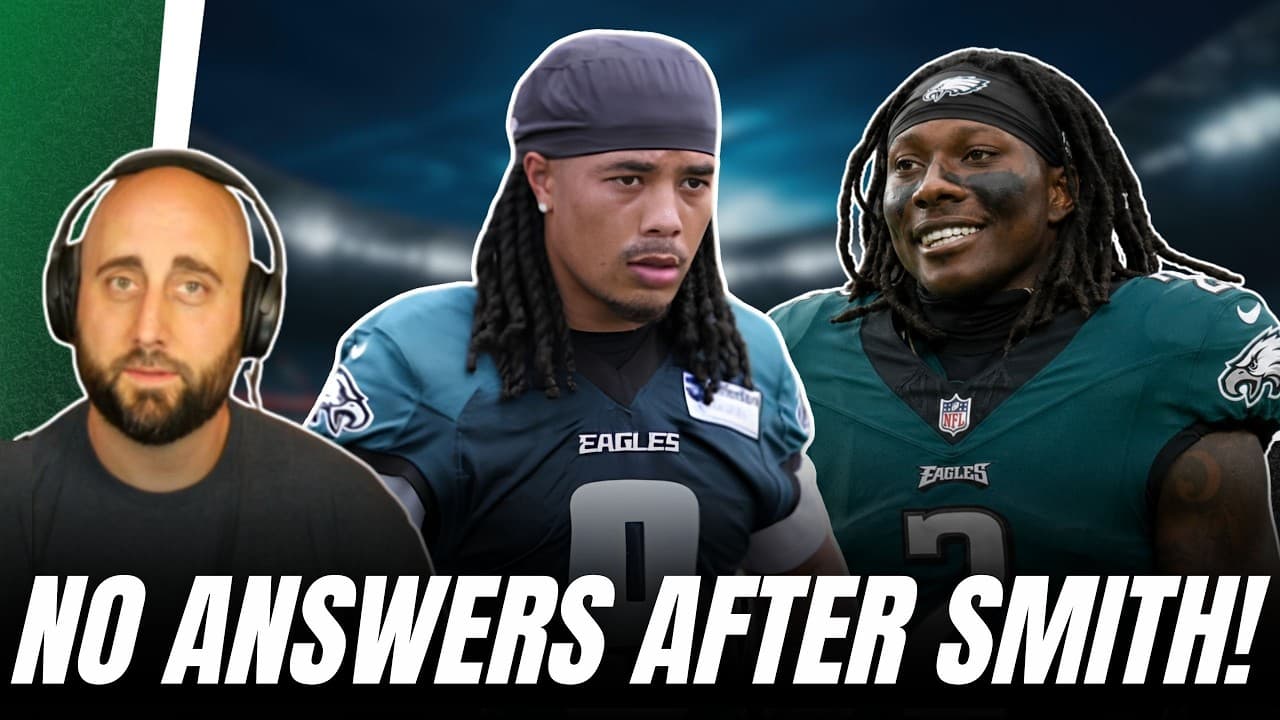
DeVonta Smith gives the Eagles a proven lead receiver, but the depth behind him remains unresolved. Hollywood Brown, Makai Lemon and Darius Cooper must turn opportunity into dependable roles.
The JAKIB Staff
contributor
DeVonta Smith gives the Philadelphia Eagles a clear answer at the top of the receiver room. The problem begins immediately after him. Hollywood Brown, Makai Lemon and Darius Cooper each offer a plausible piece of the solution, but plausible is not the same as dependable. Philadelphia needs roles that survive third down, pressure and the moment a defense decides Smith will not beat it.
The departure of A.J. Brown removed more than production. It removed a player who commanded coverage and gave Jalen Hurts another proven winner on isolated routes. The Eagles do not need one receiver to imitate Brown. They do need the rest of the room to replace his function collectively, and that replacement remains more theory than established evidence.
Smith Cannot Be the Entire Passing Plan
Smith can win outside, move into the slot and threaten multiple levels of the field. His versatility gives Sean Mannion a strong foundation for the offense. It also creates a temptation to lean on him whenever the structure breaks down.
That is not a complete plan. Opponents will bracket Smith, disrupt his release and force Hurts to work elsewhere. The receiver room will be judged by what happens on those snaps. If the secondary options cannot separate on schedule or finish contested opportunities, the field will shrink and the quarterback will hold the ball longer.
The Eagles can use tight ends and backs to spread targets, but those players do not eliminate the need for another receiver who stresses coverage. Someone must threaten vertically. Someone must win on money downs. Someone must become reliable enough that defenses pay for tilting too much attention toward Smith.
Hollywood Brown Must Define His Role
Hollywood Brown brings NFL experience and speed, two qualities that matter in a room undergoing major change. Speed can clear space even when the ball goes elsewhere. Experience can help a new offense align correctly and avoid the small errors that ruin timing.
The question is whether those traits become consistent production. A veteran role cannot exist only on reputation. Brown must show that he can run the required route detail, connect with Hurts and stay useful when defenders take away the obvious vertical shot. If he becomes a dependable second or third option, the entire rotation becomes easier to organize.
If that role remains uncertain, the Eagles will enter games asking younger players to solve too many problems at once. The offense needs Brown to establish a floor while the rest of the room develops.
Lemon Needs Reps Before He Can Carry Expectations
Makai Lemon arrived with significant expectations, but expectations do not replace practice. A young receiver must learn releases, coverage adjustments, timing and the exact landmarks attached to each concept. Missing or uneven work slows every part of that process.
Philadelphia should avoid turning the evaluation into an early verdict. Lemon's long-term talent remains important. The immediate issue is whether he can become trustworthy soon enough to help a team with larger ambitions. That requires healthy repetitions and a clear progression of responsibilities.
The smartest path is to let Lemon master a useful role before asking him to replace star-level production. Give him concepts that fit his strengths, measure assignment accuracy and expand the menu when his execution earns it. Draft status should create opportunity, not automatic dependence.
Cooper Has Earned a Real Evaluation
Darius Cooper represents the other side of the competition. He does not carry the same investment, but performance must matter. If Cooper is consistently creating separation, catching the football and executing the offense, the Eagles should test him with stronger competition.
One drop or one highlight should not define him. The evaluation should cover route discipline, response to contact, special-teams value and whether he helps the quarterback stay on schedule. A depth receiver becomes useful by being trustworthy across ordinary snaps, not by producing one memorable preseason moment.
The Eagles cannot let résumé politics settle the rotation before the evidence does. Lemon deserves development. Brown deserves a chance to establish a veteran role. Cooper deserves meaningful work if his performance keeps demanding it.
Dependability Is the Missing Piece
This receiver problem does not require panic, but it does require honesty. Smith is the proven centerpiece. Everything after him remains conditional. Mannion and Hurts need to identify which combinations create spacing, which players win against pressure looks and who can be trusted when the primary read disappears.
The room has enough different traits to build a workable committee. It does not yet have enough verified production to call that committee complete. The next practices and preseason opportunities should be about turning names into defined jobs. Until at least two receivers behind Smith establish dependable roles, the Eagles' passing game will carry a question that defenses are eager to ask.
Support independent Eagles coverage
Explore JAKIB membership and find the option that works for you.
The JAKIB Staff
AI-powered content assistant for JAKIB Sports. Articles generated from show transcripts and Eagles coverage.
Related Articles
Chicago’s Quarterback Decision Tests Ben Johnson’s System Fit
Chicago’s quarterback debate turns on how Ben Johnson’s offense functions, not simply who has more talent. Caleb Williams’ questionable designation also keeps availability separate from the argument for Case Keenum.
Howie Roseman’s Roster Reset Still Needs Immediate Impact Players
Howie Roseman’s roster reset needs players who contribute now as well as future flexibility. The Eagles’ additions, departures and retention decisions solve different problems and deserve separate evaluation.
Makai Lemon’s Next Opportunity Is About Where the Eagles Target Him
Makai Lemon’s next opportunity should depend on where the Eagles target him, not simply how often. Catches beyond the line can give Philadelphia a clearer way to build and evaluate his role.
What Nick Sirianni’s Preparation Shows Beyond the Eagles’ Final Scores
Nick Sirianni’s weekly preparation deserves scrutiny alongside the Eagles’ results. Evaluating the full head-coaching job also means keeping a hypothetical future reset separate from the current assignment.
Jake Majors’ Natural Position Matters in the Eagles’ Center Decision
Jake Majors’ natural position gives the Eagles a reason to limit disruption at center. Availability and exchange reliability should drive the decision without turning an unofficial depth chart into a starting lineup.
Why the Eagles Cannot Recreate the Nick Foles Reset in Two Days
Tanner McKee’s abrupt starting assignment calls for a clear, executable plan against Carolina. The Nick Foles comparison explains why adapting to a quarterback takes more than changing the call sheet.