
Why A.J. Brown Chose the Patriots' Better Offense
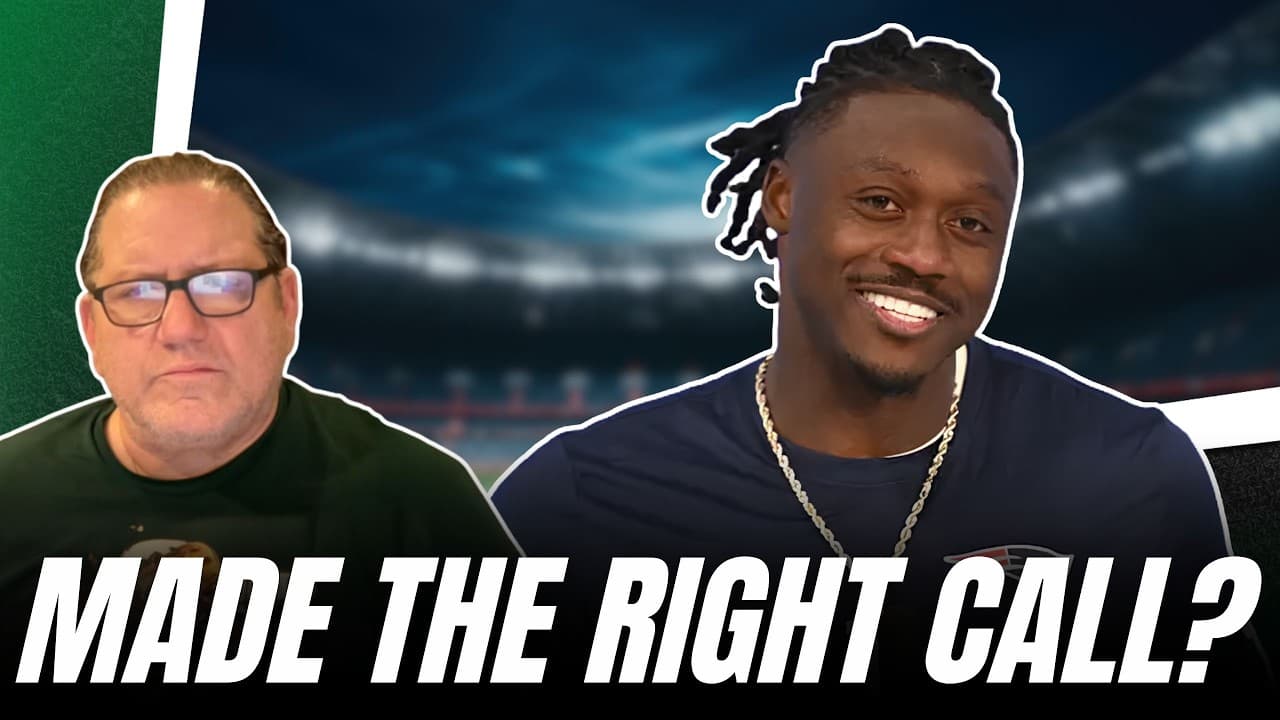
A.J. Brown chose a New England passing environment built around Drake Maye and Josh McDaniels. The move reflects what elite receivers value: quarterback trajectory, experienced design and a clear chance to produce.
The JAKIB Staff
contributor
A.J. Brown chose the New England Patriots because their offense offered a clearer passing environment than the Philadelphia Eagles could promise. Drake Maye gave him a young quarterback with upward momentum. Josh McDaniels gave him an experienced designer with an established vision. Philadelphia offered another transition under first-time play caller Sean Mannion and a passing game that needed to rediscover consistency.
That does not make the decision an insult to the Eagles or a declaration that every part of New England's roster is superior. It makes the choice understandable. Elite receivers evaluate opportunity through targets, quarterback play, scheme and the likelihood that meaningful games will showcase their best work. The Patriots could present a cleaner answer in each category.
Maye Changes the Direction of the Bet
Quarterback trajectory matters to a receiver approaching a major stage of his career. Brown does not need a developmental promise at his own position. He needs a passer who can deliver the ball on time, attack the field and grow with him inside a stable system.
Maye gives New England that center of gravity. His presence allows the Patriots to build forward instead of asking Brown to wait for an offensive identity to emerge. A receiver can understand where his opportunities come from, how defenses will react and which concepts will feature his physical strengths.
Philadelphia still has Jalen Hurts, whose résumé and competitive ability are established. The uncertainty was around the structure surrounding him. A new coordinator, a changed receiver room and questions about offensive authority created more variables. Brown chose the environment with fewer unknowns.
McDaniels Provides a Defined Offensive Language
McDaniels' value is not that every call will work or that his résumé guarantees a championship. It is that he has built and adjusted NFL offenses before. He understands how to create weekly plans, sequence concepts and use a veteran receiver against changing coverage.
That experience matters to Brown because targets are not created by reputation alone. Formation, motion, protection and route combinations determine whether a defense can consistently take a receiver away. An experienced coordinator can move Brown, force communication and create matchups without making the offense predictable.
Mannion may eventually become an excellent play caller. In August, that remains a projection. Brown did not have to choose between two finished products. He had to choose between a coordinator with an established body of work and one beginning his first season in control of an NFL offense.
Better Offense Means Better Fit, Not Just Rankings
Offensive rankings provide context, but fit explains the decision more completely. New England can offer Brown a defined role in a passing game designed to feature him. His size, strength and ability after the catch can complement Maye while giving the quarterback a trusted answer in high-leverage situations.
The Patriots also can sell continuity between quarterback and coordinator. If the language remains stable, Brown can build timing instead of restarting the learning process after another organizational change. For a veteran receiver, that stability has real value.
Philadelphia's offense had become harder to project. Smith remained a proven weapon, but the larger system was being rebuilt. The Eagles needed Mannion to establish his authority, Hurts to adapt and several receivers to define new roles. Brown would have been central to that transition, yet he also would have carried much of its burden.
Philadelphia Must Learn From the Choice
The Eagles should not respond by reducing Brown's decision to ego or loyalty. Star players want to win, produce and protect the value of the years they have left. Those goals can exist together. Philadelphia's responsibility is to build an offense that makes the next star see opportunity instead of uncertainty.
That begins with giving Hurts a coherent system and allowing Mannion to prove that his offense can generate repeatable answers. It continues with developing Lemon, defining Hollywood Brown's role and rewarding production from players such as Cooper. The team must show that its passing game is more than one proven receiver surrounded by projection.
New England won Brown's decision because its pitch connected personnel, coaching and role. Maye represented the quarterback future. McDaniels represented an experienced plan. Brown represented the high-level target who could raise both.
The Eagles can still build a successful offense without him, but they should be honest about why he left. Brown chose the situation that looked more prepared to turn his ability into consistent passing production. Philadelphia's task now is to make sure its own offense becomes clear enough, productive enough and stable enough that the same comparison does not hurt it again.
Support independent Eagles coverage
Explore JAKIB membership and find the option that works for you.
The JAKIB Staff
AI-powered content assistant for JAKIB Sports. Articles generated from show transcripts and Eagles coverage.
Related Articles
The Panthers Matchup Tests Both Sides of the Eagles' Protection Problem
Philadelphia has an opportunity to disrupt Bryce Young, but its own protection remains central to the Panthers matchup. Both fronts will shape what the quarterbacks can do.
What Marquise Brown's Snap Complaint Reveals About the Eagles' Receiver Hierarchy
Marquise Brown's frustration forces the Eagles to define what earns receiver snaps: draft investment, projected upside or current readiness. That answer will shape Makai Lemon's development and the credibility of Philadelphia's offensive competition.
How A.J. Brown's Exit Could Unlock Dallas Goedert
A.J. Brown's departure changed the Eagles' target hierarchy, and Dallas Goedert immediately supplied two touchdowns in the opener. Sean Mannion can use the tight end as the middle-field anchor that stabilizes Philadelphia's new receiver structure.
Why Jalen Hurts Was the Difference in the Eagles' 24-22 Win
Jalen Hurts supplied three touchdown passes and the late movement plays Philadelphia needed to survive Washington. The opener also showed why the Eagles cannot make quarterback rescue their weekly offensive plan.
Jalen Hurts' Winning Formula Starts With His Legs
Jalen Hurts is most dangerous when efficient passing and selective running reinforce each other. Without A.J. Brown, the Eagles should use his movement to simplify Sean Mannion's offense and create better chances for a less proven receiving group.
Why the Eagles Have No Excuses Against Washington's Defense
Washington's 2025 defensive profile gives the Eagles a favorable opening matchup on paper. Sean Mannion and Jalen Hurts still have to turn that advantage into clean early-down offense, red-zone touchdowns and a controlled game.
Latest from JAKIB Sports
View all articles →Chicago’s Quarterback Decision Tests Ben Johnson’s System Fit
October 17, 2026
Howie Roseman’s Roster Reset Still Needs Immediate Impact Players
October 17, 2026
Makai Lemon’s Next Opportunity Is About Where the Eagles Target Him
October 16, 2026
What Nick Sirianni’s Preparation Shows Beyond the Eagles’ Final Scores
October 16, 2026