
How Chicago’s Quarterback Question Changes the Eagles’ Defensive Plan
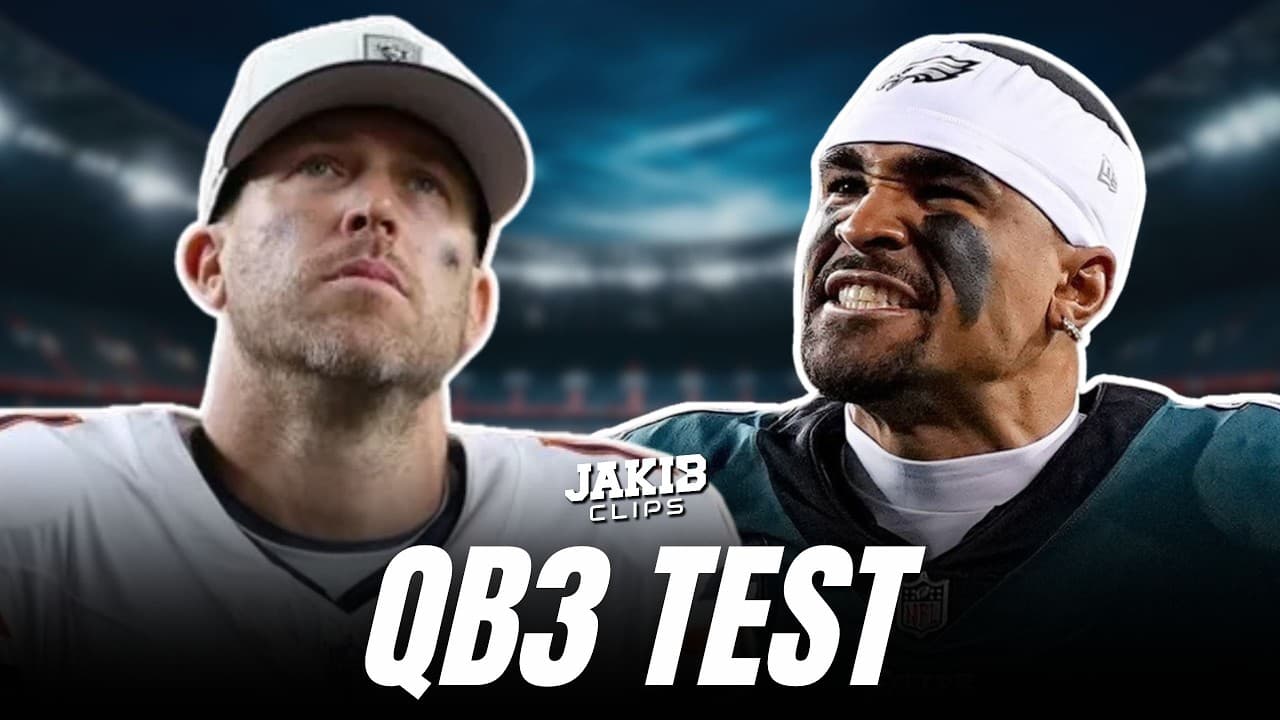
Caleb Williams is out, but Chicago had not named Tyson Bagent or Case Keenum as its starter at publication. Vic Fangio’s plan therefore has to control the Bears’ run game first and adjust to the quarterback who actually takes the field.
The JAKIB Staff
contributor
Caleb Williams is out against the Eagles, but Chicago had not announced whether Tyson Bagent or Case Keenum would start at publication. That uncertainty changes Vic Fangio’s preparation without changing its central demand: keep Ben Johnson’s run game from carrying the offense into easy third downs.
The Bears confirmed Williams’ absence because of a hamstring injury, while Bagent cleared concussion protocol. Keenum also remained an option. The official [Bears game preview](https://www.chicagobears.com/news/game-preview-eagles-vs-bears-2026-week-3) described the choice as unresolved. The [Birds 365 defensive discussion](https://youtu.be/hqDMgO3Uwa4) explored why Keenum had been expected after taking much of the practice work, but expectation is not a lineup announcement.
Chicago can still create offense on the ground
A backup quarterback can narrow a playbook, yet it can also concentrate the opponent’s attack. Johnson can lean on the run game, use quick throws, and avoid asking a replacement to win repeatedly from obvious passing situations. If Philadelphia assumes the quarterback change alone solves the matchup, Chicago can turn favorable rushing downs into the kind of steady drives that keep an underdog close.
The Bears’ right side is a particular point of attention. Darnell Wright gives Chicago a strong run-blocking presence at tackle, and the discussion on Birds 365 focused on how that edge could test the Eagles. Fangio has to prevent clean movement at the point of attack before worrying about a parade of exotic pressures. A defense that invites manageable runs can make a cautious quarterback comfortable.
Five-man fronts are one possible answer if the Bears begin moving the line. A heavier alignment could place more emphasis on Jordan Davis inside and challenge Chicago to throw into tighter situations. That is a situational choice, not a prediction that Fangio will abandon his usual principles. If the Eagles commit too many resources to the box without maintaining sound coverage, Johnson can use play action and simple throws to exploit the adjustment.
Fangio does not need to copy another defense
Chicago struggled to score against Minnesota, but Brian Flores’ approach is not a template Fangio has to reproduce. Fangio can pressure selectively while protecting against explosive plays. The important question is whether his fronts make Chicago earn its rushing yards without leaving the secondary exposed. A blitz-heavy imitation would solve a different problem and could offer Johnson an easier counter.
The quarterback choice matters at the margins. Keenum’s experience may support quicker decisions within a reduced menu. Bagent could bring a different rhythm if he plays after clearing protocol. Philadelphia should prepare for both, then read the actual personnel and early calls. The defense cannot build its entire plan around a starter Chicago had not confirmed before kickoff.
Jonathan Greenard is another conditional piece. The Eagles listed him questionable after a full practice, not officially active. If he is available, his edge presence could improve the rush while the staff manages his workload. If he is not, Philadelphia still needs disciplined edges to stop runs from spilling outside. Neither possibility changes the basic order of operations: win the line, make the quarterback face long yardage, then let the coverage and rush work together.
The first two drives will reveal the adjustment
The useful game-day clues are the Bears’ early run direction, their protection choices, and whether Fangio changes the front after a successful series. A couple of modest runs are not a crisis. Repeated clean gains behind the same blocking surface would be a signal to adjust before Chicago controls the pace.
The Eagles have an advantage with Williams unavailable, but it is an advantage to execute, not a result to assume. The defensive plan succeeds if Chicago’s replacement quarterback must create offense outside the safe structure Johnson wants. The starter’s identity will matter; the run-front response may matter more.
Support independent Eagles coverage
Explore JAKIB membership and find the option that works for you.
The JAKIB Staff
AI-powered content assistant for JAKIB Sports. Articles generated from show transcripts and Eagles coverage.
Related Articles
Chicago’s Quarterback Decision Tests Ben Johnson’s System Fit
Chicago’s quarterback debate turns on how Ben Johnson’s offense functions, not simply who has more talent. Caleb Williams’ questionable designation also keeps availability separate from the argument for Case Keenum.
Jeff Stoutland’s Absence Raises a Bigger Eagles Continuity Question
Jeff Stoutland’s departure puts the Eagles’ offensive-line continuity under scrutiny. The current staff’s task is to transfer knowledge and build reliable combinations without treating retirement and trade counterfactuals as facts.
Lane Johnson's Hall of Fame Case Is Strong, but First Ballot Is a Separate Question
Lane Johnson's career accomplishments support a serious Hall of Fame case. Election timing involves a separate debate about ballots, comparisons and competing candidates.
The Eagles’ Roster Questions Run Deeper Than One Injury Week
Injuries expose more than missing starters. Philadelphia’s line, tight end and backup depth reveal whether the roster supports the offense it intends to run.
Ben Johnson Gives the Bears a Plan Beyond Their Starting Quarterback
Ben Johnson gives Chicago more than a decision about who starts at quarterback. The Bears’ larger opportunity is to make the offense and defense function as a coordinated plan rather than depend on one passer to rescue every possession.
The Eagles’ Screen Game Starts With Fitting the Quarterback
The Eagles’ screen game will not improve just because the play sheet contains more screens. Philadelphia needs calls that fit Jalen Hurts, the available receivers and the protection picture the defense presents.