
Why Zach Ertz’s Return Does Not End the Eagles’ Pass-Catcher Questions
Zach Ertz gives the Eagles a familiar tight-end option, but his game-day role had not been confirmed at publication. Dallas Goedert’s absence and the Darius Cooper–Makai Lemon usage question still leave Sean Mannion with decisions that one veteran addition cannot settle.
The JAKIB Staff
contributor
Zach Ertz is back with the Eagles, but his return does not settle their pass-catcher plan for Monday against Chicago. Dallas Goedert has been ruled out, Ertz’s game-day elevation was not confirmed at publication, and Sean Mannion still has to decide how much work goes to Darius Cooper and rookie Makai Lemon.
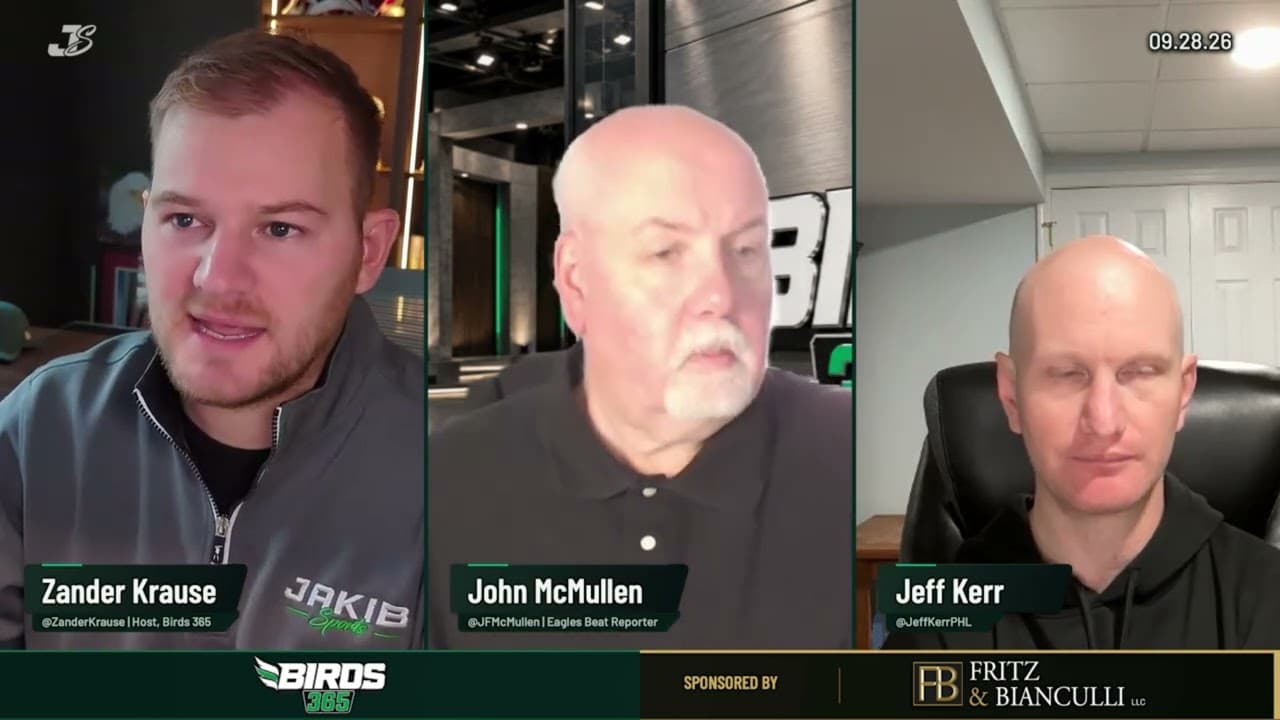
Philadelphia signed Ertz to the practice squad last week. His experience can help a thin tight-end room, especially if he is elevated, but familiarity cannot instantly replace every assignment Goedert handles. The [Birds 365 pass-catcher discussion](https://youtu.be/mhnQ_KH-dKg) made the larger point: Mannion’s personnel choices are as important as the name at the top of the depth chart.
Ertz offers an answer, not the entire plan
Goedert’s knee injury removes a trusted tight end from the Bears matchup. The Eagles’ injury report also noted that Ertz’s fitness would factor into any elevation decision. Those are separate facts. Ertz’s signing is confirmed; his exact availability and workload for this game require a game-day check.
If active, Ertz could give Hurts an experienced target in the middle of the field. That may simplify some passing concepts, particularly when the offense needs a reliable underneath option. It does not mean Mannion can use every heavier formation he designed with Goedert. Blocking assignments, timing, and snap conditioning matter. A veteran who joined during game week may contribute without becoming the full-time answer immediately.
Johnny Mundt and the other available tight ends also have roles to fill. A productive personnel grouping needs a credible blocker as well as a receiving option. Putting Ertz on the field simply because he is the most recognizable name would miss the actual problem. Mannion has to choose packages that help the line, protect Hurts, and give the quarterback a clear progression. If a grouping fails one of those tests, its star power does not rescue it.
Cooper and Lemon pose a different choice
The wide receiver debate is not identical to the tight-end shortage. Cooper made the decisive touchdown catch against Tennessee, while Lemon is a young player still finding his place in the offense. The Eagles’ own account of the Titans finish documented Cooper’s score and Lemon’s involvement on a third-down gain. Those plays show both players can contribute. They do not establish that either should absorb every meaningful snap against Chicago.
Cooper has earned attention because he finished a high-leverage play. That matters, but the Eagles have to evaluate his full assignment range: where he lines up, how he blocks, and which routes he can run with the timing Hurts expects. Lemon’s upside is a different consideration. Development takes repetitions, yet giving a rookie a larger role merely to justify draft investment could make early-down execution harder if the details are not ready.
There is room for both. Mannion can design defined touches for Lemon while retaining Cooper in packages that have already earned trust. The goal is not to declare a permanent winner from two games. It is to put each player in a position to make a specific play and to learn whether that role scales. The Bears game should supply more evidence than a debate about draft status or a single touchdown.
Mannion’s combinations will tell the story
The offense has an early-down efficiency concern, and the pass-catcher plan connects directly to it. A receiver who blocks effectively can improve a run. A tight end who threatens the middle can simplify the next throw. Conversely, a package that signals run or pass too clearly gives Chicago an easier read before the snap. Mannion’s challenge is to combine available players without advertising the call.
That is why Ertz’s return is useful but incomplete. Philadelphia needs to see which groupings keep Hurts ahead of the chains, not merely which names look reassuring on a lineup card. The next test comes when a Bears defender challenges the formation: does the chosen combination still provide a clean answer, or does Hurts have to improvise again?
Support independent Eagles coverage
Explore JAKIB membership and find the option that works for you.
The JAKIB Staff
AI-powered content assistant for JAKIB Sports. Articles generated from show transcripts and Eagles coverage.
Related Articles
What the Eagles Learned by Going for Two Down Eight in Dallas
The Eagles tried for two down eight in the fourth quarter. The first miss changed what their next touchdown needed to accomplish, and a penalty complicated the second try.
How the Eagles Set Up Jake Elliott’s 59-Yard Winner Without Timeouts
Philadelphia had 50 seconds, no timeouts and the ball at its own 48. Two DeVonta Smith catches and a penalty helped set up Jake Elliott’s 59-yard winner.
Where Eli Stowers’ Offensive Snaps Went Against Pittsburgh
Stowers went from limited offensive work before the bye to 20 special-teams snaps against Pittsburgh. The gamebooks show which tight ends took the offensive assignments.
What Zach Ertz Is Chasing in Harold Carmichael’s Eagles Record
Zach Ertz needs seven catches to tie Harold Carmichael’s Eagles receptions mark. Their two careers show what the regular-season record counts and why the franchise keeps separate yardage and touchdown marks.
Ertz's Active-Roster Return Adds a New Decision for Eli Stowers
Zach Ertz is back on the Eagles' active roster, eight catches from passing the franchise record. Philadelphia can honor that pursuit while making room for Eli Stowers if football sets the order.
T.J. Paganetti's Return Gives the Eagles a Run-Game Test After the Bye
T.J. Paganetti's consultant return gives Philadelphia a practical test: turn another coaching perspective into clearer run-game instruction and coordinated execution.