
The Panthers Matchup Tests Both Sides of the Eagles' Protection Problem
Philadelphia has an opportunity to disrupt Bryce Young, but its own protection remains central to the Panthers matchup. Both fronts will shape what the quarterbacks can do.
The JAKIB Staff
contributor
The Eagles can improve their chances against Carolina by winning two different protection battles. Their defensive front has an opening to disrupt Bryce Young, while their own offensive line has to give Jalen Hurts time to exploit anything downfield.
Those jobs connect without canceling each other out. Pressure on Young can create favorable possessions, but Philadelphia still needs an offense capable of using them. A defensive opportunity offers a path back; it cannot execute the Eagles’ passing game for them.
Wednesday’s official injury report supplied relevant context on both sides. Carolina’s report was an estimate because the Panthers did not practice, and rookie right tackle Monroe Freeling was listed as a nonparticipant. For Philadelphia, Jonathan Greenard was limited and Jalen Carter participated fully. Those are preparation details, not final Sunday availability rulings.
Make the Panthers solve a protection problem
The appeal of this matchup begins with the Eagles’ ability to challenge Carolina’s blocking. A defense that can create pressure without surrendering coverage flexibility asks a quarterback to make several decisions quickly. That is a more useful plan than waiting for an opponent to make an unforced mistake.
Carter can influence that equation from inside. Interior disruption shortens the space in which a quarterback can step up, and it can make an edge rusher’s path more productive. The rush works best when those movements fit together rather than turning into separate races toward the same spot.
Greenard’s progress matters within that picture. His limited practice participation is encouraging information about the week, but it does not establish the snap count or effectiveness the Eagles will receive. Any prediction about the front should preserve that uncertainty instead of quietly assuming its preferred personnel.
Carolina also gets a vote. Protection help, quick throws and changes in launch point can reduce the effect of a favorable individual matchup. Philadelphia’s front needs a coordinated response when the first rush does not get home. Reckless pursuit can open the escape route the defense was supposed to remove.
The test is whether the Eagles can keep Young operating on their terms across a series. One pressure followed by an easy conversion changes very little. Repeatedly narrowing his options can give the secondary a more manageable job.
Philadelphia has its own clock to extend
On the other side, the Eagles cannot treat available targets as a substitute for time to throw. A route can win and still become irrelevant if the quarterback has to abandon the pocket before the passing window opens. Protection determines which opportunities are realistically available.
Nick Sirianni’s Wednesday news conference offered a useful reminder about Carolina’s defense. He identified defensive tackle Derrick Brown and safety Tre’von Moehrig as players who stand out on film. Philadelphia’s plan should account for that disruption rather than reducing the matchup to a general opinion about the Panthers.
Brown presents a different problem from a defensive back winning at the catch point. Interior penetration can interfere with a handoff, collapse a throwing lane or force Hurts away from the intended timing. Protection assignments and the quarterback’s answers against pressure belong in the same conversation.
The Wednesday returns to practice create possibilities for the Eagles, including Landon Dickerson’s work at guard. They also create decisions about how much each returning player can handle. A plan built around hypothetical health can fail before the first possession develops.
Philadelphia has room to simplify responsibilities without shrinking every play into a desperate quick throw. Clear communication, dependable spacing and a credible rushing threat can help the offense stay out of predictable situations. The calls still need execution, and the available blockers have to make the intended structure real.
Judge the possessions, not a matchup slogan
The strongest version of the Eagles’ case is about complementary results. Defensive pressure can produce a longer field for Carolina or a shorter one for Philadelphia. Offensive protection can turn that advantage into a drive instead of sending the defense immediately back out.
That makes early-down efficiency worth watching even before a sack appears. A rush that forces a checkdown short of the necessary yardage can serve the defense. A clean pocket that allows Hurts to make a routine completion can serve the offense without producing a spectacular throw.
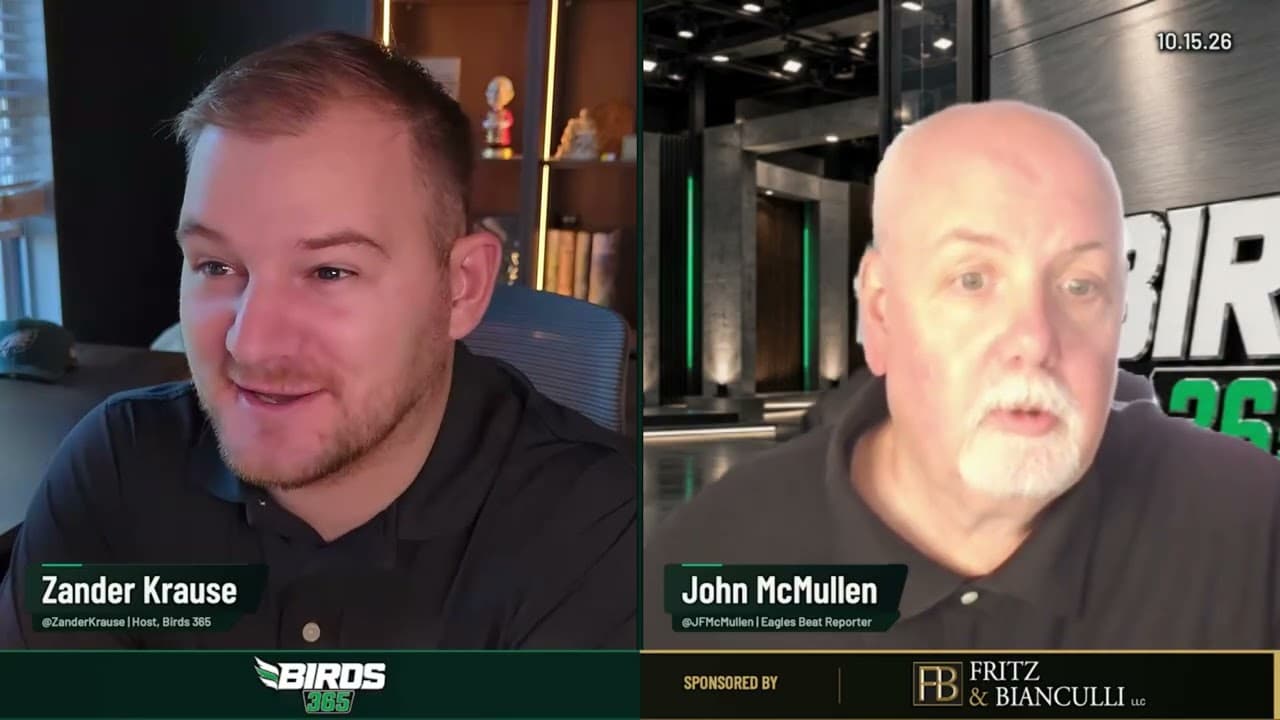
The Birds 365 discussion treated Carolina as a chance for the Eagles to regain some footing while questioning Philadelphia’s own offensive reliability. Those ideas can coexist. A winnable matchup still requires the Eagles to perform the basic work that makes their talent usable.
Watch the space around both quarterbacks on Sunday. If Young repeatedly has to escape while Hurts has room to set and deliver, Philadelphia will have created a meaningful advantage. If the Eagles lose their own protection battle, favorable expectations about Carolina will offer little comfort.
Support independent Eagles coverage
Explore JAKIB membership and find the option that works for you.
The JAKIB Staff
AI-powered content assistant for JAKIB Sports. Articles generated from show transcripts and Eagles coverage.
Related Articles
Jalen Carter’s Dallas Matchup Shows the Cost of Losing With Strength
Jalen Carter’s Dallas matchup raises a specific technique question: what happens when the first surge fails? A timely counter offers a more useful correction than unsupported claims about effort or emotion.
Three-and-Outs Are Turning the Eagles’ Defense Into an Attrition Test
Carolina’s 79 offensive snaps put a concrete number on the burden facing the Eagles’ defense. Sustained offensive possessions and defensive stops on favorable third downs would address different parts of the same workload problem.
Chicago’s Quarterback Decision Tests Ben Johnson’s System Fit
Chicago’s quarterback debate turns on how Ben Johnson’s offense functions, not simply who has more talent. Caleb Williams’ questionable designation also keeps availability separate from the argument for Case Keenum.
Jake Majors’ Natural Position Matters in the Eagles’ Center Decision
Jake Majors’ natural position gives the Eagles a reason to limit disruption at center. Availability and exchange reliability should drive the decision without turning an unofficial depth chart into a starting lineup.
Why the Eagles Cannot Recreate the Nick Foles Reset in Two Days
Tanner McKee’s abrupt starting assignment calls for a clear, executable plan against Carolina. The Nick Foles comparison explains why adapting to a quarterback takes more than changing the call sheet.
Tanner McKee Won’t Get a Clean Test of the Eagles’ Offense
Tanner McKee will be evaluated alongside the Eagles’ protection, route timing and coaching adjustments. The Carolina game can reveal what works for the backup and what the whole offense still needs.
Latest from JAKIB Sports
View all articles →Nick Sirianni’s Résumé Is Only Part of the Eagles’ Coaching Decision
November 4, 2026
The Eagles Need an Evaluation Plan for Their Young Players
November 4, 2026
The Eagles’ Offensive Fix Starts With Clear Assignments
November 4, 2026
The Sixers’ 7–1 Start Still Leaves an Embiid–LeBron Fit Test
November 4, 2026