
Joe Milton Adds Mobility. The Eagles Still Have to Solve the Play Clock.
Joe Milton gives the Eagles another way to create yards. A workable pre-snap operation will determine whether his athleticism supports the offense or keeps rescuing it.
The JAKIB Staff
contributor
Joe Milton gives the Eagles a way to escape pressure with his legs. He also inherits an offense whose hardest work can happen before the ball moves.
The change from Tanner McKee to Milton, reported Wednesday by The Philadelphia Inquirer, creates a different set of possibilities against the Giants. Turning those possibilities into sustained drives will take more than a strong arm and a scramble through an open lane.
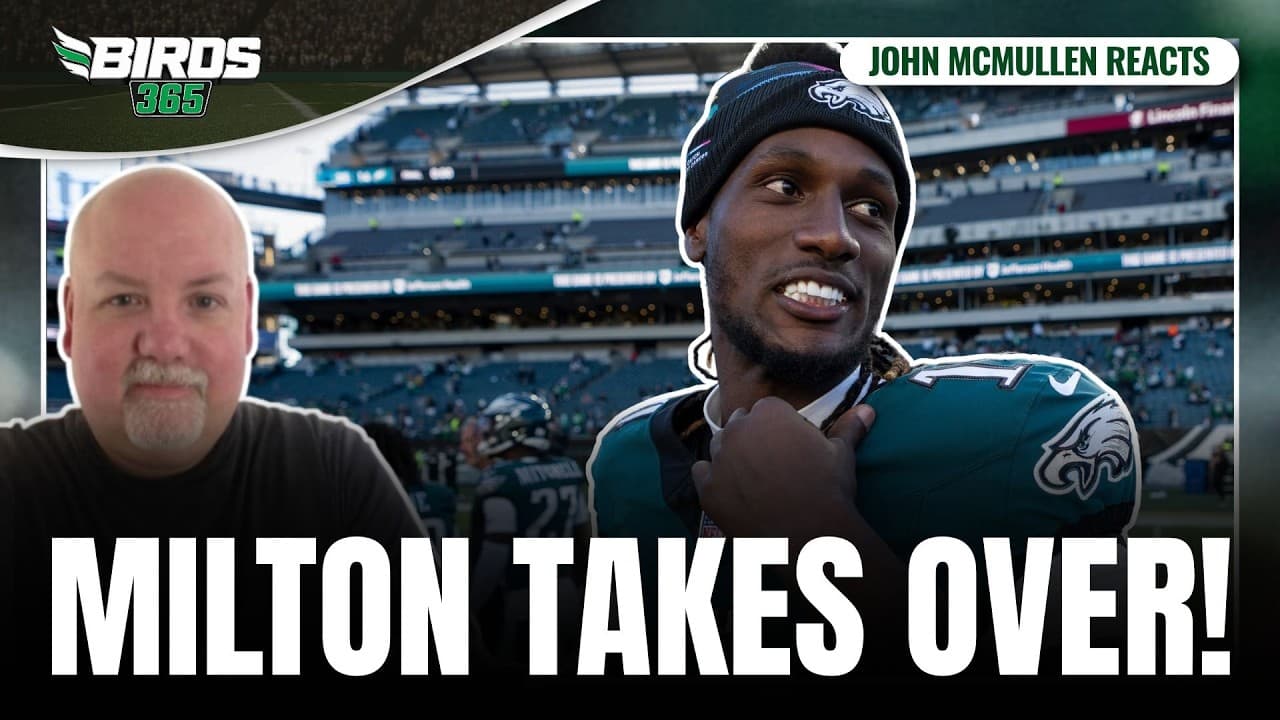
The appeal is easy to understand. Milton can threaten space outside the pocket and make a defense account for the quarterback as a runner. The danger is treating those traits as permission to leave the offense's communication problems unresolved.
Mobility changes the escape route
A mobile quarterback can rescue a play after the original design breaks down. A defender loses contain, a receiver keeps working, and a potential sack becomes a first down. That gives an offense another chance without requiring every block and route to be perfect.
There is a cost, though. Extending a play also extends the time blockers must survive. A quarterback who passes up an available throw to hunt a bigger one can turn manageable pressure into a negative play. Athleticism expands the menu; judgment determines whether the offense orders the right thing.
Milton's most useful contribution could be much quieter than a spectacular throw. If he recognizes an available running lane, takes the yards and protects possession, the Eagles can stay in a workable down and distance. A modest gain can preserve the next play call better than a desperate attempt to make a highlight.
That is the distinction worth watching on Sunday. A productive scramble solves the immediate problem. Repeated escapes from immediate pressure would leave the original protection problem in place.
The play clock belongs to the whole offense
The fourth-and-four discussed on Birds 365 puts the issue in focus: late urgency, a hurried snap operation and a play compromised before it could develop. The useful question is how the offense reached that point, rather than which individual makes the easiest target.
Sirianni's Monday explanation of a separate protection failure included late communication, a check and players operating from different calls. Responsibility extended beyond one blocker. The Eagles' official transcript supports that distinction.
A quarterback receives the call, gets the offense aligned, surveys the defense and communicates adjustments. Motion can help identify coverage or alter a defender's responsibility, but it also consumes time. A protection adjustment helps only if the players hear and understand it before the snap.
Those tasks overlap. If the offense spends too long getting aligned, it loses time for the diagnosis. If the quarterback changes something late, the line gets less time to confirm the new responsibility. The clock makes every earlier delay more expensive.
Replacing the quarterback changes the person handling that workload. It leaves the workload itself for the coaches to examine. Asking Milton to absorb every moving part while also providing instant improvisational answers would be a poor way to evaluate him.
Give Milton decisions he can finish
The Eagles can build a practical test around a smaller, connected group of calls. Use formations that support several answers. Keep the initial protection language consistent. Add motion when it supplies information the quarterback can actually use.
Simplifying the operation does not mean surrendering deception. Two plays from the same presentation can create hesitation without asking the offense to stage an elaborate pre-snap production. The goal is to make the defense process more while the Eagles communicate less.
Milton's arm strength then becomes a tool within that structure. A vertical threat can create room underneath, but the quarterback still has to recognize when the shorter throw is the profitable answer. Touch and anticipation matter when the target is moving through a closing window.
Watch the ordinary possessions as closely as the exciting ones: a completed protection call, an on-time checkdown, a snap with everyone settled. Those repetitions would show that the Eagles are giving Milton a chance to play quarterback, instead of asking him to outrun their organizational mistakes.
Watch the Birds 365 discussion of Milton and the Eagles offense.
Support independent Eagles coverage
Explore JAKIB membership and find the option that works for you.
The JAKIB Staff
AI-powered content assistant for JAKIB Sports. Articles generated from show transcripts and Eagles coverage.
Related Articles
Embiid’s 37 Points Put the Paint Back at the Center of the Sixers’ Offense
Joel Embiid’s 37-point night gives Philadelphia an inside-first shot-selection test. His work near the basket and elbow can set the balance without eliminating the three.
The Giants’ Free Rushers Put the Eagles’ Offensive-Line Coaching Under Scrutiny
Two documented Arvell Reese sacks expose different protection questions after the Eagles’ 19–11 loss. Chris Kuper’s evaluation should distinguish an unblocked rush from a lost matchup and show whether the staff can teach the correct response.
Joe Milton’s First Start Exposed an Offense That Needs to Get Simpler
Joe Milton’s first start put the Eagles’ protection and teaching under scrutiny. A simpler offense can give an inexperienced quarterback clearer answers without hiding the tradeoffs.
Caleb Williams’ Improvement Starts With the Structure Around Him
Caleb Williams completed 70.9 percent of his passes across five starts through Week 8. Protection, run-game connections and continuity offer a framework for examining the improvement without taking credit away from the quarterback or treating a small sample as causal proof.
The Eagles’ Backup Quarterback Problem Is Bigger Than One Bad Start
The Eagles invested in backup quarterbacks. The harder question is whether practice work, scheme fit and a usable replacement plan prepared the offense to function when the quarterback changed.
Joe Milton's First Eagles Test Includes What Happens Before the Snap
The Eagles must decide what Joe Milton can read from a stationary formation, what motion adds and whether gathering that clue leaves the rest of the offense enough time to execute.