
Jeffrey Lurie’s Honor Arrives Amid an Eagles Trust Problem
Jeffrey Lurie’s Eagles Hall of Fame induction recognizes a championship legacy. Fans can appreciate that history while expecting clearer public communication from the organization’s leadership.
The JAKIB Staff
contributor
Jeffrey Lurie’s Eagles Hall of Fame ceremony can recognize a championship legacy and still arrive at an uncomfortable moment. The Eagles do not need fans to forget their current questions in order to appreciate what his ownership has meant.
That is the tension before tonight’s game against Dallas. A halftime honor looks backward; the audience also wants confidence in the people making decisions now. Treating those two instincts as incompatible turns a useful discussion about trust into an argument over whether fans are sufficiently grateful.
Jeffrey Lurie’s record belongs in the ceremony
The Eagles’ August 26 announcement set Lurie’s induction for halftime against Dallas on October 26. He has owned the team since 1994, and the franchise’s first two Super Bowl championships came during his ownership.
That is a substantial foundation for an honor. Championships change a fan base’s shared history. They create the seasons people return to, the moments families pass along and the standard against which the next team gets measured. Recognizing that history is a reasonable purpose for halftime.
But a ceremony is not an approval vote on every current decision. Fans can applaud the achievement without agreeing that the organization has communicated well through its latest difficult stretch. They can also criticize today’s leadership without pretending the championships never happened. A serious assessment should make room for both.
Lurie’s legacy is strong enough to withstand that distinction. Insisting that gratitude requires silence makes the honor feel more fragile than the accomplishments warrant.
The Eagles’ communication burden remains
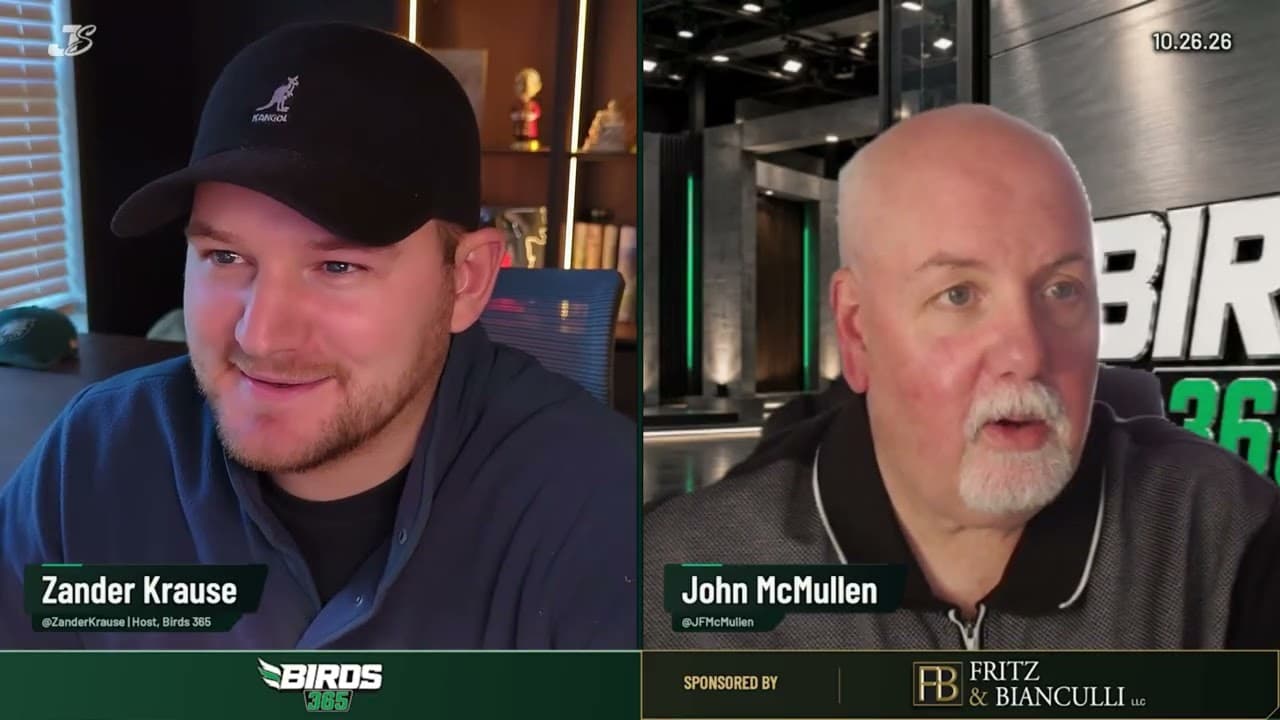
The Birds 365 debate connected the planned ceremony to frustration surrounding questions about Jalen Hurts and the organization’s public response. That discussion captures a concern worth examining. It does not establish that medical care was improper, reveal anyone’s private intent or measure what the entire fan base believes.
The sound argument is about responsibility for communication. When supporters have serious questions, ownership and football leadership should help explain what the organization can explain. That does not require disclosure of private medical details or an answer to every speculative accusation. It requires clarity about who is addressing the issue and where the limits of the public information sit.
A head coach answering questions is one part of that process. It should not become an excuse for treating broader concerns as merely a coaching press-conference problem. The people responsible for an organization’s direction also have a stake in whether its explanations are understood.
Trust suffers when an information gap fills with assumptions. Fans may interpret a limited answer as evasion; the team may consider the same answer an appropriate boundary. Clear explanations cannot guarantee agreement, but they can make the disagreement more honest. That is a fair expectation for an organization asking people to invest so much emotion in its decisions.
A predicted reaction is still a prediction
The show’s disagreement over possible boos should stay a disagreement about an event that has not happened. There is no crowd verdict to report before kickoff, and individual expressions of frustration would not automatically represent everyone in the building.
The discussion also became more qualified than a simple applause-versus-boos split. It distinguished scattered reactions from a crowd-wide response, and a later exchange acknowledged that a night-game atmosphere and drinking could affect behavior. Those were possibilities raised in conversation, not evidence about tonight’s actual crowd or a reason to stereotype the people attending.
More importantly, a reaction at halftime would be a blunt signal. Applause would not prove that every concern had disappeared. Boos would not identify a single cause, establish wrongdoing or erase appreciation for the franchise’s success. Trying to read a full organizational referendum into a few seconds of sound would tell readers more than the evidence could support.
The better standard survives whichever reaction comes. Honor the championships and the ownership history. Expect leadership to communicate clearly when current concerns demand attention. Fans do not have to choose one position for the rest of their lives, and the Eagles should not need them to.
Tonight’s ceremony can celebrate what Lurie helped build. The work of maintaining confidence in the organization continues after the halftime presentation ends.
Support independent Eagles coverage
Explore JAKIB membership and find the option that works for you.
The JAKIB Staff
AI-powered content assistant for JAKIB Sports. Articles generated from show transcripts and Eagles coverage.
Related Articles
The Eagles’ Coaching-Hire Debate Has Three Different Decisions
Recommendation, coaching selection and ownership approval carry different kinds of influence. Separating them makes the Eagles’ Mannion debate more useful—and keeps private pressure from becoming an invented fact.
Jalen Carter Still Has Not Reached Jeffrey Simmons' Every-Down Standard
Jalen Carter can still produce dominant flashes, but Philadelphia needs him to control complete drives rather than isolated snaps. Jeffrey Simmons supplied the comparison: elite interior play travels through every down and every game situation.
Why Garry Cobb Says the Eagles Aren't Playing Championship Football
Philadelphia is 2-0, but neither line is controlling games and the current formula depends too heavily on Jalen Hurts and DeVonta Smith. Jeffrey Simmons' relentless disruption also showed the standard Jalen Carter has not yet sustained.
How the Eagles' Offensive-Line Contingency Failed
Philadelphia built an offensive-line plan that depended too heavily on health and familiar starters. Cam Jurgens' post-surgery movement and the lack of a stable interior fallback have turned every protection call into a stress test for Jalen Hurts.
What Jeffrey Simmons' Jalen Hurts Comment Actually Meant
Jeffrey Simmons' comment about Jalen Hurts was a description of Tennessee's containment plan, not a dismissal of the Eagles quarterback. The Titans want to remove Hurts' escape routes and force Philadelphia to win from a stable pocket.
Why the Eagles Had to Protect Landon Dickerson From Himself
Landon Dickerson's toughness has made him one of Philadelphia's most dependable linemen, but it also complicated the decision to keep him on the field while compromised. Placing him on Injured Reserve was the necessary correction for the player and the offense.
Latest from JAKIB Sports
View all articles →The Eagles’ Film Meeting Changes the Room, Not the Personnel
October 26, 2026
DeVonta Smith’s Rest Question Is About Weeks, Not the Season
October 26, 2026
Caleb Williams and Ben Johnson Have Given Chicago a Window to Act
October 24, 2026
The Eagles’ Defensive Depth Bill Is Coming Due
October 23, 2026