
What Jeffrey Simmons' Jalen Hurts Comment Actually Meant
Jeffrey Simmons' comment about Jalen Hurts was a description of Tennessee's containment plan, not a dismissal of the Eagles quarterback. The Titans want to remove Hurts' escape routes and force Philadelphia to win from a stable pocket.
The JAKIB Staff
contributor
Jeffrey Simmons' comment about Jalen Hurts was not a claim that the Philadelphia Eagles quarterback cannot throw. It described Tennessee's preferred defensive trade: keep Hurts inside the pocket, remove the explosive plays he creates after escaping and force the offense to win through a more controlled structure.
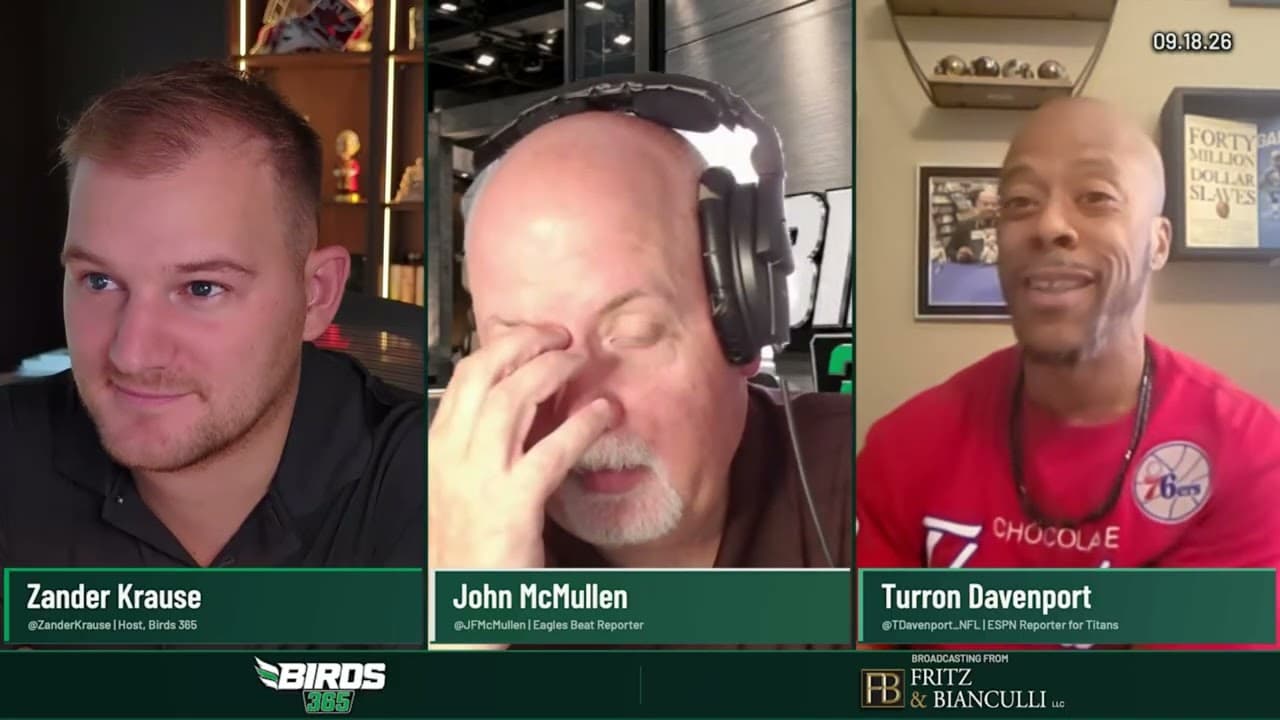
The distinction matters because the quote sounded sharper once it reached Philadelphia without its full context. The reporter who posted the exchange was standing with Simmons and described no malice in the delivery. This was a game-plan explanation, not a personal attack.
Containment is respect for Hurts' best weapon
Hurts changes a defense after the original play begins. He can escape pressure, extend the down and force coverage players to remain connected longer than the call was designed to last.
That extra time is dangerous because Philadelphia has receivers who can turn a broken play into a deep completion. DeVonta Smith can adjust his route once Hurts leaves the pocket, and the quarterback can punish a defender who abandons coverage to chase him.
Tennessee's goal is to remove that second phase. The edge rushers have to stay disciplined instead of racing past the quarterback. Interior defenders must collapse space without opening a clean lane through the middle. The secondary then has to keep covering through the whistle.
That plan does not assume Hurts is harmless from the pocket. It accepts that a defense would rather face a scheduled throw than the combination of a scramble, an extended route and a coverage breakdown. Every coordinator tries to make an opponent win away from his most disruptive trait.
Simmons can control the terms inside
Simmons is central to the plan because his quickest path to the ball comes through the Eagles' biggest lineup question. Landon Dickerson is on Injured Reserve, and Philadelphia is choosing among younger interior options and veteran tackle Fred Johnson at left guard.
An immediate interior win can ruin both parts of the offense. Simmons can reach Saquon Barkley before the running lane develops, forcing the back to stop and restart. He can also push the pocket toward Hurts while Tennessee's edge defenders protect the escape routes.
The challenge is maintaining that balance. If Simmons attacks too far upfield or loses his rush lane, Hurts can step through the opening. If the Titans become so focused on containment that they generate no pressure, Philadelphia can let its routes develop against a secondary covering for an extra beat.
Simmons does not need a sack on every series. One tackle for loss can put the Eagles behind schedule. One quick pressure can force a checkdown. One strip-sack can create the short field Tennessee may need against a deeper Philadelphia roster.
Philadelphia can answer the strategy
The Eagles should expect the Titans to build a fence around Hurts. Their response has to make patience expensive.
Quick throws can punish defenders who are more concerned with rush lanes than immediate pressure. Outside-zone runs can move the front laterally and test whether Simmons can penetrate without losing his assignment. Designed movement can also change the launch point before Tennessee settles into the same picture.
Hurts still has to resist forcing the spectacular answer. If Tennessee stays disciplined, the right play may be a completion underneath or a handoff that keeps the offense on schedule. Taking those gains can eventually pull a defender out of his lane and recreate the escape opportunity the Titans are trying to eliminate.
Philadelphia's skill players complicate the plan. Smith threatens deep space, Dallas Goedert can work the middle and Barkley demands multiple defenders near the run. Tennessee cannot devote every resource to Hurts' legs without exposing another part of the offense.
The comment identified the real Week 2 matchup
The noise around the quote turned a normal defensive objective into an argument about respect. The football question is more useful: can Tennessee compress the pocket without giving Hurts a lane, and can its secondary survive while he searches for the next answer?
Philadelphia's offensive line will decide how long that structure holds. If the new left guard can keep Simmons from winning immediately, Hurts can stay on schedule and force the Titans to defend the complete playbook. If Simmons owns the interior, every snap becomes a test of the quarterback's discipline.
The comment did not reduce Hurts to one skill. It acknowledged the skill that most quickly breaks a defense's rules. Tennessee wants to make him solve the game another way; Week 2 will show whether the Titans can maintain that choice once Philadelphia begins attacking it.
Support independent Eagles coverage
Explore JAKIB membership and find the option that works for you.
The JAKIB Staff
AI-powered content assistant for JAKIB Sports. Articles generated from show transcripts and Eagles coverage.
Related Articles
The Eagles' Offensive Identity Problem Complicates Jalen Hurts' Evaluation
Jalen Hurts’ decisions, the protection plan and the Eagles’ route concepts need separate evaluation. Their shared timing will reveal whether Philadelphia is building a coherent offense.
The Eagles' Offensive-Line Reset Changes Jalen Hurts' Leverage
Philadelphia's changing offensive line affects the football support around Jalen Hurts. Contract and agent-shopping scenarios remain analysis, not evidence of a trade request.
Why Changing Coaches Is Easier Than Replacing Jalen Hurts
If the Eagles’ offense remains near the bottom, changing its coaching or scheme is more direct than replacing Jalen Hurts. His contract and the uncertainty of finding a better quarterback make the choices unequal.
Jalen Hurts Played Poorly—and His Supporting Cast Still Matters
Hurts played poorly against Los Angeles, and the changing cast around him made the job harder. Philadelphia has to solve both problems instead of using one to dismiss the other.
Jalen Hurts Can Raise the Eagles’ Level, but He Cannot Replace an Entire Roster
Jalen Hurts can give the Eagles a chance against the Rams without being able to replace every missing player. Philadelphia’s injury report turns that distinction into a practical football problem, not an excuse to lower the quarterback’s standard.
Jalen Hurts’ Development Tests the Eagles’ Offensive Structure
Jalen Hurts' development tests the Eagles' offensive structure because quarterback improvement depends on more than the player's individual work. Philadelphia also has to provide clear rules, connected concepts and a coaching operation that turns corrections into usable answers.