
Jalen Hurts’ Development Tests the Eagles’ Offensive Structure
Jalen Hurts' development tests the Eagles' offensive structure because quarterback improvement depends on more than the player's individual work. Philadelphia also has to provide clear rules, connected concepts and a coaching operation that turns corrections into usable answers.
The JAKIB Staff
contributor
Jalen Hurts' development tests the Eagles' offensive structure because quarterback improvement depends on more than the player's individual work. Philadelphia also has to provide clear rules, connected concepts and a coaching operation that turns corrections into usable answers.
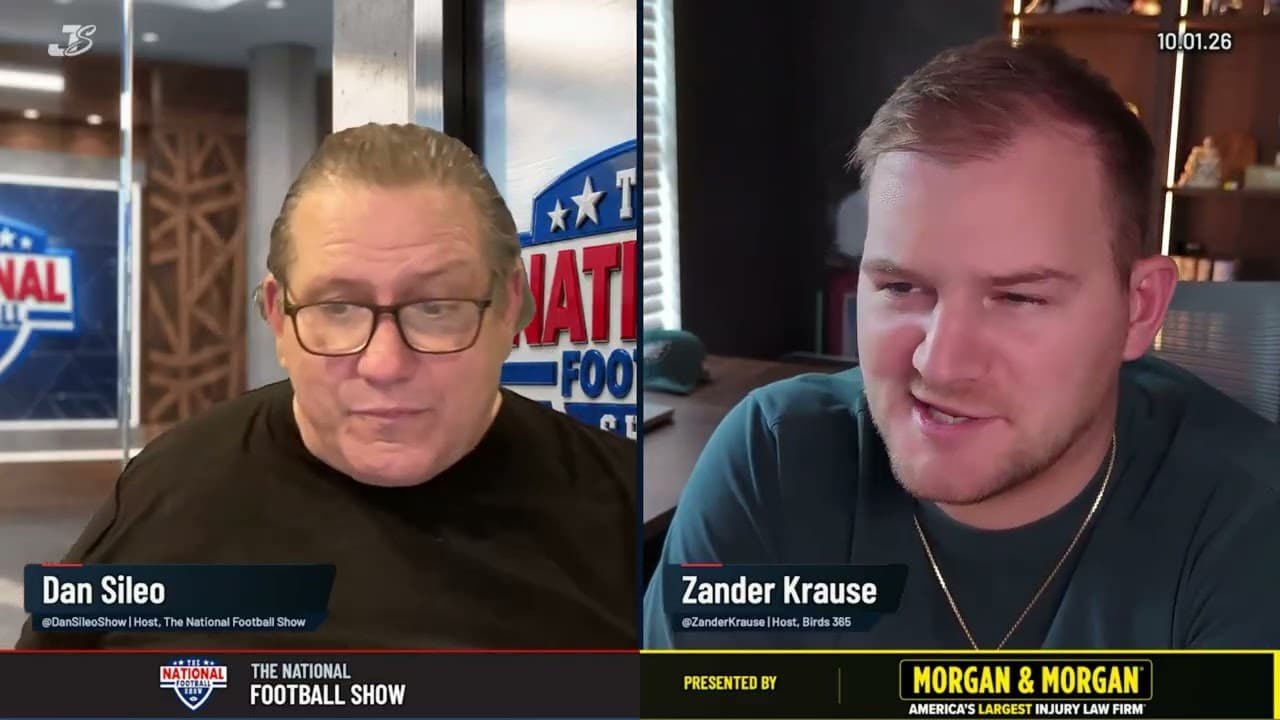
The National Football Show's discussion asks whether that environment is helping Hurts expand or forcing him to hold disconnected pieces together. It also includes the necessary counterargument: the Eagles have won at a high level, and organizational success deserves weight in any evaluation.
Those positions can coexist. A successful team can still make a player's job unnecessarily difficult. A difficult offensive stretch does not, by itself, prove that the entire organization is broken.
Development needs repeatable decisions
A quarterback improves when similar defensive pictures produce recognizable rules. That does not require a frozen playbook. It requires a coherent relationship between protection, route timing and the answer to pressure.
Hurts should know where his help comes from and what happens if the defense removes it. A quick-game concept, a run option and a deeper passing call can support one identity when their rules connect. They can also place competing demands on the same player when they do not.
The visible test is the quarterback's decision process. Does the ball arrive on time when the expected answer is available? Does the next read develop before the pocket collapses? Can the offense identify a correction and show it on the following series?
Those questions are more useful than guessing what Hurts privately thinks of the front office. This analysis does not establish a trade request, dissatisfaction report or internal disagreement. The source conversation contains possibilities and opinions, not confirmation of those events.
Authority should produce clarity, not another voice
Nick Sirianni is responsible for the team as head coach. Sean Mannion is part of the offensive operation. The difficult issue is not whether both should care about the offense, but whether their work reaches the quarterback as one actionable plan.
Head-coach involvement is not automatically interference. A coordinator's influence is not automatically autonomy. Either can improve the operation if the responsibilities are clear and the final decision is consistent.
Problems arise when a quarterback appears to be reconciling the system during the play. If the run and passing concepts demand different assumptions, Hurts absorbs the cost through hesitation or improvisation.
The staff should be able to explain the offense's preferred answers against the next opponent. That includes which adjustments belong to the quarterback, which come from the sideline and which calls remain available when the original plan is defeated.
Analytics can inform those decisions. It should not be described as proof that unnamed executives dictate particular plays without independent evidence. Data, coaching judgment and player execution all belong in the evaluation; none excuses unclear responsibilities.
Winning is the strongest counterargument
Philadelphia's success matters because an organization is not evaluated only on how comfortable its offense looks. Roster construction, defense and situational execution contribute to wins too.
Howie Roseman's role in building the roster belongs in that broader picture. The argument for organizational continuity is that a team can sustain itself through personnel changes rather than depending entirely on one coach's system.
That does not answer every development concern. A strong roster can help an offense survive while concealing avoidable weaknesses. Equally, a quarterback's uneven performance can make a sound call look worse than it was.
The fair evaluation separates those layers. Credit the organization for winning. Identify the specific offensive decisions that help or hinder Hurts. Then examine whether corrections improve both the quarterback's execution and the team's results.
The next improvement should be observable
Hurts does not need a public declaration that every offensive problem belongs to someone else. He needs a plan that reduces the number of conflicting demands placed on each snap.
The next game offers a concrete test. Watch whether Philadelphia links its early-down calls to manageable passing situations, whether the protection matches the route timing and whether a failed series produces a visible adjustment.
If Hurts makes cleaner, earlier decisions inside that structure, the offense has evidence of progress. If he remains responsible for repairing the same disconnects with movement and late creation, the development question stays open. The Eagles can defend their winning model while still demanding that their quarterback receive a clearer path to getting better.
Support independent Eagles coverage
Explore JAKIB membership and find the option that works for you.
The JAKIB Staff
AI-powered content assistant for JAKIB Sports. Articles generated from show transcripts and Eagles coverage.
Related Articles
Tanner McKee’s Split Summer Leaves an Unfinished Development Question
Tanner McKee’s summer competition and uneven preparation leave a development question. A steadier practice role can help the Eagles evaluate him without pretending to explain his confidence.
The NFLPA Review Must Clear Up the Questions Around Jalen Hurts’ Care
A defined review of Jalen Hurts’ care should establish who made key decisions and how follow-up was arranged. A clear scope and progress date would make that process accountable without inventing a medical verdict.
The NFL and NFLPA Are Asking Different Jalen Hurts Questions
The NFL has defended the handling of Jalen Hurts’ medical care while the NFLPA seeks a full investigation. A defined review process could address follow-up questions while respecting his privacy.
A One-Year Bridge Could Separate the Eagles’ Jalen Hurts Decisions
A proposed one-year bridge would let the Eagles separate immediate continuity from a long commitment to Jalen Hurts. Its value would depend on the football evidence and the agreement both sides could reach.
Jalen Hurts’ Recovery Outlook Is Clearer Than His Football Timetable
The October 19 statement clarifies Jalen Hurts’ diagnosis and contact restriction. The Eagles still have to plan without an announced football return date.
Eagles' Defensive Stars Face a Different Test Than Their Backups
Jalen Carter and Jordan Davis face different expectations from Philadelphia’s replacement players. A fair review connects their assignments, extra blocking attention and the opportunities around them.