
How Howie Roseman's Roster Control Shapes the Eagles' Receiver Decision
The Eagles' third-receiver competition is also a test of how Philadelphia balances draft investment against current practice evidence. Makai Lemon's development matters, but Darius Cooper and the rest of the room have to be judged by the role they can execute now.
The JAKIB Staff
contributor
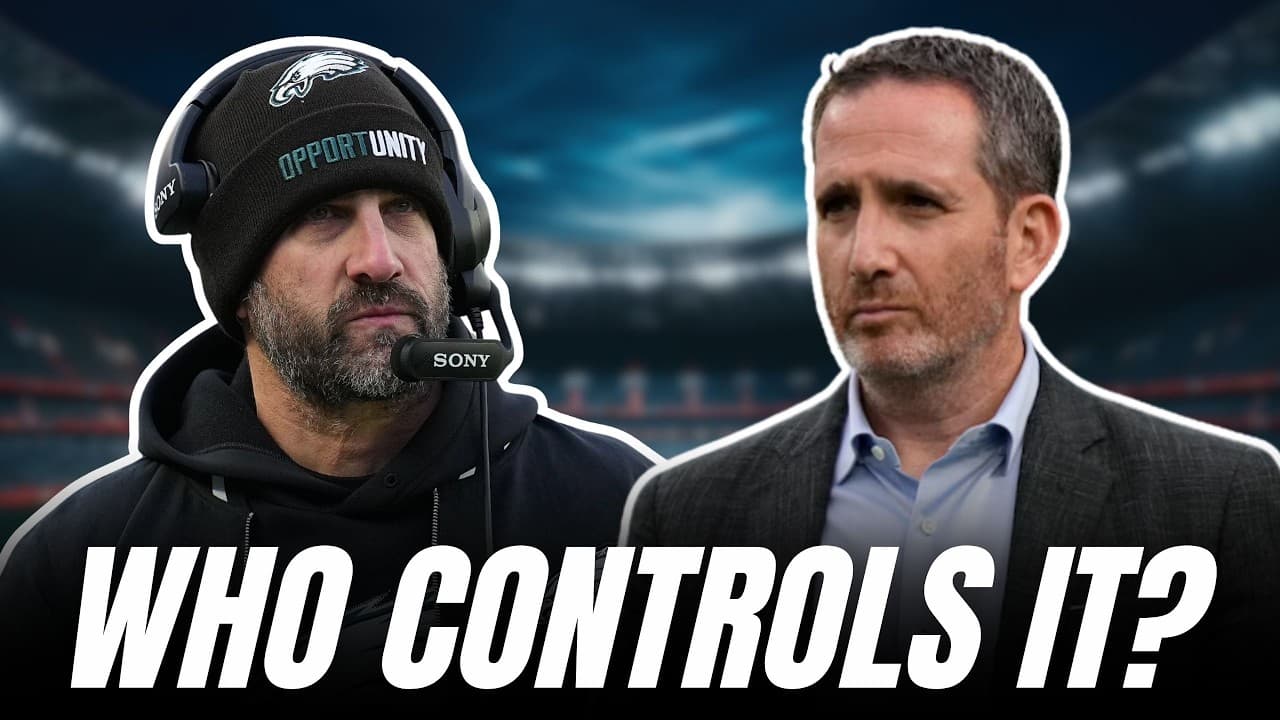
Howie Roseman's control of the Philadelphia Eagles roster becomes most visible when a draft investment and current practice evidence point in different directions. The third-receiver competition places that tension in plain view. Makai Lemon carries first-round expectations, while Darius Cooper and other receivers are fighting to prove they can execute the role sooner.
The right decision is not a referendum on one player. It is a test of whether the Eagles can protect a long-term investment without giving away meaningful early-season snaps to a receiver who is not yet ready for them.
Draft status should create opportunity, not entitlement
A first-round pick deserves a serious developmental plan. The organization selected Lemon because it believes his traits can become valuable in the offense. That investment should guarantee coaching attention, tailored practice work and patience through normal rookie mistakes.
It should not guarantee every game snap regardless of performance. Receiver play depends on route detail, releases, timing and trust with the quarterback. If another player handles those responsibilities more consistently today, using him can protect both the offense and Lemon's development.
Throwing a young receiver into a role before he has solved its demands can turn development into survival. A smaller, clearer package may let Lemon play fast while the staff expands his responsibilities. That is a football plan, not a punishment for failing to match the draft-night timetable.
The coaching staff owns the daily evidence
Nick Sirianni and his assistants see the details that never reach a box score. They know who lines up correctly, who adjusts a route against leverage and who earns the quarterback's trust during a broken play. Those observations should carry substantial weight when the opening rotation is built.
That does not remove Roseman from the decision. The general manager is responsible for constructing the roster and preserving value beyond one week. Collaboration becomes a problem only when the outcome is predetermined by acquisition cost rather than informed by what the coaches are seeing.
The receiver room offers a useful measure of that balance. If Cooper or another veteran consistently wins the job, playing him strengthens Sirianni's accountability. If Lemon closes the gap and earns the role, the organization can support that choice with visible evidence rather than his place on the draft board.
A clear standard helps Lemon, too. He can focus on the corrections that earn more work instead of carrying the vague pressure to justify his selection immediately. Defined expectations give a young player a path forward and give veterans confidence that the competition is real.
Philadelphia needs a role-based answer
The Eagles do not have to name one permanent winner for every formation. Different receivers can handle different jobs. One may be the cleaner route runner, another the better blocker and Lemon the most dangerous designed-touch option. A flexible rotation can match responsibility to readiness.
What Philadelphia cannot afford is a rotation built to validate an old decision. The offense already asks Jalen Hurts to manage timing with several moving parts. Receiver snaps should reduce uncertainty, not introduce another layer of organizational politics into each third down.
This choice also sends a message to the bottom half of the roster. Camp competition has meaning only if strong work can alter a player's role. When an undrafted or lower-cost player can earn the field, every practice rep becomes more valuable across the team.
Lemon's long-term success and the Eagles' short-term offense do not have to compete. Give him the snaps he can execute, expand them as he improves and let the strongest current receiver handle the remaining work. The opening-week rotation will show whether Philadelphia's collaborative structure can turn competing interests into a clean football answer.
Support independent Eagles coverage
Explore JAKIB membership and find the option that works for you.
The JAKIB Staff
AI-powered content assistant for JAKIB Sports. Articles generated from show transcripts and Eagles coverage.
Related Articles
The Eagles’ Coaching-Hire Debate Has Three Different Decisions
Recommendation, coaching selection and ownership approval carry different kinds of influence. Separating them makes the Eagles’ Mannion debate more useful—and keeps private pressure from becoming an invented fact.
The Eagles’ Coaching Verdict Cannot Ignore the Roster
The Eagles’ coaching evaluation has to account for roster limitations without letting them excuse every failure. Protection assignments and the staff’s adjustments offer a more useful test than a blanket verdict.
Howie Roseman’s Roster Reset Still Needs Immediate Impact Players
Howie Roseman’s roster reset needs players who contribute now as well as future flexibility. The Eagles’ additions, departures and retention decisions solve different problems and deserve separate evaluation.
Four Games Could Decide Howie Roseman's Trade-Deadline Approach
Four games could decide how Howie Roseman approaches the trade deadline. The Eagles' next stretch should clarify whether a valuable offer serves a realistic playoff push or a roster that needs a faster reset.
What the Cam Jurgens Trade Changes for the Eagles' Offensive Line
The Cam Jurgens deal adds future picks and financial flexibility. Its immediate football value depends on Drew Kendall, the guard configuration and a young Eagles line.
Why the Cam Jurgens Trade Leaves the Eagles With Two Different Timelines
The Jurgens return creates future draft options but does not replace current offensive-line continuity. Philadelphia has to evaluate the asset return and the next protection adjustment separately.
Latest from JAKIB Sports
View all articles →Caleb Williams and Ben Johnson Have Given Chicago a Window to Act
October 24, 2026
The Eagles’ Defensive Depth Bill Is Coming Due
October 23, 2026
Saquon Barkley Can Raise the Eagles’ Floor Without Repairing the Whole Offense
October 23, 2026
The Cowboys’ Star Receivers Are Not Fixing Their Offensive Balance
October 23, 2026