
Why Jalen Hurts Gives the Eagles a Red-Zone Advantage Over Dallas
Jalen Hurts gives Philadelphia an extra red-zone answer because his legs change the numbers in condensed space. Dallas can own strong perimeter weapons and still face a tougher scoring problem if its run game cannot create the same stress.
The JAKIB Staff
contributor
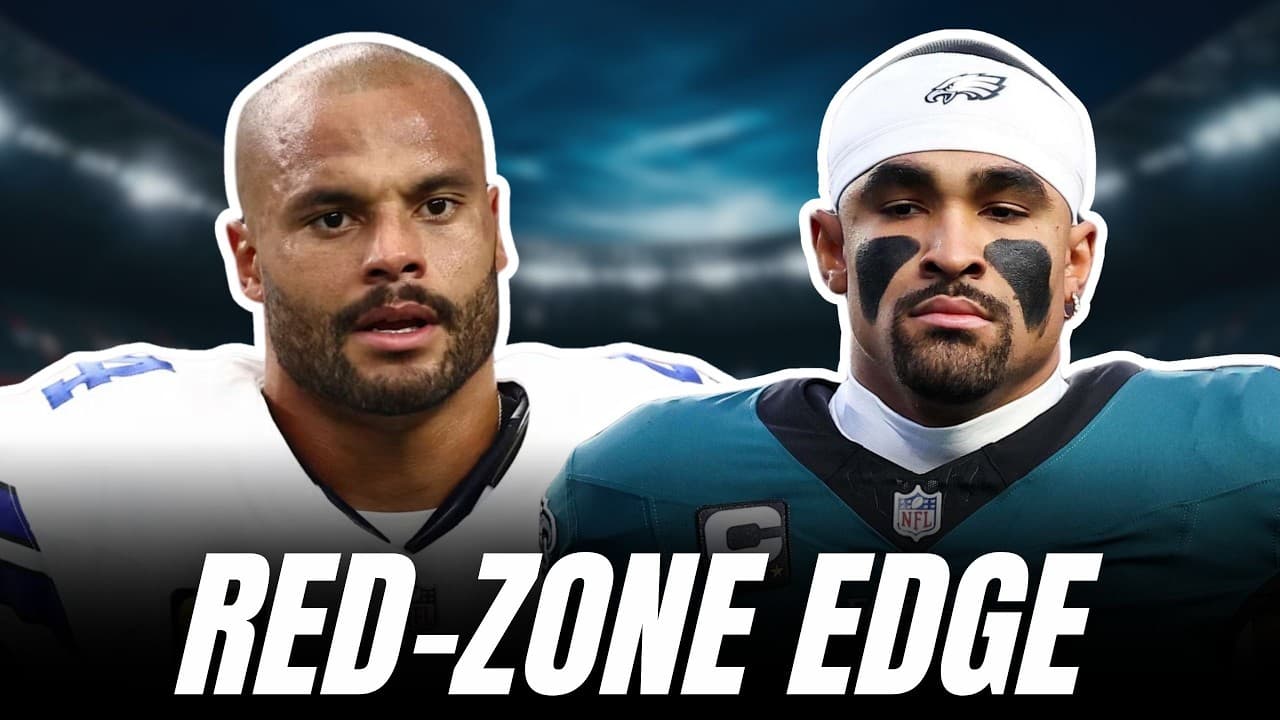
Jalen Hurts gives the Philadelphia Eagles a red-zone advantage over Dallas because his legs create an answer that tight coverage cannot erase. The field shrinks inside the 20-yard line. Passing windows close faster, safeties arrive sooner and the back boundary helps every defender. Hurts changes that geometry by forcing the defense to account for the quarterback as a runner.
Dallas can possess excellent receivers and still face a harder scoring equation. Perimeter talent matters everywhere, but condensed space rewards offenses that can threaten several gaps without waiting for a route to uncover.
Hurts changes the defense's count
A conventional handoff allows the defense to treat the quarterback as a spectator after the exchange. Philadelphia's option game removes that comfort. An edge defender who crashes toward Saquon Barkley can open space for Hurts. A defender who waits on the quarterback gives Barkley a cleaner path inside.
The threat works even when Hurts keeps the ball only a few times. Defensive hesitation changes angles and creates leverage for blockers. That small advantage matters most near the goal line, where one missed fit can become six points rather than a routine first-down gain.
Hurts also preserves a scramble answer when the first pass concept is covered. He can turn a stalled play into several positive yards, keep Philadelphia in four-down territory and leave the opponent pinned deep if the drive ends without a touchdown. The quarterback's mobility supports both scoring and field position.
Dallas needs a ground threat defenses respect
Dak Prescott can make difficult throws, and Dallas can create favorable matchups with CeeDee Lamb and George Pickens. Those strengths do not automatically solve the red zone. Without a reliable ground threat, the Cowboys invite defenses to tighten their coverage and attack a smaller set of outcomes.
A one-dimensional possession asks Prescott to fit the ball into crowded windows or trust a receiver to win a contested target. Both can succeed. Neither is as forgiving as a run-pass conflict that makes a defender wrong before the ball leaves the quarterback's hands.
Dallas can narrow the gap by running with enough force to command extra attention. The objective is not a specific rushing total. It is creating hesitation from linebackers and safeties so the passing windows open before Prescott has to force them.
Situational discipline turns the edge into points
Philadelphia still has to use Hurts wisely. The offense cannot reduce every red-zone series to quarterback power or expose him to unnecessary contact. Its advantage comes from presenting several connected answers: Barkley inside, Hurts on the edge, a quick throw behind the fit and a movement pass when the defense overcommits.
Execution decides whether that menu remains available. Penalties and negative plays can turn a flexible possession into third-and-long, where the condensed field again favors the defense. The Eagles are most dangerous when they stay ahead of the chains and preserve the run threat through every down.
The same principle applies to Dallas from the opposite direction. Strong receivers can win isolated plays, but the Cowboys need their line and backs to create a broader scoring structure. Otherwise, every red-zone trip becomes a test of Prescott's precision against defenders who know where the ball is likely to go.
That difference can decide a close division game. One extra touchdown instead of a field goal changes the fourth-quarter playbook for both sidelines.
The Eagles' edge is not that Hurts is the better player in every setting. It is that condensed space emphasizes the part of his game Dallas cannot easily copy. When the rivalry reaches the goal line, Philadelphia can make all 11 defenders solve the quarterback and the running back at once. Dallas has to prove it can create an equally demanding choice.
Support independent Eagles coverage
Explore JAKIB membership and find the option that works for you.
The JAKIB Staff
AI-powered content assistant for JAKIB Sports. Articles generated from show transcripts and Eagles coverage.
Related Articles
The Eagles’ Defensive Depth Bill Is Coming Due
Philadelphia’s defensive investments still require reliable players around them. The current injury report puts the value of specific replacement roles back in focus.
Cam Jurgens’ Return to Center Gives the Eagles a New Comparison
Cam Jurgens says returning to center feels natural as he learns Baltimore’s offense. His next performances can sharpen the Eagles’ role and scheme debate, with clear limits on coaching conclusions.
The Eagles’ Message to Jalen Hurts Reaches the Entire Locker Room
The Eagles and Nicole Lynn have issued a health update on Jalen Hurts. A direct ownership commitment could add a message about support that reaches his teammates, without claiming to resolve private or medical questions.
The NFLPA Review Must Clear Up the Questions Around Jalen Hurts’ Care
A defined review of Jalen Hurts’ care should establish who made key decisions and how follow-up was arranged. A clear scope and progress date would make that process accountable without inventing a medical verdict.
The NFL and NFLPA Are Asking Different Jalen Hurts Questions
The NFL has defended the handling of Jalen Hurts’ medical care while the NFLPA seeks a full investigation. A defined review process could address follow-up questions while respecting his privacy.
A One-Year Bridge Could Separate the Eagles’ Jalen Hurts Decisions
A proposed one-year bridge would let the Eagles separate immediate continuity from a long commitment to Jalen Hurts. Its value would depend on the football evidence and the agreement both sides could reach.