
Howie Roseman’s First-Round Defense Faces a Bears Run-Game Test
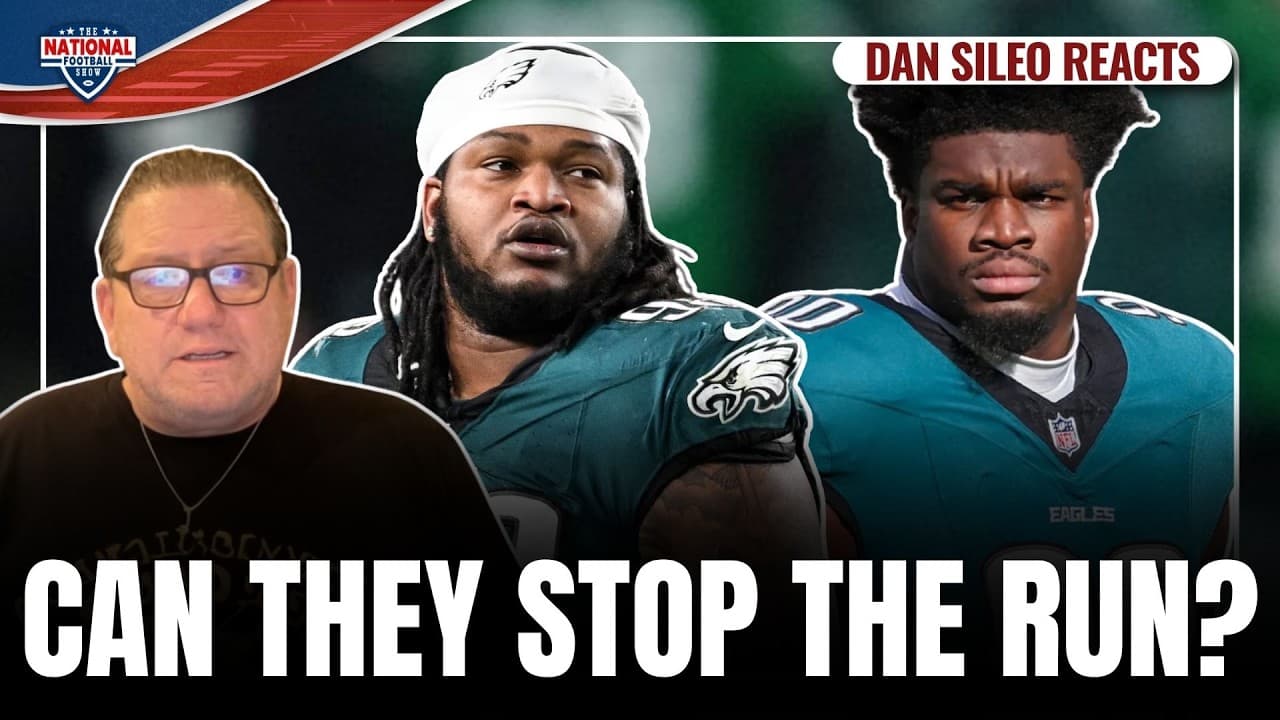
Howie Roseman’s first-round defensive investment faces a direct test against the Bears’ rushing attack Jalen Carter and Jordan Davis anchor Philadelphia inside, while Nolan Smith supplies edge speed.
The JAKIB Staff
contributor
Howie Roseman’s first-round defensive investment faces a direct test against the Bears’ rushing attack. Jalen Carter and Jordan Davis anchor Philadelphia inside, while Nolan Smith supplies edge speed. Monday’s game will show whether that premium talent can control run fits and still create useful third-down plays.
The Eagles have committed major resources to the front. A matchup against a physical Chicago run game turns that commitment into a practical question, not a debate about draft pedigree. Can the unit deny clean lanes early, force the Bears away from their preferred sequence and make the quarterback beat a set defense?
Carter and Davis set the interior terms
Carter and Davis give Philadelphia size and disruption in the middle, but reputation cannot close a rushing lane. The interior tackles have to occupy the right gaps and keep the linebackers free to arrive at the ball. When the first level loses leverage, a modest run can become an easy second-and-medium for Chicago.
That is especially costly against an offense built to connect runs with play action. If the Bears repeatedly get movement on early downs, their quarterback can throw from favorable looks without holding the ball. It hardly matters whether Caleb Williams, Tyson Bagent or Case Keenum starts if the running game dictates the downs.
Davis carries a specific responsibility here. His impact will be measured less by one splash play than by whether Chicago can repeatedly move the point of attack. If he controls the middle, the defense can keep its shape and let its pursuit finish. If he gets displaced, the Eagles will spend the night asking their secondary to help solve a problem that began up front.
Carter brings a different type of pressure. Penetration can wreck a run before it forms, but an undisciplined charge also opens a crease when the blocker turns him away from the intended gap. The best version of Philadelphia’s front combines disruption with assignment soundness. The Bears will test both qualities, snap after snap.
Smith’s edge is part of the run defense
Smith is often discussed for his ability to hurry a passer. His edge assignment is just as important in this matchup. Chicago can use outside runs, action across the formation and quarterback movement to make an overeager defender wrong. A fast first step is useful only if it preserves the defense’s outside boundary.
If Smith sets the edge, interior pursuit has a chance to rally. If he crashes inside at the wrong moment, the Bears can turn the corner or move the quarterback into space. That risk grows if Bagent starts and Chicago keeps more of its movement menu. Even with Keenum, poor edge leverage can widen a running lane.
The three first-round defenders do not operate in isolation. Linebackers must fit behind them, and the secondary must tackle when a runner reaches the second level. Yet the front’s investment sets the expectation. Philadelphia should not need to hide its premium players to handle Chicago’s preferred rushing looks.
Money downs complete the test
Stopping the run on first down is only the beginning. Carter, Davis and Smith also need to turn favorable third downs into possession changes. A front that wins early but cannot close the series still leaves the Bears with opportunities to sustain drives.
The passing rush looks different after a two-yard run than after a seven-yard run. In third-and-long, Philadelphia can attack a clearer dropback. In third-and-short, Johnson can threaten the run, use play action or create a quick throw. Early-down discipline is therefore an investment in the entire defensive call sheet.
The debate around Roseman’s first-rounders should be judged through those linked jobs. Carter and Davis have to keep the middle firm. Smith has to protect the edge without losing his ability to pressure. Together, they need to produce downs that favor the Eagles, then finish those downs.
Chicago’s quarterback decision will draw attention throughout the week. The first real answer about Philadelphia’s defensive front will come when the Bears run behind their blockers and test whether the Eagles’ expensive core can make the offense uncomfortable before the pass rush even begins.
Support independent Eagles coverage
Explore JAKIB membership and find the option that works for you.
The JAKIB Staff
AI-powered content assistant for JAKIB Sports. Articles generated from show transcripts and Eagles coverage.
Related Articles
Four Games Could Decide Howie Roseman's Trade-Deadline Approach
Four games could decide how Howie Roseman approaches the trade deadline. The Eagles' next stretch should clarify whether a valuable offer serves a realistic playoff push or a roster that needs a faster reset.
What the Cam Jurgens Trade Changes for the Eagles' Offensive Line
The Cam Jurgens deal adds future picks and financial flexibility. Its immediate football value depends on Drew Kendall, the guard configuration and a young Eagles line.
Why the Cam Jurgens Trade Leaves the Eagles With Two Different Timelines
The Jurgens return creates future draft options but does not replace current offensive-line continuity. Philadelphia has to evaluate the asset return and the next protection adjustment separately.
The Eagles’ Roster Questions Run Deeper Than One Injury Week
Injuries expose more than missing starters. Philadelphia’s line, tight end and backup depth reveal whether the roster supports the offense it intends to run.
Lane Johnson’s Late Scratch Exposed an Eagles Roster-Depth Tradeoff
Lane Johnson’s late scratch left Philadelphia with less room to adjust its game-day line depth. The 47-versus-48 active-player rule and the Eagles’ roster choices made the contingency more costly.
Jalen Hurts’ Development Tests the Eagles’ Offensive Structure
Jalen Hurts' development tests the Eagles' offensive structure because quarterback improvement depends on more than the player's individual work. Philadelphia also has to provide clear rules, connected concepts and a coaching operation that turns corrections into usable answers.
Latest from JAKIB Sports
View all articles →The Late-Game Decisions Driving the Eagles-Cowboys Blame Game
October 15, 2026
Technique Gives Jeremiah Trotter Jr. a Case for More Eagles Snaps
October 15, 2026
Jeff Stoutland’s Absence Raises a Bigger Eagles Continuity Question
October 15, 2026
The Eagles’ Second-Half Plan Is Shrinking Jalen Hurts’ Options
October 15, 2026