
The Eagles’ Second-Half Plan Is Shrinking Jalen Hurts’ Options
The Eagles need a second-half approach that protects the ball without removing their best answers. Coaching design and Jalen Hurts’ decisions both shape whether a lead becomes another possession or another defensive burden.
The JAKIB Staff
contributor
The Eagles cannot protect a lead by making Jalen Hurts easier to defend. Their second-half plan should reduce reckless decisions while preserving enough answers to keep moving the chains. A cautious offense that repeatedly hands the ball back leaves the defense protecting more than the scoreboard.
Philadelphia scored only three second-half points in its 19–17 loss to Jacksonville, according to the Eagles’ official game recap. That result sharpens the question facing Sean Mannion: how does an offense manage risk without surrendering the ability to attack?
The answer involves both the calls and the quarterback. Treating those as competing explanations gives everybody an excuse. A play can offer a workable answer that Hurts misses. A completed pass can also conceal a design that leaves the offense facing another difficult down.
Protect the ball without giving away the next down
Running the clock works best when an offense earns another series. Calling something safe on first down has little value if it creates an obvious passing situation on third down. The defense can then pressure the protection and sit on the routes it expects.
That is the football cost of becoming predictable. A defense that respects a quarterback’s movement and several receiving options has more decisions to make. Remove those threats together and defenders can play faster, even against an offense that believes it has simplified the assignment.
The response should be selective aggression. A quick throw with a clear leverage read can serve ball security and efficiency together. Movement can change a defender’s angle. A well-timed intermediate route can punish coverage that is leaning toward a short completion. Those are options to evaluate, not a demand to call every concept against every look.
Coaches can also separate the desired result from the instruction. Asking Hurts to protect the football should not become an invitation to pass up an available throw. Asking him to avoid unnecessary contact should leave room to take an open lane and finish a possession responsibly.
Hurts still owns the decisions after the snap
Criticizing the plan does not excuse the quarterback’s processing. Hurts has to identify where pressure changes his answer, get through the progression on time and recognize when the defense has surrendered space. The coordinator cannot make those decisions once the ball is snapped.
Scrambling belongs in that discussion, but it should not become a fantasy that every stalled play has an easy escape. Protection, rush lanes, coverage and the quarterback’s physical condition all affect that choice. A review should identify the actual opportunity before declaring that Hurts simply needed to run.
The same standard applies to throwing the ball away. Sometimes that is the best remaining answer. Other times, an earlier decision would have kept the offense on schedule. Evaluating only the final scramble or incompletion can hide the moment when the play stopped working.
That is why a turnover-free afternoon is an incomplete report card. Ball security matters, but so do productive downs, sustained possessions and the ability to respond after a defense adjusts. An offense can avoid a giveaway and still make its own defense carry an unreasonable burden.
Give the next possession a workable identity
Philadelphia’s protection problems deserve real weight. Mannion cannot call the offense as though every blocker has the same experience or every route has unlimited time to develop. The useful question is which calls give this group a repeatable chance to execute.
That means matching protection, route depth and the quarterback’s timing. If a call requires the ball to leave quickly, its receiving options should support that instruction. If the offense wants to threaten deeper coverage, it needs a credible way to buy the necessary time.
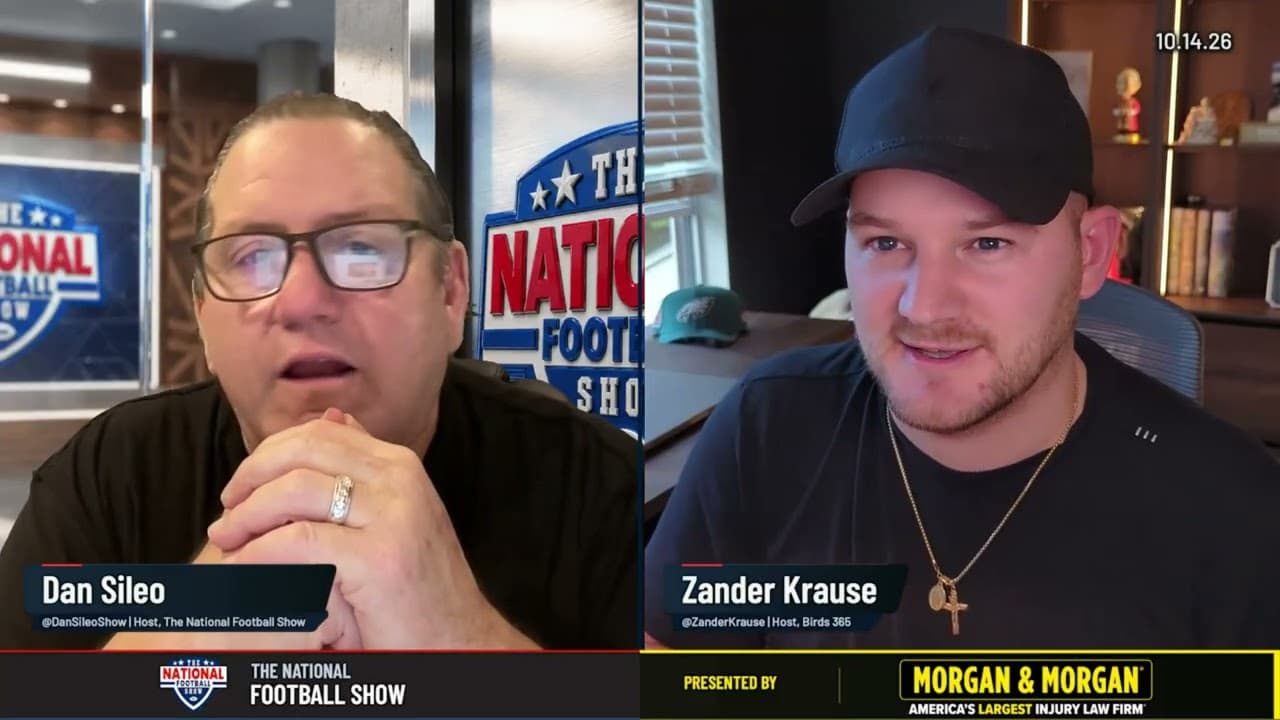
The National Football Show’s discussion of the Eagles’ approach gets at that balance: coaching responsibility and quarterback accountability can exist on the same play. Neither disappears because the other is easier to argue about.
Against Carolina, watch the opening possessions after halftime. Look for usable answers on early downs and a quarterback willing to take them. The Eagles’ next adjustment will mean something when it produces another first down instead of another explanation.
Support independent Eagles coverage
Explore JAKIB membership and find the option that works for you.
The JAKIB Staff
AI-powered content assistant for JAKIB Sports. Articles generated from show transcripts and Eagles coverage.
Related Articles
Four Games Could Decide Howie Roseman's Trade-Deadline Approach
Four games could decide how Howie Roseman approaches the trade deadline. The Eagles' next stretch should clarify whether a valuable offer serves a realistic playoff push or a roster that needs a faster reset.
The Eagles' Second-Half Collapse Is More Than an Injury Problem
The Eagles' second-half collapse is more than an injury problem. Philadelphia's offense has to produce answers after its opening success, not just explain why the available personnel changed.
The Eagles’ Bigger Problem Beyond the Final Kickoff
The kickoff decision deserves scrutiny, but Philadelphia’s recurring offensive breakdown matters more. Hurts, the staff and the line all face a more durable test.
What the Eagles Would Need From a Nick Sirianni Successor
A hypothetical coaching change would test how much football authority the Eagles give their next leader. The issue is staff control and clear accountability, not a famous name.
Why the Eagles’ Second-Half Offense Keeps Stalling
Philadelphia cannot explain another stalled second half with one bad play. The Eagles need a repeatable early-down plan and real counters when a defense adjusts.
Why the Eagles’ Second-Half Offense Remains Their Biggest Problem
The final kickoff decided the Jacksonville game, but Philadelphia’s 232-yard offense creates a more persistent test for Jalen Hurts and the play-calling staff.
Latest from JAKIB Sports
View all articles →The Late-Game Decisions Driving the Eagles-Cowboys Blame Game
October 15, 2026
Technique Gives Jeremiah Trotter Jr. a Case for More Eagles Snaps
October 15, 2026
Jeff Stoutland’s Absence Raises a Bigger Eagles Continuity Question
October 15, 2026
The Eagles Can Buy for the Future Without Going All-In at the Trade Deadline
October 14, 2026