
Embiid’s 37 Points Put the Paint Back at the Center of the Sixers’ Offense
Joel Embiid’s 37-point night gives Philadelphia an inside-first shot-selection test. His work near the basket and elbow can set the balance without eliminating the three.
The JAKIB Staff
contributor
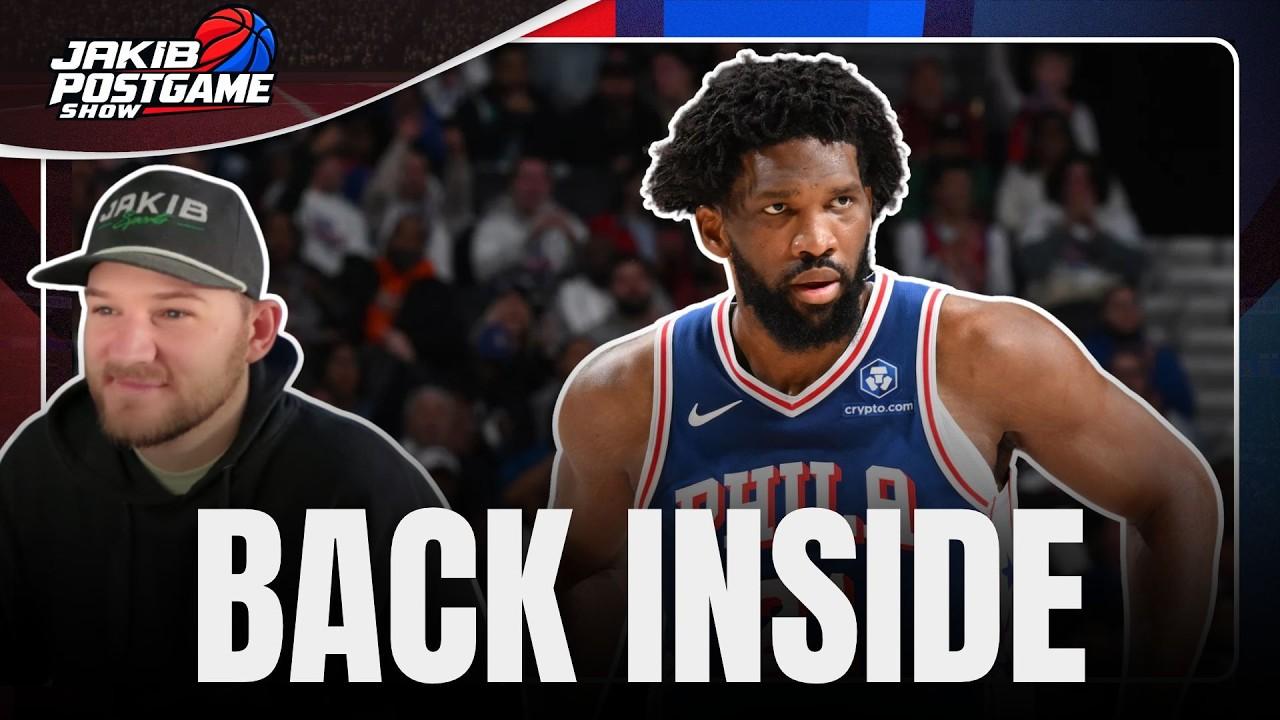
Joel Embiid’s 37 points against Brooklyn give the Sixers a useful place to start their next offensive review: the basket, followed by the elbow. Philadelphia should want those areas to shape his shot selection, with the three-pointer available when it complements the pressure he creates closer in.
Embiid scored 37 and Jaylen Brown added 31 in Philadelphia’s 135–123 win without LeBron James, according to the Associated Press game report. That is plenty to enjoy in a Sixers win. It also opens a more specific basketball question than whether Embiid had a big scoring night: which opportunities should the offense keep trying to create for him?
His work toward the rim and around the foul line supplies the starting point. The tradeoff is how often a perimeter attempt replaces a chance to use those areas. Philadelphia can accept some outside shooting while still asking its center to make the defense deal with him inside first.
Make the defense answer the inside threat
A catch closer to the basket can shorten the distance between Embiid and a scoring opportunity. An elbow touch gives him a different starting position, with room to face his defender and assess whether a jumper or a move toward the lane is available. Those are distinct options, and Philadelphia should preserve both.
Consider a hypothetical elbow possession. If the defender gives Embiid room, the foul-line jumper could be a reasonable choice. If the defender closes that space, there may be a path toward the basket. If help arrives, moving the ball can become the better decision. The value comes from keeping several credible options available before committing to the shot.
That framework explains the appeal of his Brooklyn performance without pretending that 37 points reveals every detail of how the offense worked. The total alone cannot tell us how many touches began in the paint, how often help came or which teammates benefited. Those questions need possession review.
For the Sixers, the practical priority is getting Embiid the ball where he can threaten the defense promptly. An entry that takes too long or leaves him well outside his intended spot can change the shot available. Where the possession begins matters to what Philadelphia can reasonably expect at its end.
A three-pointer still has to earn the possession
An inside emphasis leaves room for Embiid to shoot threes. The important distinction is between an outside attempt that fits the possession and one that gives up a better opportunity closer to the basket.
For example, a hypothetical open three after the ball has moved and the defense has scrambled presents a different choice from a quick perimeter attempt while a favorable interior matchup remains available. Time on the shot clock matters, too. A possession with only a few seconds left may offer fewer useful alternatives.
A make or miss cannot settle that evaluation by itself. A difficult make can reward a questionable decision. An open miss can follow sound offense. Philadelphia should ask what Embiid could reasonably have done at the moment he chose to shoot.
The balance matters across the game as well. When he is consistently creating problems inside and at the elbow, outside attempts can remain part of his game without taking it over. When those attempts begin replacing the actions that make him difficult to guard, the Sixers have a reason to reconsider the distribution. No fixed three-point allowance can account for every coverage or possession.
Keep the second half in the review
Brooklyn’s comeback belongs beside the positive Embiid discussion. The AP account records Brooklyn cutting the lead to four before Embiid made a three with 51 seconds left. That finish sharpens the shot-selection argument: a paint-first preference can still leave room for the right outside attempt. A productive scoring night and an uneven team performance can exist together.
That makes the second half essential to the review. An effective opening half does not establish that the Sixers sustained the same quality of decisions or control after the break. Nor does the comeback, by itself, identify whether shot selection, defensive execution, rebounding or some combination deserved the most blame. Assigning a cause requires closer evidence.
Embiid’s scoring gives Philadelphia something concrete to build around while that review continues. The next useful check is a stretch of possessions when the offense needs a dependable basket: can the Sixers establish his position near the lane or elbow, recognize the coverage and choose the best available finish? Then examine the next outside attempt and whether a better inside option was available. That is where the paint-first preference becomes a decision Philadelphia can actually evaluate.
Watch the full Sixers discussion.
Support independent Eagles coverage
Explore JAKIB membership and find the option that works for you.
The JAKIB Staff
AI-powered content assistant for JAKIB Sports. Articles generated from show transcripts and Eagles coverage.
Related Articles
The Giants’ Free Rushers Put the Eagles’ Offensive-Line Coaching Under Scrutiny
Two documented Arvell Reese sacks expose different protection questions after the Eagles’ 19–11 loss. Chris Kuper’s evaluation should distinguish an unblocked rush from a lost matchup and show whether the staff can teach the correct response.
Notre Dame’s Miami Test Puts CJ Carr at the Center of the Playoff Argument
CJ Carr can keep Notre Dame’s offense flexible if Miami crowds the running game. The Irish have a direct opportunity to strengthen their playoff case, with two very different paths through the matchup.
Washington’s Blitz Puts the Eagles’ Backfield on the Spot
Washington’s pressure approach tests the Eagles’ running-back protection. Saquon Barkley is cleared to play, but Philadelphia still needs coordinated answers from its backfield and quarterback.
The Eagles’ Defensive Contracts Have Put Accountability Under the Microscope
Long-term commitments to Jalen Carter and Jordan Davis raise the stakes for Philadelphia’s weekly defensive decisions. The Eagles can demand clearer execution and adjust roles without turning a poor performance into an unsupported verdict on effort.
The Eagles’ Shrinking Play Menu Points to an Execution Problem
The Eagles looked short of dependable offensive answers against the Rams. A narrow usable menu may reflect failed execution, not a verified internal decision to simplify the playbook.
Eagles–Rams Puts Defensive-Front Versatility Back in Focus
The Eagles’ defensive front needs more than recognizable names against the Rams. It needs enough versatility to keep pressure, run fits and linebacker protection working together when Los Angeles changes the picture.
Latest from JAKIB Sports
View all articles →Ertz's Active-Roster Return Adds a New Decision for Eli Stowers
November 17, 2026
The Eagles' Quarterback Decision Runs on Two Different Calendars
November 17, 2026
Dexter Lawrence's Bengals Impact Sets a Test for the Eagles' Interior
November 17, 2026
T.J. Paganetti's Return Gives the Eagles a Run-Game Test After the Bye
November 17, 2026