
Why Sean Mannion and Chris Kuper Need One Connected Eagles Offense
Sean Mannion’s offense and Chris Kuper’s blocking plan share the same assignment. Philadelphia’s next test is whether protection, personnel choices and complementary calls work together.
The JAKIB Staff
contributor
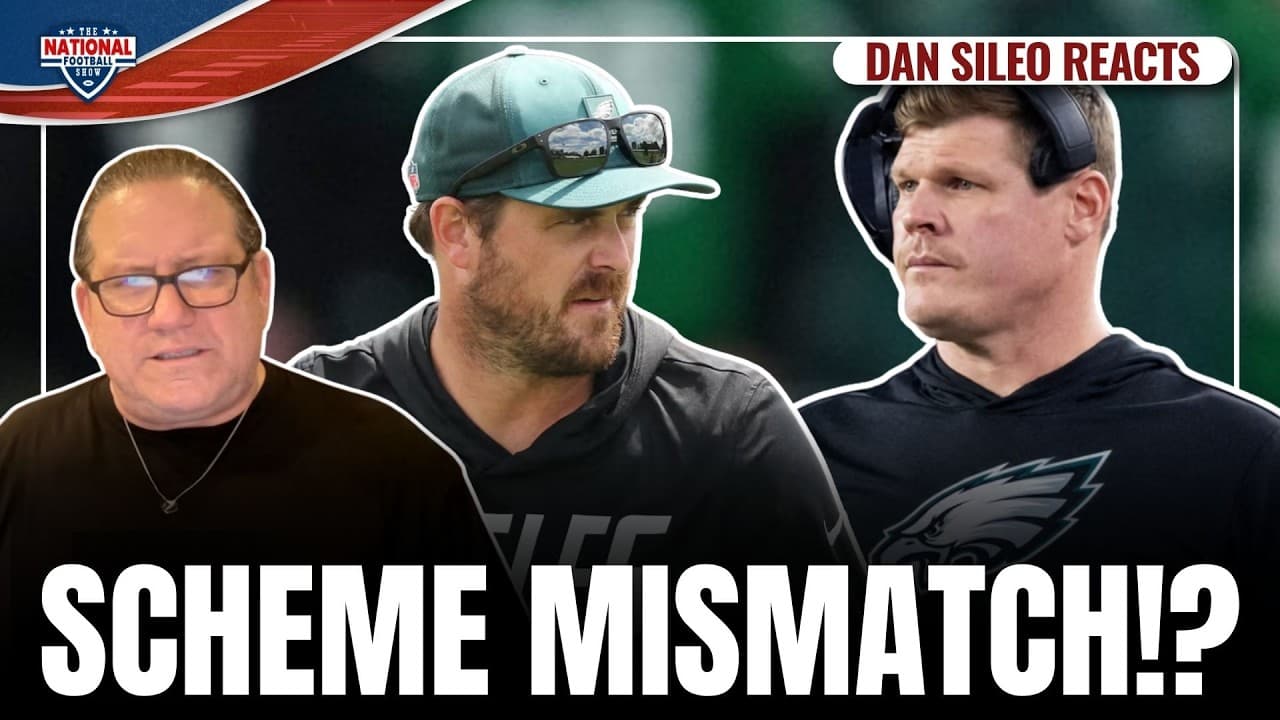
The Philadelphia Eagles do not need a running offense and a passing offense that operate like separate projects. Sean Mannion and Chris Kuper need one connected plan, because protection, blocking angles and quarterback decisions influence each other on nearly every possession.
The concern in Wednesday’s National Football Show is that Philadelphia’s approach has not consistently looked synchronized. That is an observation about the football, not proof of a private disagreement between coaches. The practical issue is whether a call gives the players a shared solution.
Mannion’s offensive direction and Kuper’s line work meet where a play becomes an assignment. A passing concept can look attractive on paper and still fail if its protection asks for more time than the route or matchup allows. A running concept can fail when the front’s movement disrupts the intended combination block.
Blocking is part of the play’s design
Offensive-line coaching is not limited to individual technique. The group identifies the front, accounts for possible pressure and coordinates how adjacent blockers work together. A defender’s late movement can change those decisions after the offense reaches the line.
The running game requires similar coordination. One blocker may secure a defensive lineman while another prepares to climb to a linebacker. If they separate too early or remain together too long, the play can lose the path it was designed to create.
That timing connects Kuper’s responsibilities to the larger offensive plan. The coordinator’s concept determines what the line is trying to accomplish. The available blockers and their strengths determine which versions of that concept are realistic.
Philadelphia cannot solve a protection problem simply by asking Jalen Hurts to hold the ball for a more ambitious route. It also cannot judge a running design without considering where the blocking advantage exists. A connected offense begins with matching the desired result to the assignments that can produce it.
Personnel should support the actual assignment
Wednesday’s discussion questions the fit between certain personnel choices and the work those players were asked to perform. That provides a useful framework without requiring an unsupported claim that any individual player caused the entire offensive problem.
A screen, for example, is not automatically an easy completion that becomes a successful play. Its outcome depends on the release, timing and blockers reaching the right defenders. The receiver’s ability matters, but so does the offense’s choice of who leads the play into space.
The same principle applies to the running game. Saquon Barkley can create yards that the design did not guarantee. That talent should complement the blocking rather than become an excuse to ignore an unfavorable angle or a crowded lane.
Hurts adds another dimension. His movement can punish a defense that loses contain, and his presence can affect how defenders react to run action. The offense gets more value from those abilities when the surrounding assignments anticipate them, instead of asking everyone to improvise after the structure breaks down.
The run and pass answers should connect
An offense can use an effective run to create a later passing opportunity. It can also use a passing tendency to move a defender away from a running lane. Neither sequence works automatically. The complementary call has to attack a response the defense actually showed.
If a defense commits another player to stop Barkley, Philadelphia can examine the space that commitment leaves. If the defense changes its coverage to protect a passing route, the Eagles can reconsider the box and the available blocking numbers. The information from one play becomes useful on the next.
That approach is different from dividing the game into a running phase and a passing phase. It gives both parts of the offense a common purpose. The players can understand not only what they are doing, but what the previous action revealed about the defense.
The Rams offer a practical test of that coordination. Watch whether Philadelphia’s protection answers match its route timing and whether productive blocking concepts lead to sensible complementary calls. Mannion and Kuper do not need every play to succeed. They need possessions that show the offense is solving the same defensive problem together.
Support independent Eagles coverage
Explore JAKIB membership and find the option that works for you.
The JAKIB Staff
AI-powered content assistant for JAKIB Sports. Articles generated from show transcripts and Eagles coverage.
Related Articles
Tanner McKee Won’t Get a Clean Test of the Eagles’ Offense
Tanner McKee will be evaluated alongside the Eagles’ protection, route timing and coaching adjustments. The Carolina game can reveal what works for the backup and what the whole offense still needs.
Jeff Stoutland’s Absence Raises a Bigger Eagles Continuity Question
Jeff Stoutland’s departure puts the Eagles’ offensive-line continuity under scrutiny. The current staff’s task is to transfer knowledge and build reliable combinations without treating retirement and trade counterfactuals as facts.
The Eagles’ Second-Half Plan Is Shrinking Jalen Hurts’ Options
The Eagles need a second-half approach that protects the ball without removing their best answers. Coaching design and Jalen Hurts’ decisions both shape whether a lead becomes another possession or another defensive burden.
Eagles' Offensive Line Problems Make the Sean Mannion Verdict Harder
Philadelphia's blocking problems complicate the evaluation of Sean Mannion and Jalen Hurts. Personnel limitations matter, but they do not erase questions about the offense's responses.
The Eagles’ Bigger Problem Beyond the Final Kickoff
The kickoff decision deserves scrutiny, but Philadelphia’s recurring offensive breakdown matters more. Hurts, the staff and the line all face a more durable test.
How the Eagles’ Run-Game Collapse Exposes Their Offensive Line
Philadelphia’s rushing collapse exposed more than a missing run call. The Panthers game will show whether its line can restore manageable downs and a credible run threat.