
The Eagles’ Bye Week Leaves the Door Open for Changes
The Giants game gives Philadelphia another evaluation before the bye. Any quarterback or play-calling change should solve a defined football problem.
The JAKIB Staff
contributor
The Eagles can keep their current offensive setup against the Giants and still have difficult decisions waiting during the bye. A commitment to this week's preparation does not settle how Philadelphia should spend the rest of a season that is slipping away.
Nick Sirianni is sticking with Tanner McKee and Sean Mannion this week. The Eagles host the Giants on November 8, followed by their Week 10 bye. That sequence gives the staff one more game of evidence before an extended preparation window.
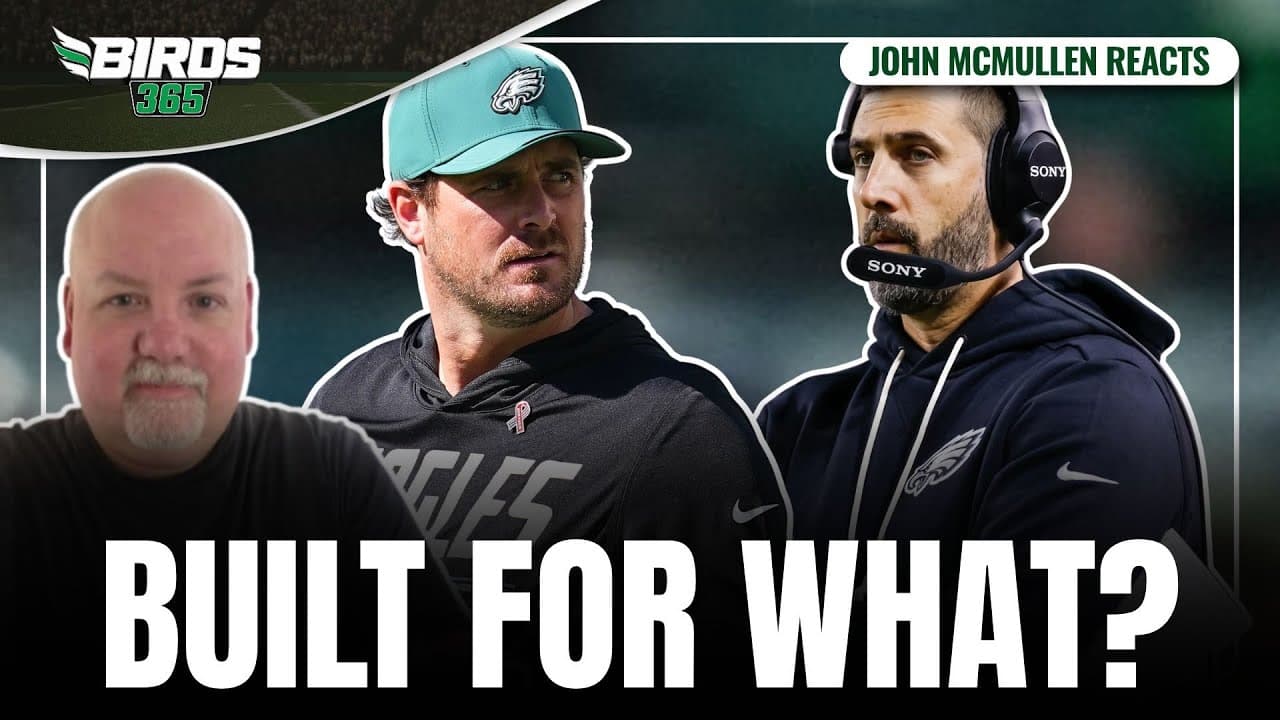
The distinction drove the Birds 365 discussion: continuity now can coexist with evaluation later. The useful question is what a change would actually improve, rather than whether Philadelphia can produce a dramatic announcement.
The bye offers preparation time, not an automatic answer
Changing quarterbacks or redistributing play-calling responsibilities carries a practical cost. A replacement needs practice repetitions, a clear assignment and an offense that reflects what he can execute. Extra preparation time would help that process if the Eagles choose it.
It would not make the choice correct by itself. A different quarterback could bring different strengths while struggling with the same protection breakdowns. A different voice calling plays could inherit the same personnel limitations and the same disconnect between the design and its execution.
Philadelphia should begin with the problem it wants to solve. If the offense repeatedly fails to produce a usable answer against pressure, the staff should examine the protections, route spacing and quarterback decisions together. Replacing one participant without identifying the failure would leave the next participant guessing.
The Giants game can make that evaluation more specific. Watch whether the offense gets aligned promptly, creates an ordinary completion when it needs one and gives McKee a response when the first read disappears. Those are practical measures of progress, even before a bigger personnel decision arrives.
Mannion's circumstances belong in the evaluation
The offensive debate on Birds 365 allowed two uncomfortable conclusions to stand together. Mannion is working under difficult circumstances, and the offense can still deserve criticism for its structure and preparation.
An injury-depleted lineup changes what a coordinator can reasonably demand. Longer developing routes become harder to justify when protection cannot hold up. Complicated assignments become riskier when players are adjusting to unfamiliar combinations. Expecting the same menu under every condition would be poor coaching.
But acknowledging those constraints should sharpen the coaching standard. Can Mannion reduce the burden on his players? Can the offense repeat a few dependable concepts, or does every possession require a collection of difficult individual wins?
Those questions also reach Sirianni. The head coach has to judge whether his staff is asking for something the available lineup can deliver. He cannot evaluate the coordinator as though the system, the practice plan and the rest of the offensive staff operate independently.
If Philadelphia changes responsibilities during the bye, the new arrangement should come with a narrower, clearer football purpose. More consistency in protections or fewer conflicting assignments would offer a better rationale than simply satisfying the demand to do something.
Responsibility extends beyond the play caller
Another thread in the show challenged the fit between the offensive approach and the players asked to run it. That is a broader concern than the identity of the person selecting the next play.
A roster reflects a series of choices about blocking, receiving and quarterback strengths. An offensive change should account for those choices. If a new approach requires skills the lineup cannot provide consistently, the coaching staff and front office both have questions to answer.
The discussion offered competing interpretations of who drove the offensive direction. The football lesson does not require choosing a private decision-maker: the organization should evaluate the fit it produced. Debating internal influence cannot substitute for deciding what these players can execute next Sunday.
That is where the bye can become useful. Coaches can strip away calls that demand too much, identify combinations worth repeating and decide whether another quarterback would make the remaining offense more functional. They can also determine whether a change would merely move the same problem elsewhere.
The 27–10 Washington loss left Philadelphia at 2–6. There is ample reason to question the current approach. There is also a difference between demanding an evaluation and assuming its result.
The Eagles should enter the bye ready to make a defensible football decision. Keeping the same people would require evidence of a workable direction. Changing them would require a plan that gives the next arrangement a fair chance.
Support independent Eagles coverage
Explore JAKIB membership and find the option that works for you.
The JAKIB Staff
AI-powered content assistant for JAKIB Sports. Articles generated from show transcripts and Eagles coverage.
Related Articles
Joe Milton Offers a Different Test for the Eagles’ Broken Offense
Joe Milton would give the Eagles another set of tools, but a quarterback change still requires a workable plan. The next Giants game and the bye provide a decision point, not proof that a switch is coming.
DeVonta Smith’s Rest Question Is About Weeks, Not the Season
The Eagles have announced no shutdown or return timetable for DeVonta Smith. A Birds 365 discussion about possible short-term rest raises a separate challenge: building a workable passing plan with the receivers available.
Tanner McKee’s Split Summer Leaves an Unfinished Development Question
Tanner McKee’s summer competition and uneven preparation leave a development question. A steadier practice role can help the Eagles evaluate him without pretending to explain his confidence.
Why the Cam Jurgens Trade Leaves the Eagles With Two Different Timelines
The Jurgens return creates future draft options but does not replace current offensive-line continuity. Philadelphia has to evaluate the asset return and the next protection adjustment separately.
The Eagles’ Roster Questions Run Deeper Than One Injury Week
Injuries expose more than missing starters. Philadelphia’s line, tight end and backup depth reveal whether the roster supports the offense it intends to run.
Zack Baun’s Injury Leaves the Eagles Facing a Rams Coverage Test
Zack Baun’s concussion puts the Eagles’ middle-of-field coverage under greater scrutiny against the Rams. His availability remains unresolved, and Philadelphia’s plan cannot assume its best linebacker matchup is intact.
Latest from JAKIB Sports
View all articles →An Eagles Reset Starts With the Trenches and the Right Trade Returns
November 3, 2026
The Eagles’ Pass Rush Is Failing the Players Behind It
November 3, 2026
The Eagles’ Run Defense Is Making Zack Baun Play Catch-Up
November 3, 2026
The Eagles’ RPO Debate Is Really About Who Gets the Extra Defender
November 3, 2026