
Why the Eagles Cannot Simply Copy Sean McVay's Rams Offense
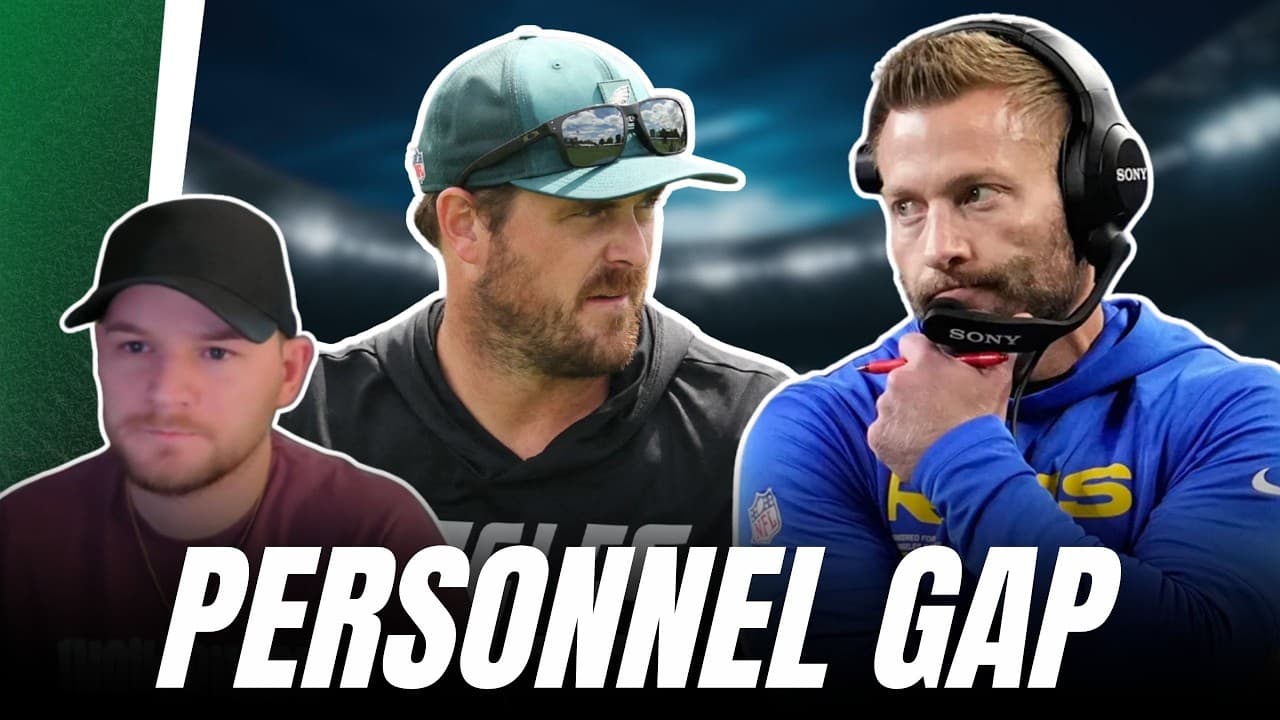
Sean McVay's under-center offense works because the Rams can create multiple looks from versatile personnel. Sean Mannion must adapt those ideas to Philadelphia instead of copying a system built around a deeper tight end room.
The JAKIB Staff
contributor
The Philadelphia Eagles cannot copy Sean McVay's Rams offense by borrowing under-center formations and expecting the same results. Los Angeles creates multiplicity with five playable tight ends, while Sean Mannion must build answers around a thinner personnel menu.
The distinction is bigger than terminology. Scheme works when players make several concepts look identical before the snap. If Philadelphia cannot present the same threats from the same grouping, defenders receive clues that the Rams are designed to hide.
McVay's Multiplicity Starts With Personnel
A deep tight end room allows the Rams to change the picture without changing players. One grouping can support the run, protect the quarterback or release multiple targets into routes. The defense cannot solve the play simply by identifying who entered the huddle.
That uncertainty gives under-center offense its power. The backfield action can pull linebackers forward, while route combinations attack the space they leave. The same initial movement can lead to outside zone, boot action or a dropback pass from a protected pocket.
Philadelphia cannot assume every tight end offers that range. If one player is primarily a blocker and another is mostly a receiver, substitutions reveal intent. The formation may resemble Los Angeles, but the defense is solving a much simpler problem.
Sean Mannion Needs an Eagles Version
Mannion's task is adaptation. He can use McVay's sequencing, play-action structure and under-center presentation without recreating every Rams package. The offense should ask what Philadelphia's best players execute naturally, then use borrowed concepts to sharpen those strengths.
That starts with the offensive line and Saquon Barkley. A credible run threat can create the hesitation that play action needs. Jalen Hurts then benefits from defined reads and moving launch points without becoming trapped inside an imitation of another quarterback's offense.
Hurts' movement remains an advantage the Rams do not possess in the same form. Philadelphia should combine under-center discipline with the quarterback stress already built into its identity. Removing that element to chase a purer copy would make the offense easier to defend.
The Rams Are Also the Team Philadelphia Must Beat
There is another problem with direct imitation: the Eagles are chasing a team they may need to defeat. Running Los Angeles' system with fewer interchangeable pieces creates a bad comparison. The original version will usually operate faster and offer more counters.
Philadelphia needs its own constraint plays. If defenses overplay the run, Hurts should have quick access to Smith and the other receivers. If linebackers widen with motion, Barkley should find the interior crease. Each answer should come from the Eagles' personnel, not a Rams diagram.
The early season will reveal whether the staff understands that difference. Watch which groupings can run and pass without obvious substitutions. Also watch whether Philadelphia preserves quarterback movement when the under-center package cannot create a clean answer.
Tempo offers another way to protect the package. If Philadelphia finds a grouping that creates leverage, staying on the field can prevent defensive substitutions. The offense gains multiplicity through pace even when its personnel does not match the Rams' depth.
Motion can create similar advantages. It can identify coverage, improve blocking angles and move a receiver away from contact. Those benefits fit Philadelphia's roster without requiring every tight end to threaten every part of the field.
The danger is treating formation as identity. Lining up under center does not automatically produce a physical or unpredictable offense. The call still requires believable run action, coordinated protection and targets who punish defenders for stepping toward the backfield.
Mannion can also vary where the stress appears. One week may feature Barkley behind downhill action. Another may isolate Smith after motion. The system becomes durable when opponents recognize the shell but cannot predict which Eagles strength will emerge from it.
Borrowing good football ideas is smart. Building an offense that depends on players another roster possesses is not. Mannion's real test is turning McVay's principles into a Philadelphia system that can eventually challenge the Rams instead of merely resembling them.
Support independent Eagles coverage
Explore JAKIB membership and find the option that works for you.
The JAKIB Staff
AI-powered content assistant for JAKIB Sports. Articles generated from show transcripts and Eagles coverage.
Related Articles
Chicago’s Quarterback Decision Tests Ben Johnson’s System Fit
Chicago’s quarterback debate turns on how Ben Johnson’s offense functions, not simply who has more talent. Caleb Williams’ questionable designation also keeps availability separate from the argument for Case Keenum.
Howie Roseman’s Roster Reset Still Needs Immediate Impact Players
Howie Roseman’s roster reset needs players who contribute now as well as future flexibility. The Eagles’ additions, departures and retention decisions solve different problems and deserve separate evaluation.
Makai Lemon’s Next Opportunity Is About Where the Eagles Target Him
Makai Lemon’s next opportunity should depend on where the Eagles target him, not simply how often. Catches beyond the line can give Philadelphia a clearer way to build and evaluate his role.
What Nick Sirianni’s Preparation Shows Beyond the Eagles’ Final Scores
Nick Sirianni’s weekly preparation deserves scrutiny alongside the Eagles’ results. Evaluating the full head-coaching job also means keeping a hypothetical future reset separate from the current assignment.
Jake Majors’ Natural Position Matters in the Eagles’ Center Decision
Jake Majors’ natural position gives the Eagles a reason to limit disruption at center. Availability and exchange reliability should drive the decision without turning an unofficial depth chart into a starting lineup.
Why the Eagles Cannot Recreate the Nick Foles Reset in Two Days
Tanner McKee’s abrupt starting assignment calls for a clear, executable plan against Carolina. The Nick Foles comparison explains why adapting to a quarterback takes more than changing the call sheet.