
Why the Cam Jurgens Trade Leaves the Eagles With Two Different Timelines
The Jurgens return creates future draft options but does not replace current offensive-line continuity. Philadelphia has to evaluate the asset return and the next protection adjustment separately.
The JAKIB Staff
contributor
The Cam Jurgens trade leaves the Eagles operating on two different clocks. Philadelphia can improve its future draft position while making the current offensive line harder to hold together, and both judgments can be true at once.
The Eagles' official October 7 transaction entry says they agreed to send Jurgens and a 2027 seventh-round pick to Baltimore. In return, Philadelphia receives a 2027 fifth-round pick and a 2028 second-round pick. That is a specific investment in later rosters, not an immediate replacement at center.
The distinction matters because arguments about the deal often answer different questions. One side evaluates the return. The other asks who handles the next protection adjustment. Winning the first argument does not solve the second problem.
Draft value does not take a snap
A future second-round pick gives Howie Roseman another tool for building the roster. It can become a player, facilitate a move up the board or enter another trade. Those options have value before the eventual selection ever reaches Philadelphia.
They also have limits. A 2028 selection cannot identify pressure before the next snap, help a guard sort out a defensive twist or establish the center-quarterback exchange this week. The team has exchanged an available player for resources whose main payoff comes later.
That does not automatically make the transaction a mistake. Keeping every familiar starter can leave a team paying for yesterday's identity. Moving a player can be sensible if the organization believes the return exceeds his remaining value within its plans.
But the football analysis still requires an honest accounting of what leaves the building. A pick is not a replacement player simply because its round sounds attractive. Philadelphia now carries the execution risk that accompanies another change in its offensive front.
The current offense has a continuity bill
An offensive line is not five independent evaluations added together. Adjacent blockers share responsibilities, recognize movement and communicate changes before and after the snap. Changing the center affects that network even when the replacement possesses useful individual traits.
The immediate questions are therefore practical. Who sets the protection? How quickly can the interior exchange assignments? Which runs give the new combination its best chance to move together? These are coaching decisions, not arguments about the draft chart.
The Eagles also placed Landon Dickerson on injured reserve on September 15, according to their transaction ledger. That documented absence adds another continuity concern without requiring a prediction about when he will return. His medical timetable should not be invented to make the trade argument cleaner.
For Jalen Hurts, the issue is the quality of the environment around each decision. A changing line can force the offense to adjust timing, protection help and route combinations. It does not excuse every quarterback error, but it changes what the offense can reasonably ask him to execute.
Two timelines require two report cards
Philadelphia can judge the transaction return now while reserving judgment on the eventual draft selection. It can also evaluate the rebuilt line every week. Combining those assessments into one sweeping verdict hides more than it explains.
The future report card asks whether the acquired resources produce meaningful roster value. The present report card asks whether the offense can protect the passer, create usable running lanes and avoid communication breakdowns. Those outcomes may move in opposite directions for a while.
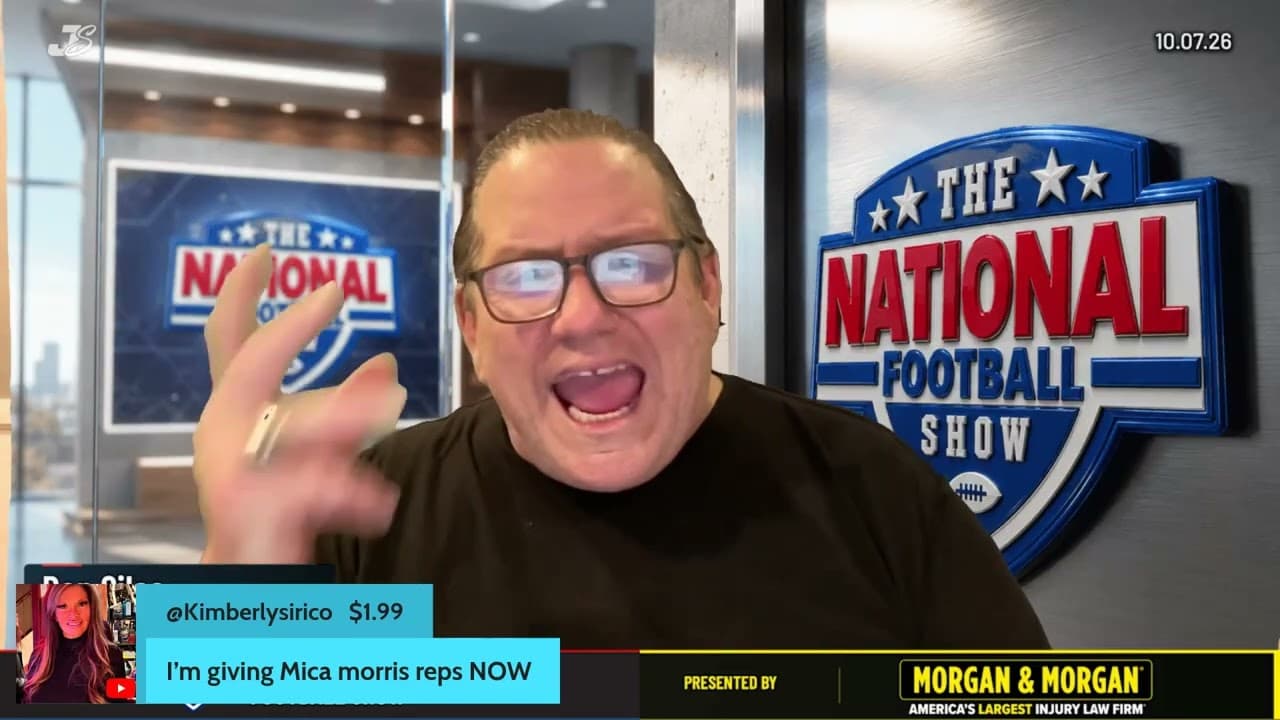
That tension is the point of the National Football Show's discussion: a favorable exchange of assets does not establish that the current roster improved. Nor does a difficult offensive adjustment prove that the eventual pick will fail. The same transaction can create an opportunity and impose a cost.
The next useful evidence will come from the offense's response, not another argument about whether a second-round pick sounds sufficient. Watch how Philadelphia organizes the interior, where it supplies protection help and whether the replacement combination can execute without shrinking the playbook. That is where the current-season price of a future-facing decision becomes visible.
Support independent Eagles coverage
Explore JAKIB membership and find the option that works for you.
The JAKIB Staff
AI-powered content assistant for JAKIB Sports. Articles generated from show transcripts and Eagles coverage.
Related Articles
Jeffrey Lurie’s Honor Arrives Amid an Eagles Trust Problem
Jeffrey Lurie’s Eagles Hall of Fame induction recognizes a championship legacy. Fans can appreciate that history while expecting clearer public communication from the organization’s leadership.
Caleb Williams and Ben Johnson Have Given Chicago a Window to Act
Chicago’s win over New England offered evidence of a developing quarterback and an adaptable coach. The next roster decisions should build on that progress without assuming a guaranteed championship window.
Cam Jurgens’ Return to Center Gives the Eagles a New Comparison
Cam Jurgens says returning to center feels natural as he learns Baltimore’s offense. His next performances can sharpen the Eagles’ role and scheme debate, with clear limits on coaching conclusions.
Tanner McKee’s Split Summer Leaves an Unfinished Development Question
Tanner McKee’s summer competition and uneven preparation leave a development question. A steadier practice role can help the Eagles evaluate him without pretending to explain his confidence.
Eagles-Cowboys Could Turn a Division Race Into a Trade-Deadline Decision
Monday’s Eagles-Cowboys game opens a three-game division stretch before the November 10 trade deadline. Philadelphia should use the performances to decide which roster moves support a credible competitive plan.
Three-and-Outs Are Turning the Eagles’ Defense Into an Attrition Test
Carolina’s 79 offensive snaps put a concrete number on the burden facing the Eagles’ defense. Sustained offensive possessions and defensive stops on favorable third downs would address different parts of the same workload problem.