
Cam Jurgens Trade Exposes Two Competing Visions of the Eagles' Future
The announced Cam Jurgens trade agreement creates future draft options and immediate protection questions. The better-now argument still needs evidence from the replacement line.
The JAKIB Staff
contributor
The Cam Jurgens trade agreement forces the Eagles to answer two different questions: can the replacement line play better now, and is Philadelphia prioritizing a broader roster reset? Those possibilities can overlap, but they carry very different burdens of proof.
On Wednesday, the Eagles announced an agreement to send Jurgens and a 2027 seventh-round pick to Baltimore for a 2027 fifth-round pick and a 2028 second-round pick, pending a physical. The return creates future options. It does not establish what the next offensive-line combination will deliver this Sunday.
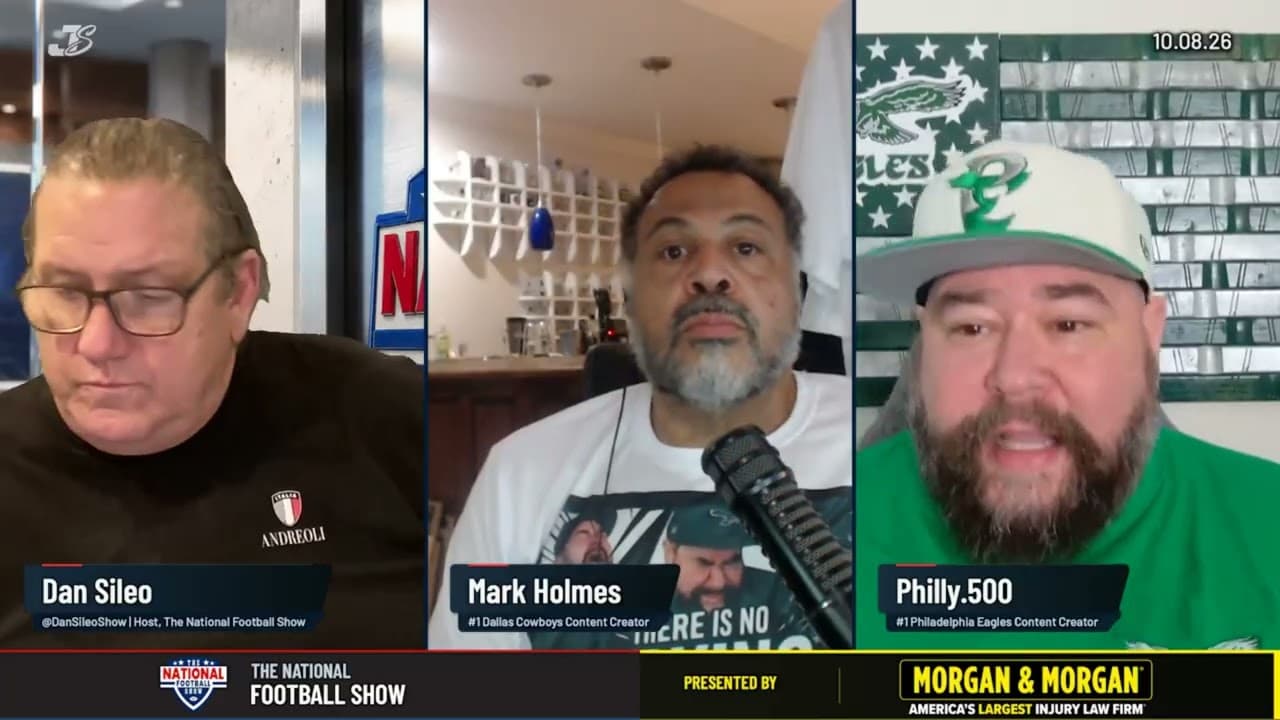
The National Football Show explored the divide between an optimistic replacement argument and a longer-term interpretation of the move. The football consequence is immediate either way: Philadelphia has fewer familiar answers while preparing to face Jacksonville in London.
The replacement argument needs evidence on the field
The optimistic case is that changing the lineup can improve the unit even after moving a recognizable player. A younger or differently suited blocker might execute the current assignments more effectively. The evaluation should be based on actual combinations and results, rather than assuming the established name is always the best current option.
There is also a limit to that argument. A replacement's potential is not proof that the offense has improved. The Eagles have to demonstrate consistent protection, workable run-blocking combinations and the communication required to handle changing defensive fronts.
Jurgens had already moved from center to left guard after Landon Dickerson went on injured reserve. Drew Kendall took over at center. That sequence means the trade affects a line that was adapting before the announcement, not an otherwise stable group choosing one simple substitution.
The team's trade announcement identified Willie Lampkin and Micah Morris among its options to reshuffle the line. Those names describe possible answers. They should not be presented as a confirmed Sunday lineup before practice availability and the team's final decisions establish it.
Thursday's report listed Kendall as a nonparticipant with a knee injury. That adds another variable to any confident claim that the new unit will be better. The identity of the center, the surrounding combination and the time available to practice together all affect the test.
Draft capital supports a reset without proving one
The other interpretation starts with the future return. The Eagles said the agreement would leave them positioned with 16 picks over the next two drafts before compensatory selections, including additional early-round capital in 2028. That creates flexibility for rebuilding multiple positions.
Flexibility is valuable, but it does not tell us which path the front office will choose. Picks can help a team replenish its line while retaining its quarterback and coaching staff. They can also support a larger transition. The transaction alone cannot establish the full plan.
Lane Johnson's retirement strengthens the need for replenishment, regardless of how the Jurgens decision is described. Philadelphia's announcement put rookie Markel Bell in line for another start after his appearance against the Rams. The line now includes development questions that the offense once treated as settled strengths.
A team can compete while developing players. The difficulty comes when the offense requires every inexperienced replacement to become dependable immediately. That leaves little room for missed assignments, injuries or a prospect who needs more time.
The front office's future return should therefore be evaluated separately from the current offense's protection. A trade can produce useful assets and still make this week's lineup harder to manage. Calling one side successful does not automatically settle the other.
Avoid turning an interpretation into medical reporting
The show included conjecture about why the Eagles felt comfortable moving Jurgens. That does not establish private medical conclusions, a manufactured injury designation or a hidden organizational motive. None of those claims is needed to explain the football decision.
The verified information is narrower: the team announced the agreement pending a physical, described the return and outlined available line options. Analysis can compare those choices without claiming access to a player's diagnosis or the club's undisclosed reasoning.
The same standard applies to Jurgens' future performance. Success in Baltimore would offer useful evidence about the player and his new circumstances. It would not retroactively explain every factor behind Philadelphia's decision. Struggles elsewhere would not prove every optimistic replacement claim either.
For the Eagles, the immediate burden is practical. Build a lineup that can protect Hurts, create usable running lanes and avoid communication failures while the roster changes. For the longer term, turn the acquired flexibility into players who can anchor the next version of the offense.
Jacksonville will test the first burden before any future pick can help. Watch the actual combinations and the adjustments around them; that is where the better-now argument begins to earn its credibility.
Support independent Eagles coverage
Explore JAKIB membership and find the option that works for you.
The JAKIB Staff
AI-powered content assistant for JAKIB Sports. Articles generated from show transcripts and Eagles coverage.
Related Articles
Replacing Nick Sirianni Would Not Remove the Eagles' Coaching Dilemma
A coaching change would not automatically settle the Eagles' offensive direction. Authority, play-calling and personnel fit remain central to evaluating Nick Sirianni and any alternative.
Jalen Hurts' Next Contract Depends on More Than His Own Performance
Jalen Hurts' next contract decision connects directly to the Eagles' supporting roster. Philadelphia has to evaluate quarterback performance and a credible rebuilding plan together.
The Eagles' Makeshift Offensive Line Turns Jacksonville Into a Protection Test
The Eagles face Jacksonville with an offensive line in transition. Center uncertainty and Markel Bell's development will shape how Philadelphia protects Jalen Hurts.
The Eagles' Offensive Identity Problem Complicates Jalen Hurts' Evaluation
Jalen Hurts’ decisions, the protection plan and the Eagles’ route concepts need separate evaluation. Their shared timing will reveal whether Philadelphia is building a coherent offense.
Lane Johnson's Exit Turns Markel Bell Into an Eagles Development Test
Markel Bell inherits an immediate right-tackle audition after Lane Johnson’s retirement. Protection support and communication will determine how useful that development opportunity becomes.
What the Cam Jurgens Trade Changes for the Eagles' Offensive Line
The Cam Jurgens deal adds future picks and financial flexibility. Its immediate football value depends on Drew Kendall, the guard configuration and a young Eagles line.