
Ray Didinger's Spinner Brings a Hockey Dream's Human Cost to Swarthmore
Ray Didinger's reporting relationship with Brian Spencer became a play about ambition and its cost. Spinner returns to the stage in Swarthmore in January 2027.
The JAKIB Staff
contributor
Ray Didinger's Spinner asks what remains of a sports dream after reaching the highest level stops being the whole story. Its coming Swarthmore staging gives Philadelphia sports fans a reason to look beyond the achievement and consider the person carrying its cost.
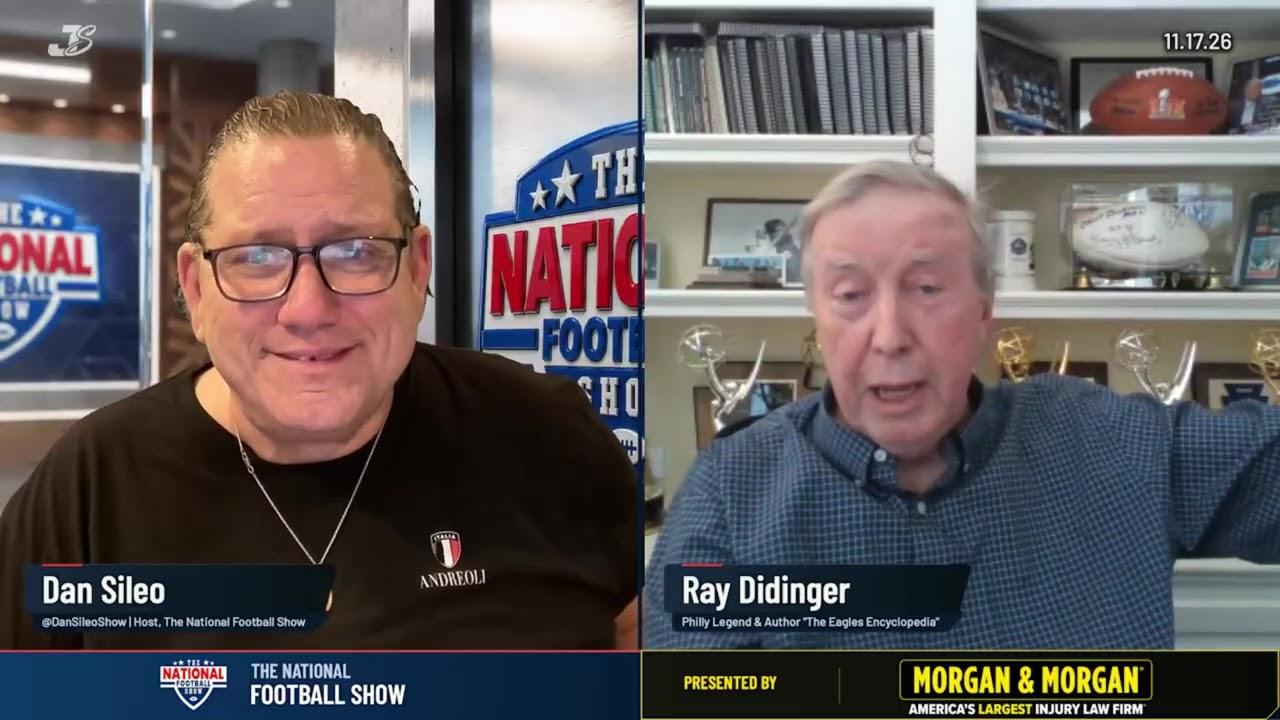
The play centers on Brian “Spinner” Spencer, an NHL player whose story Didinger first reported in 1971. In his latest JAKIB interview, Didinger describes a reporting relationship that outlasted the original assignment. That long connection supplies a different entry into the story than a career summary could.
A returned phone call became a lasting story
Didinger recalls working as a young Philadelphia Bulletin reporter when he encountered the account that prompted his interest. He left a message for Spencer without expecting much chance of a response. Spencer called back, and Didinger says they spoke for about an hour.
The exchange did not end when the article appeared. Didinger recalls mailing Spencer the story and receiving a thank-you letter. During later visits to Philadelphia, they would talk again. The first interview became the beginning of a relationship through which Didinger learned more about the life behind the player.
That history matters because sports coverage usually moves toward the next result. An athlete's arrival creates a story, then another game supplies a new one. Here, the reporter kept returning to the same person, hearing how the life continued beyond the event that first brought attention.
Didinger does not present that relationship as identical to the one behind Tommy and Me. In the interview, he describes that earlier play as a story he lived, from childhood admiration for Tommy McDonald to his later connection as a reporter. Spinner grew from interviewing and getting to know someone whose experience remained with him.
The distinction keeps the focus on Spencer. Didinger is the playwright recalling his own reporting, while Spencer is the athlete whose story compelled him to keep working. Their relationship explains the project's origins while preserving the difference between witnessing a story and living it.
The achievement does not settle the cost
Didinger's account returns to the distance between the life a child imagines and the life that follows. Reaching professional hockey fulfilled an ambition. It could not determine what that achievement would mean for Spencer or the people close to him.
That is a useful challenge to the way sports stories often measure success. A roster spot provides a clear destination, and a uniform makes the accomplishment visible. The sacrifices around it can be harder to see, particularly when audiences know the player mainly through games.
Spinner's premise invites attention to that difference. Ambition can organize a life and demand more from it at the same time. Recognizing that tension does not require treating every athlete's pursuit as a warning. It requires leaving room for consequences that a successful arrival cannot resolve.
Didinger describes the play as a father-son story within the hockey world. That framing gives viewers an approach even if they know little about Spencer's career. The relationship and the pursuit carry questions that do not depend on remembering a particular lineup or season.
Those questions also give the older reporting a reason to return in another form. Didinger recalls writing and repeatedly revising the play. The move to theater lets the story ask for sustained attention to a person, rather than leaving him as a brief item in the record of a sport.
A new staging in Swarthmore
The Players Club of Swarthmore's current production page lists Spinner for January 22 through February 5, 2027, directed by Jeff Martin. The announced running time is 100 minutes.
This is a returning work. The Delaware Theatre Company production ran September 17 through October 5, 2025, with Matt Silva directing. That earlier production explains Silva's connection to the play; Martin is the director listed for Swarthmore.
The coming run offers another audience a way into a story Didinger has carried since that first interview. His recollections explain why it lasted: the professional dream and the life surrounding it never fit neatly into the same account. As January approaches, the invitation is to follow Spencer beyond the point where a conventional sports story might declare that he had made it.
Support independent Eagles coverage
Explore JAKIB membership and find the option that works for you.
The JAKIB Staff
AI-powered content assistant for JAKIB Sports. Articles generated from show transcripts and Eagles coverage.
Related Articles
The Eagles' Rebuild Cannot Simply Borrow the 2020 Blueprint
The Eagles' earlier rebound had two distinct steps and a veteran foundation. That history supports confidence in Howie Roseman without supplying a deadline.
The Eagles’ $60 Million Interior Must Carry More of the Defense
The show’s $60 million shorthand for Jalen Carter and Jordan Davis raises a performance question, not a verified combined-payroll statistic. Philadelphia needs its interior to keep linebackers clean and compress passing lanes after Case Keenum exploited the middle of the defense.
What Case Keenum Exposed in the Eagles’ Middle-Zone Defense
Case Keenum attacked the area between Philadelphia’s linebackers and safeties in Chicago’s 27-7 win. The Eagles’ next defensive test is whether better interior leverage, spacing, and tackling can close that lane without sacrificing coverage elsewhere.
Why Safety Is Philadelphia’s Hardest Defensive Fix After the Bears Loss
Chicago's 41-yard touchdown exposed a coverage breakdown, but the Eagles' safety concern runs deeper than one play. Philadelphia needs steadier communication, pursuit and tackling before the Rams game.
Eagles' Second-Half Stall Exposed More Than One Offensive Problem
The scoreless second half in Chicago exposed linked failures in Philadelphia’s offense. Short drives compounded the defense’s workload and raised the stakes for every later possession.
How the Eagles’ Second-Half Offense Fell Apart Against Chicago
The Eagles were down only three at halftime in Chicago before three short possessions killed their comeback chance. Their 27-7 loss exposed problems in protection, down-and-distance and second-half execution.