
Why Sean Mannion's McKee Adjustment Matters for Jalen Hurts
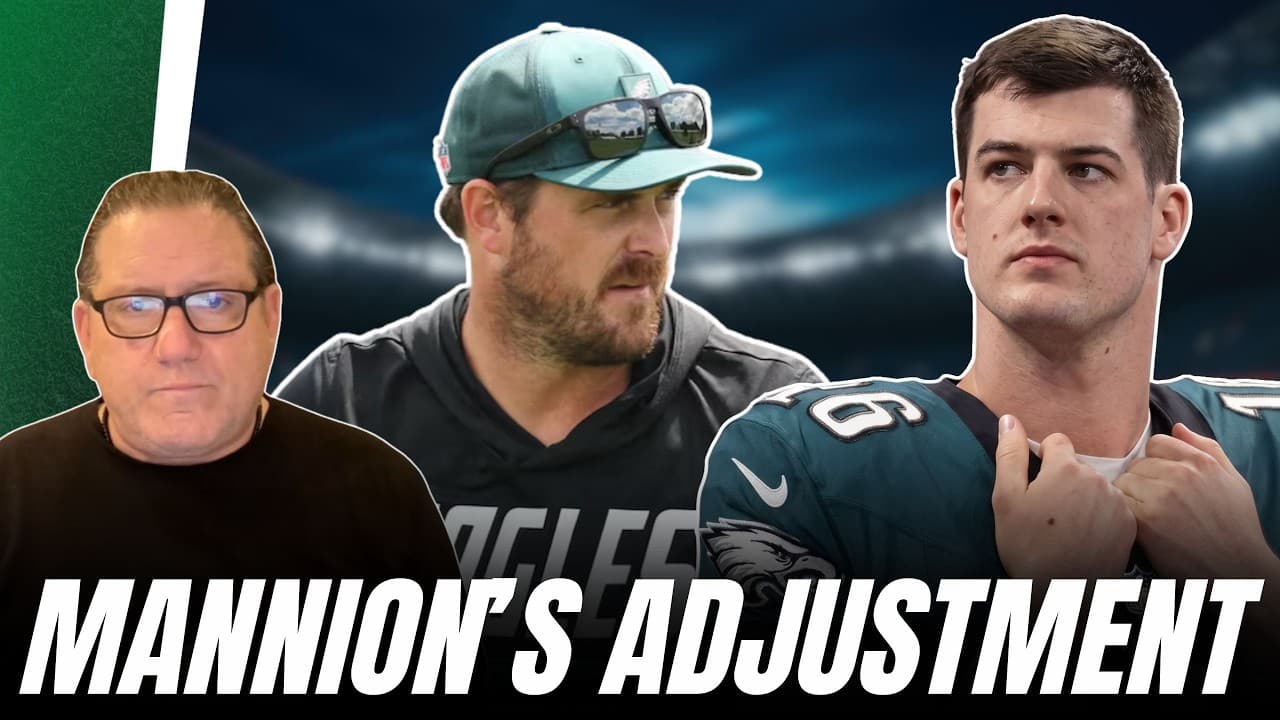
Sean Mannion put Tanner McKee in shotgun and built the call sheet around what his quarterback handled best. That preseason adjustment matters because Jalen Hurts requires the same kind of tailored structure, only with a much broader menu of movement, option and play-action answers.
The JAKIB Staff
contributor
Sean Mannion's most useful preseason decision was not a clever play. It was putting Tanner McKee in shotgun and letting the quarterback operate from a structure that fit him. For the Eagles, that adjustment matters far beyond the backup competition. It offers an early test of whether Philadelphia's offensive coordinator will shape the offense around Jalen Hurts instead of forcing Hurts into somebody else's preferred picture.
McKee and Hurts present different problems, but the coaching principle is identical. Identify what helps the quarterback see the field, marry those answers to the run game, and remove unnecessary stress from the operation. Mannion showed that flexibility with McKee. The regular-season consequence is whether he can apply it to a starter whose legs, deep ball and option-game value create a much larger menu.
McKee gave Mannion a clean coaching test
The preseason setup made the lesson easy to see. McKee looked more comfortable when the Eagles reduced his under-center work, used quicker throws and allowed him to survey the defense from shotgun. Those calls did not ask him to become a different athlete. They emphasized his size, vision and willingness to distribute the football while limiting the footwork that can slow the start of a play.
That is what adaptable play calling looks like. The coordinator does not win by proving his system can survive any quarterback. He wins by finding the version of the system that gives the quarterback clear answers. McKee's improvement came with a practical change in presentation, and the offense gained more manageable first- and second-down plays because of it.
Hurts expands the menu and the difficulty
Hurts creates a more complicated assignment because he can threaten a defense in several ways. Philadelphia can use designed movement, sprint-outs, run-pass options and play action without abandoning its physical identity. Each tool can simplify the coverage picture while forcing an edge defender or second-level player to account for Hurts as a runner. The offense becomes harder to defend when those threats look connected rather than collected from separate pages of the call sheet.
The mistake would be treating movement as an escape hatch used only after the static passing game stalls. Movement should be part of the weekly design. A rollout can change the launch point, shorten a progression and make a defender choose between closing on Hurts or carrying a route. An option look can hold the backside long enough to create a cleaner lane for Saquon Barkley. Those details reinforce each other.
None of that means Hurts should leave the pocket on every important down. The Eagles still need conventional dropback answers for obvious passing situations and late-game football. Tailoring an offense is not hiding a quarterback. It is sequencing the strongest concepts so the difficult plays arrive after the defense has already been forced to honor the run, the keeper and the moving pocket.
The regular season will reveal the real adjustment
Preseason success only proves that Mannion recognized one problem and chose a sensible answer. Regular-season defenses will disguise pressure, change leverage after the snap and build a plan specifically for Hurts. The coordinator will have to counter those changes without losing the run-first foundation that makes Philadelphia dangerous. That is a larger test than moving a backup into shotgun for an exhibition game.
Still, the McKee adjustment is meaningful evidence. It shows Mannion was willing to let the quarterback's traits change the call sheet. For Hurts, the next proof will come when an opponent squeezes the run game or muddies the pocket. Philadelphia should answer with movement and option stress early enough to dictate the matchup, not after a string of empty possessions forces the issue.
Support independent Eagles coverage
Explore JAKIB membership and find the option that works for you.
The JAKIB Staff
AI-powered content assistant for JAKIB Sports. Articles generated from show transcripts and Eagles coverage.
Related Articles
The Eagles’ Coaching-Hire Debate Has Three Different Decisions
Recommendation, coaching selection and ownership approval carry different kinds of influence. Separating them makes the Eagles’ Mannion debate more useful—and keeps private pressure from becoming an invented fact.
Johnny Mundt’s Blocking Role Is Smaller Than the Eagles’ Offensive Demand
Johnny Mundt can have value in a defined movement role. Philadelphia’s broader tight-end demands require a closer look at assignments and workload, rather than a universal blocking label.
Tanner McKee’s Split Summer Leaves an Unfinished Development Question
Tanner McKee’s summer competition and uneven preparation leave a development question. A steadier practice role can help the Eagles evaluate him without pretending to explain his confidence.
The Eagles’ Scripted First Play Raised a Communication Problem
Philadelphia’s opening sack against Carolina raised questions before pressure arrived. The correction starts with a shared call and a clear answer to pressure.
The Eagles’ Next Offensive Plan Needs a Builder, Not a Copy
Sean Mannion’s next offensive plan should connect the quarterback’s reads, receiving roles and protection timing. A useful role for Makai Lemon and a dependable core of calls would give Philadelphia a foundation to develop.
Tanner McKee Needs a Pocket Before the Eagles Can Judge This Offense
Tanner McKee needs protection and a receiving answer he can use against Dallas pressure. The Eagles should give him those opportunities Monday, then hold him accountable for the available throws.
Latest from JAKIB Sports
View all articles →Caleb Williams and Ben Johnson Have Given Chicago a Window to Act
October 24, 2026
The Eagles’ Defensive Depth Bill Is Coming Due
October 23, 2026
Saquon Barkley Can Raise the Eagles’ Floor Without Repairing the Whole Offense
October 23, 2026
The Cowboys’ Star Receivers Are Not Fixing Their Offensive Balance
October 23, 2026