
Why Sean Mannion's Terminology Change Is the Eagles Offense's First Real Test
The Eagles' new terminology creates a real learning curve for Sean Mannion, Jalen Hurts and the veteran offense. The test is whether clearer communication produces faster football before Week 1.
The JAKIB Staff
contributor
The Philadelphia Eagles are not installing a few cosmetic wrinkles. They are changing how the offense communicates, teaches and connects one play to the next. That makes Sean Mannion's terminology change the first real test of the 2026 offense, long before a September game tells anyone whether the final product works.
Training camp can make every incomplete pass look like a crisis. That is the wrong standard. The useful question is whether Jalen Hurts and the veteran offense are learning the new language quickly enough to play fast once the regular season begins.
New Eagles terminology has a real cost
Every system has its own vocabulary. A concept that meant one thing under a previous staff can carry a different tag, adjustment or protection answer under Mannion. The football itself is not foreign to players such as Hurts, Lane Johnson and Jordan Mailata. The communication around it is.
That distinction matters. Veterans can understand the picture and still lose a fraction of a second translating the call. In a meeting room, that delay is harmless. Against an NFL pass rush, it can wreck the timing of an entire play.
The early camp goal should therefore be clarity, not novelty. Mannion does not need to prove that his playbook is larger than the old one. He needs to prove that eleven players can hear a call, see the same defensive picture and reach the same answer without hesitation.
That progress should be visible in the details: fewer alignment corrections, cleaner motions, faster protection calls and less discussion after a busted rep. Those are better August indicators than a single highlight throw.
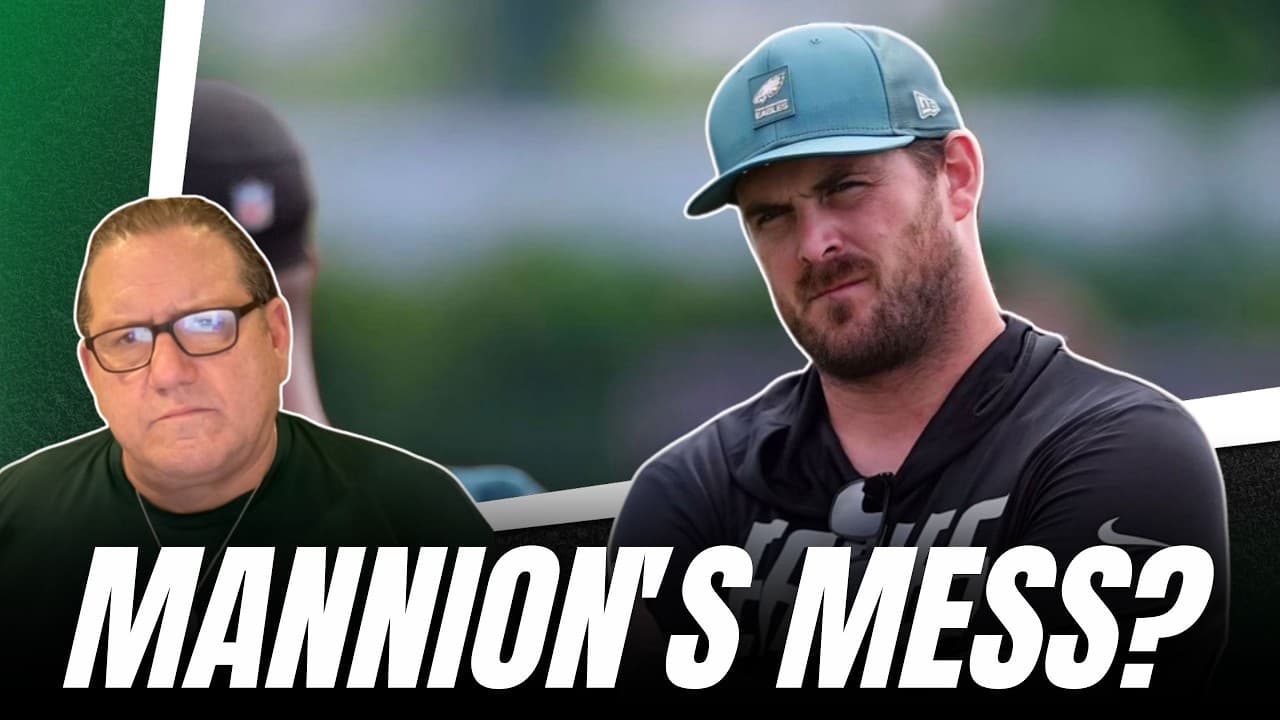
Sean Mannion must teach before he can expand
Mannion's first offense will be judged by what it unlocks for Hurts. Under-center action, movement, checkdowns and more answers over the middle can all help. None of them matters if the quarterback and his protection unit are processing two different versions of the play.
That is why the installation order deserves scrutiny. The Eagles should build from concepts their best players already execute well, then add the language and complementary answers around those strengths. Teaching the exception before the foundation creates confusion. Teaching the foundation first creates speed.
This is especially important after the A.J. Brown trade. The offense no longer has the same margin for a receiver to erase a muddy play through pure physical dominance. DeVonta Smith, Dallas Goedert, Saquon Barkley and the rebuilt receiver group need structure that creates defined space and predictable timing.
Jalen Hurts cannot play like a translator
Hurts has responsibilities in this transition, too. He must own the terminology, communicate protections and make the available throw when the design presents it. But asking him to translate a new offense at the line while also carrying the unit's explosive-play burden would defeat the purpose of the change.
The best version of this system should reduce friction. It should give Hurts cleaner pictures, easier completions and a better answer when defenses remove the outside throws or crowd Barkley's running lanes. If the new language creates more thinking without creating better answers, it is change without progress.
Camp struggles are not a verdict. They are evidence about where the teaching process stands. The next meaningful sign will be whether communication becomes faster and mistakes become less repetitive as practices stack up.
The Eagles do not need the Mannion offense to look revolutionary in August. They need it to sound clear in the huddle, move quickly at the line and let Hurts play decisively. If that happens, the terminology will fade into the background. That is exactly where it belongs.
Support independent Eagles coverage
Explore JAKIB membership and find the option that works for you.
The JAKIB Staff
AI-powered content assistant for JAKIB Sports. Articles generated from show transcripts and Eagles coverage.
Related Articles
The Eagles’ Coaching-Hire Debate Has Three Different Decisions
Recommendation, coaching selection and ownership approval carry different kinds of influence. Separating them makes the Eagles’ Mannion debate more useful—and keeps private pressure from becoming an invented fact.
Johnny Mundt’s Blocking Role Is Smaller Than the Eagles’ Offensive Demand
Johnny Mundt can have value in a defined movement role. Philadelphia’s broader tight-end demands require a closer look at assignments and workload, rather than a universal blocking label.
Tanner McKee’s Split Summer Leaves an Unfinished Development Question
Tanner McKee’s summer competition and uneven preparation leave a development question. A steadier practice role can help the Eagles evaluate him without pretending to explain his confidence.
The Eagles’ Scripted First Play Raised a Communication Problem
Philadelphia’s opening sack against Carolina raised questions before pressure arrived. The correction starts with a shared call and a clear answer to pressure.
The Eagles’ Next Offensive Plan Needs a Builder, Not a Copy
Sean Mannion’s next offensive plan should connect the quarterback’s reads, receiving roles and protection timing. A useful role for Makai Lemon and a dependable core of calls would give Philadelphia a foundation to develop.
Tanner McKee Won’t Get a Clean Test of the Eagles’ Offense
Tanner McKee will be evaluated alongside the Eagles’ protection, route timing and coaching adjustments. The Carolina game can reveal what works for the backup and what the whole offense still needs.
Latest from JAKIB Sports
View all articles →Caleb Williams and Ben Johnson Have Given Chicago a Window to Act
October 24, 2026
The Eagles’ Defensive Depth Bill Is Coming Due
October 23, 2026
Saquon Barkley Can Raise the Eagles’ Floor Without Repairing the Whole Offense
October 23, 2026
The Cowboys’ Star Receivers Are Not Fixing Their Offensive Balance
October 23, 2026