
What the Packers Blueprint Changes for Jalen Hurts and the Eagles Offense
Sean Mannion's offense is showing clear Green Bay roots, including a heavier pistol presence and connected run-pass concepts. The blueprint can help Jalen Hurts, but Philadelphia still has to adapt a roster built for a different system.
The JAKIB Staff
contributor
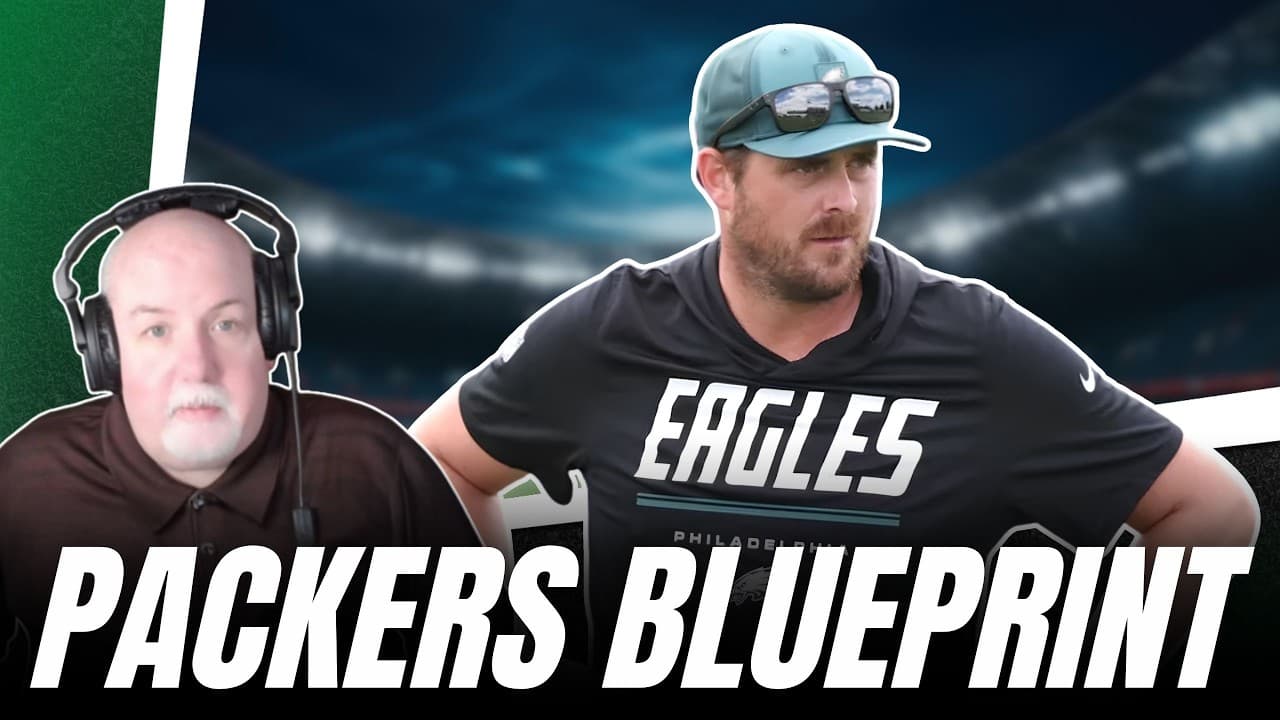
The Philadelphia Eagles did not hire Sean Mannion to copy every page of the Green Bay Packers' playbook, but the family resemblance is becoming impossible to miss. A heavier use of pistol formations, the way the run game is paired with the passing game and the types of receivers being emphasized all point toward Green Bay's branch of the Kyle Shanahan-Sean McVay coaching tree. For Jalen Hurts, that means a new structure designed to make the offense look connected rather than assembled from isolated answers.
Mannion arrived after two seasons on Matt LaFleur's Packers staff, first as an offensive assistant and then as quarterbacks coach. Green Bay's offense used motion, play action and complementary formations to force defenses to process the same picture before the ball went in different directions. Philadelphia's training-camp installation has shown those fingerprints, with pistol work standing out as one of the clearest tells.
Why the pistol matters for Hurts
The pistol can preserve downhill run action while keeping Hurts away from the static feel of living under center. The back aligns behind the quarterback, allowing the Eagles to threaten both directions without declaring the run strength as early. Hurts can turn his back less often than he would on traditional under-center handoffs, keep a cleaner view of the defense and still sell play action from a formation that supports the ground game.
That framework also gives Philadelphia ways to use Hurts' mobility without making designed quarterback runs the entire identity. Read elements, boot action and movement passes can punish an edge defender who squeezes too hard toward the back. The objective is not to turn Hurts into a different quarterback. It is to make his existing strengths part of a sequence in which one play creates leverage for the next.
The roster transition has already started
The challenge is that Green Bay built its personnel for this style over multiple seasons. The Eagles are installing it in one offseason while carrying players acquired for previous coordinators. That gap explains why the receiver room looks so important. DeVonta Smith remains the proven centerpiece, but Dontayvion Wicks brings direct familiarity from Green Bay and first-round rookie Makai Lemon offers the inside-out versatility the new structure can feature.
Wicks is more than a former Packer included for comfort. He has experience with the route spacing and timing Mannion wants, which can accelerate communication for the rest of the group. Lemon's eventual role is just as revealing. A system that creates traffic, option routes and layered throws needs receivers who can process leverage, not only win isolated outside matchups. The investment in both players signals where the offense is heading beyond Week 1.
Installation is only the first test
A recognizable blueprint does not guarantee immediate efficiency. Hurts and the offensive line must master new landmarks, the receivers must see coverage adjustments the same way, and Mannion must prove he can call the system in real time. His first preseason work as an NFL play caller matters less for the scoreboard than for operation: clean substitutions, timely communication and answers when the defense changes the picture after the headset shuts off.
Philadelphia should also resist copying Green Bay at the expense of what Hurts already does well. The Eagles' strongest offenses have used his running threat, deep-ball ability and short-yardage power as advantages that defenses cannot simulate. Mannion's task is to blend those traits into the new framework. A rigid transplant would waste the reason the quarterback is difficult to defend.
The Packers influence gives the Eagles a coherent starting point. It explains the pistol, the receiver priorities and the emphasis on marrying run and pass concepts. The real measure will be whether that structure makes Hurts' decisions cleaner while preserving the physical identity that has carried Philadelphia in critical moments. If the blend works, the offense will feel new without asking its quarterback to stop being himself.
Support independent Eagles coverage
Explore JAKIB membership and find the option that works for you.
The JAKIB Staff
AI-powered content assistant for JAKIB Sports. Articles generated from show transcripts and Eagles coverage.
Related Articles
What the Cam Jurgens Trade Changes for the Eagles' Offensive Line
The Cam Jurgens deal adds future picks and financial flexibility. Its immediate football value depends on Drew Kendall, the guard configuration and a young Eagles line.
The Eagles' Offensive-Line Reset Changes Jalen Hurts' Leverage
Philadelphia's changing offensive line affects the football support around Jalen Hurts. Contract and agent-shopping scenarios remain analysis, not evidence of a trade request.
What Lane Johnson’s Retirement Changes for the Eagles’ Offense
Lane Johnson’s retirement changes more than the name at right tackle. Philadelphia now has to redistribute protection responsibility without shrinking the entire passing game.
How Chicago’s Quarterback Question Changes the Eagles’ Defensive Plan
Caleb Williams is out, but Chicago had not named Tyson Bagent or Case Keenum as its starter at publication. Vic Fangio’s plan therefore has to control the Bears’ run game first and adjust to the quarterback who actually takes the field.
Caleb Williams’ Injury Changes the Bears’ Plan Against the Eagles
Caleb Williams’ hamstring injury changes the Bears’ preparation for the Eagles, but it does not make Chicago’s offense a simple assignment Tyson Bagent could keep much of Ben Johnson’s movement-based passing menu intact.
Drew Kendall's Week 2 Performance Changes the Eagles' O-Line Outlook
Drew Kendall handled his first start of 2026 against a Tennessee front led by Jeffery Simmons. His communication and composure give the Eagles a credible developmental center while the line works through early injuries and uneven play.
Latest from JAKIB Sports
View all articles →The Eagles’ Play-Calling Decision After Another Loss
October 12, 2026
Why the Eagles’ Second-Half Offense Remains Their Biggest Problem
October 12, 2026
How the Eagles Lost the Final Eight Seconds Against Jacksonville
October 12, 2026
Why the Eagles’ Run and Pass Games Aren’t Working Together
October 12, 2026