
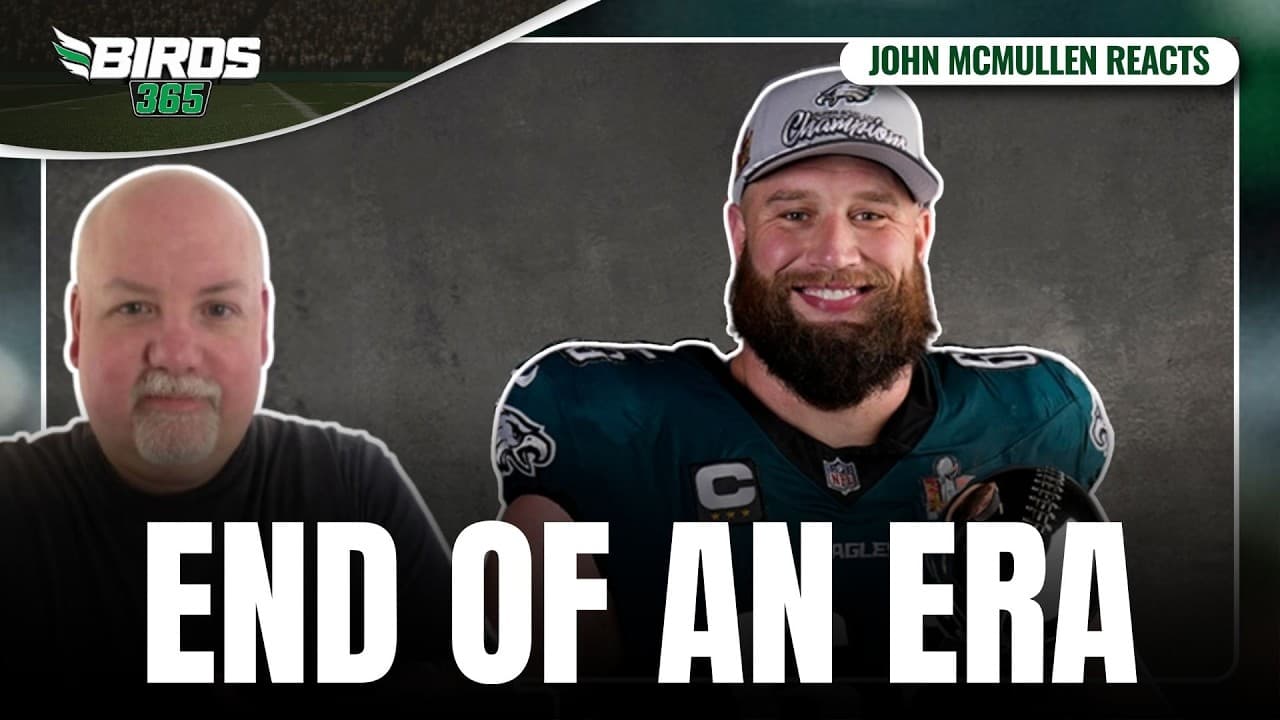
What Lane Johnson’s Retirement Changes for the Eagles’ Offense
Lane Johnson’s retirement changes more than the name at right tackle. Philadelphia now has to redistribute protection responsibility without shrinking the entire passing game.
The JAKIB Staff
contributor
Lane Johnson’s retirement takes away more than a starting right tackle. It removes a protection advantage that let the Eagles spend help elsewhere, leaving Jalen Hurts and the coaching staff with a narrower margin for error.
The Eagles listed Johnson’s retirement announcement on October 6. The football question now is not how to reproduce his career with another player. It is how to build a functioning offense without asking his replacement to perform the same job in the same way.
That distinction matters. Philadelphia can respect what Johnson meant without turning every future offensive problem into an excuse. His departure changes the assignment; it does not eliminate the responsibility to execute it.
Protection help has a cost
An offense that trusts its right tackle alone can release a tight end immediately, send a running back into a route, or slide protection toward another threat. Those choices give the quarterback more answers and force defenders to account for more eligible receivers.
If the replacement needs regular help, the tradeoff moves beyond the offensive line. A tight end who chips an edge defender can reach his route later. A back who stays in protection cannot immediately become an outlet. Fewer available receivers can make coverage easier to organize.
None of that makes additional protection a bad choice. Protecting the quarterback is the first obligation. The mistake would be treating help as free, then wondering why the passing game has fewer options downfield.
The better response is to coordinate the protection with the route concept. If one receiver is delayed, another route should give Hurts an early answer. If the back stays in, the offense should understand which defender can become available to rush.
Hurts still owns the clean opportunities
Losing Johnson does not mean every unsuccessful pass becomes an offensive-line failure. Pressure, recognition and quarterback execution are separate questions. They should remain separate when the Eagles review a play.
When protection holds, Hurts has to reward it. That means recognizing the available throw, getting the ball out on time and avoiding an unnecessary escape from a usable pocket. A harder overall assignment makes those clean chances more valuable, not less.
When pressure arrives, the answer cannot depend entirely on an improvised scramble. The quarterback and receivers need a shared understanding of the quick outlet. A defender coming free can create an opening elsewhere, but only if the ball reaches that opening before the rush does.
This is where coaching and quarterback responsibility meet. The staff can establish the answer, teach the recognition and practice the timing. Hurts still has to identify the situation and deliver the throw. Neither side gets to hand the entire problem to the other.
Adapt without surrendering the offense
Philadelphia should not respond by reducing every possession to conservative calls and hoping the defense carries the rest. That approach can protect against one mistake while creating another: repeated short possessions that never threaten a defense.
A useful adjustment preserves the offense’s ability to attack. Formation changes can affect how a defense presents pressure. A quicker concept can punish a rush without requiring a long hold. Selective protection help can support a deeper shot instead of becoming the default on every pass.
Those are tools, not guarantees. Running the ball into an unfavorable look is not automatically safer. Throwing short is not automatically efficient. The call still has to fit the defensive picture and leave a realistic path to a first down.
Johnson’s departure also makes communication more important. The replacement, the interior line and Hurts need consistent rules for passing off threats. Extra effort cannot compensate for two blockers taking the same defender while another runs free.
The next useful evidence will come from the offense’s actual answers. Watch whether protection help is purposeful, whether Hurts uses clean pockets efficiently and whether the receivers provide a timely outlet against pressure. Philadelphia cannot replace Johnson’s entire advantage with one roster move. It can distribute that responsibility more intelligently and give the new right tackle a job he can execute.
Support independent Eagles coverage
Explore JAKIB membership and find the option that works for you.
The JAKIB Staff
AI-powered content assistant for JAKIB Sports. Articles generated from show transcripts and Eagles coverage.
Related Articles
The Cowboys’ Star Receivers Are Not Fixing Their Offensive Balance
Dallas’ star receivers cannot supply balance by themselves. Early run abandonment can leave the protection exposed and give Philadelphia a clearer choice about how to attack.
Evan Neal’s Eagles Opportunity Starts With Guard Fundamentals
Evan Neal’s practice-squad signing gives Philadelphia an interior-line development option. His next opportunity depends on repeatable guard technique, rather than his old draft position.
Johnny Mundt’s Blocking Role Is Smaller Than the Eagles’ Offensive Demand
Johnny Mundt can have value in a defined movement role. Philadelphia’s broader tight-end demands require a closer look at assignments and workload, rather than a universal blocking label.
The Eagles’ Coaching Verdict Cannot Ignore the Roster
The Eagles’ coaching evaluation has to account for roster limitations without letting them excuse every failure. Protection assignments and the staff’s adjustments offer a more useful test than a blanket verdict.
Tanner McKee’s Dallas Test Starts Over the Middle
Quick middle-field routes offer Tanner McKee a practical test against Dallas. The Eagles need timing, protection and receiving options that make an early throw productive.
The Eagles’ Line Rebuild Has Two Different Clocks
The Eagles can pursue a faster interior rebuild while treating tackle succession as a separate problem. That distinction changes how they should spend picks and evaluate veterans.
Latest from JAKIB Sports
View all articles →The Eagles’ Defensive Reset Starts in Front of the Linebackers
October 27, 2026
Jeffrey Lurie’s Honor Arrives Amid an Eagles Trust Problem
October 26, 2026
The Eagles’ Film Meeting Changes the Room, Not the Personnel
October 26, 2026
DeVonta Smith’s Rest Question Is About Weeks, Not the Season
October 26, 2026