
Why Darius Cooper's Strong Camp Still Does Not Guarantee an Eagles Role
Darius Cooper has earned attention again, but Philadelphia's receiver hierarchy is shaped by more than August production. Contracts, draft investment and limited regular-season targets leave Cooper fighting for a role that strong practices alone cannot guarantee.
The JAKIB Staff
contributor
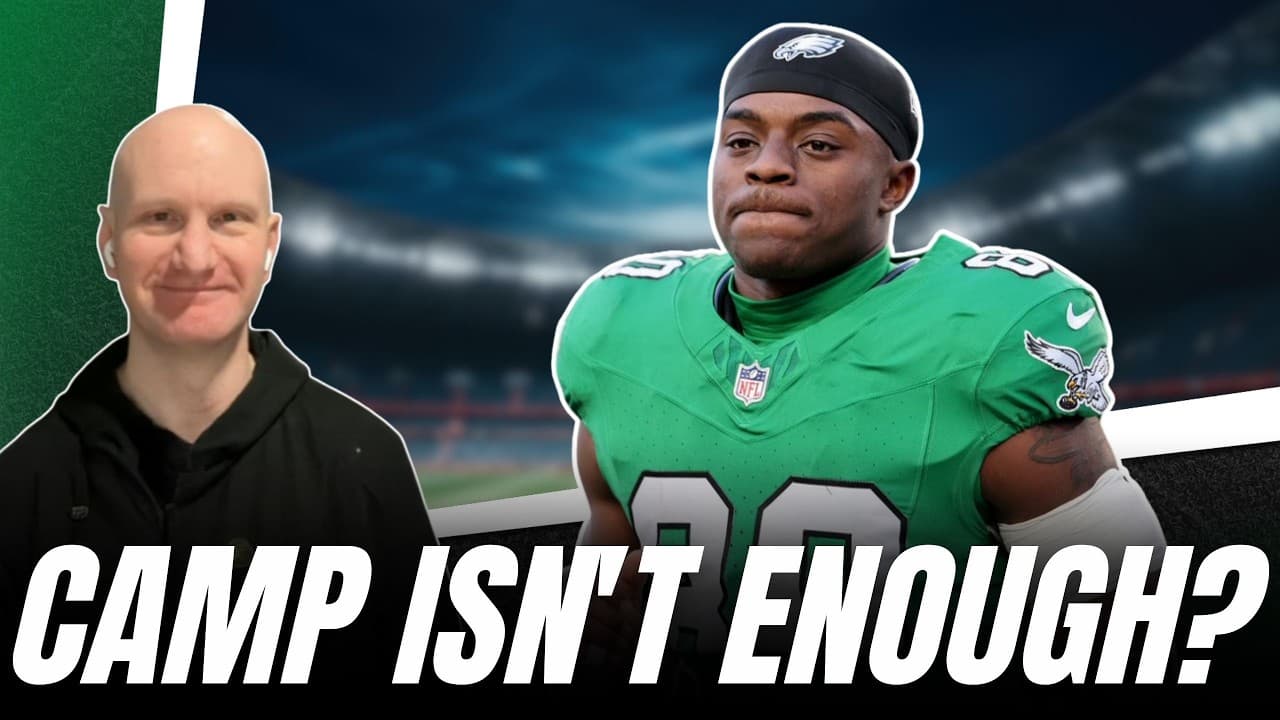
Darius Cooper has done almost everything an overlooked receiver can do to force the Philadelphia Eagles to pay attention. He made the roster as an undrafted rookie in 2025, appeared in 13 games and returned to training camp with another strong summer. The problem is not whether Cooper can play. It is whether the Eagles can create enough regular-season opportunity for him in a receiver room shaped by contracts, draft capital and a new offensive plan.
Training camp rewards the player who wins that day's rep. Roster construction rewards a broader set of investments. DeVonta Smith is the proven lead receiver. Philadelphia traded draft capital for Dontayvion Wicks and extended his contract. Makai Lemon was selected in the first round. Marquise Brown arrived on a veteran deal, while Elijah Moore brings established NFL experience. Cooper can outperform expectations and still begin the numbers game behind several players the organization has made specific commitments to feature.
Production creates a case, not a guarantee
Cooper's case is real because he has repeatedly produced when the ball comes his way. At Tarleton State, he was accustomed to being the central target rather than a complementary option. That background matters. Receivers who have carried an offense often arrive with the confidence to attack the football and expect to make a play, even when their college competition or draft status creates doubts.
He carried that mentality into his first Eagles camp and won a roster place. Doing it again in 2026 shows the first summer was not a fluke. Cooper has earned trust as a tough, competitive receiver who can finish catches and handle the physical side of the position. Yet the regular season is different from camp. Practice can distribute targets across the entire roster; game plans narrow them toward the players the offense is built around.
The target math is the real obstacle
Smith will command targets whenever he is healthy. Wicks has experience in Sean Mannion's Green Bay-rooted system, and Lemon will receive repeated chances to grow because Philadelphia used the 20th pick on him. The running backs and tight ends also need touches. By the time those priorities are satisfied, the fourth or fifth receiver may run routes without seeing enough passes to turn good play into obvious production.
That is the harsh part of life for an undrafted player. Earning a roster spot is difficult, but earning the volume needed to change the hierarchy can be even harder. Cooper may get only a few meaningful offensive chances. He must convert them while also proving he can contribute when the ball is not designed to reach him.
Special teams can turn survival into a role
The clearest path is special teams. Philadelphia has explored Cooper as a return option, and every viable assignment there makes it easier to dress him on game day. A reserve receiver who can return kicks, cover, block and handle emergency offensive snaps offers more weekly value than a pure pass catcher waiting behind three established targets.
That versatility also creates the only reliable way to escape the target problem. If Cooper is active because of special teams, he remains available when injuries or matchups open offensive snaps. One strong performance can then make it difficult for coaches to remove him. Without that game-day foothold, his best camp work can remain trapped behind the depth chart.
Cooper has made the decision uncomfortable
The Eagles should not ignore Cooper simply because other receivers arrived with larger investments. He has already beaten the odds once, and strong players deserve a genuine route to the field. At the same time, a responsible projection must acknowledge how NFL opportunities are distributed. The roster is not a blank competition in which every good August rep carries equal weight.
Cooper's camp has guaranteed one thing: Philadelphia has to take his candidacy seriously. It has not guaranteed targets, a weekly active status or a defined offensive role. His next step is to become useful in enough phases that the coaches cannot justify leaving him on the sideline. That is a tougher standard than simply playing well, but it is the standard that can turn another strong summer into lasting work.
Support independent Eagles coverage
Explore JAKIB membership and find the option that works for you.
The JAKIB Staff
AI-powered content assistant for JAKIB Sports. Articles generated from show transcripts and Eagles coverage.
Related Articles
Why the Eagles’ Second-Half Offense Remains Their Biggest Problem
The final kickoff decided the Jacksonville game, but Philadelphia’s 232-yard offense creates a more persistent test for Jalen Hurts and the play-calling staff.
Why the Eagles’ Run and Pass Games Aren’t Working Together
The Eagles’ run and pass games aren’t working together when one fails to make the other easier. Against Jacksonville, 22 rushing yards left Jalen Hurts carrying a passing workload that produced too little sustained offense.
Jalen Hurts’ C-Minus Game—and the Offensive Line Behind It
A C-minus is a defensible editorial grade for Jalen Hurts’ uneven afternoon against Jacksonville. But fixing the Eagles’ passing game requires examining the protection and rushing support behind him, not simply circling the quarterback’s name.
Why the Eagles Couldn’t Finish Off Jacksonville
The Eagles couldn’t finish off Jacksonville because their offense stopped giving the defense breathing room. A 19-17 loss turned another winnable afternoon into a reminder that late heroics cannot replace sustained scoring.
Eagles Face a Protection and Receiving Test Against Jaguars in London
Philadelphia's London plan depends on protection and receiving availability. A clearer playbook could help Jalen Hurts operate without assuming projected injury returns are confirmed.
Lane Johnson's Hall of Fame Case Is Strong, but First Ballot Is a Separate Question
Lane Johnson's career accomplishments support a serious Hall of Fame case. Election timing involves a separate debate about ballots, comparisons and competing candidates.
Latest from JAKIB Sports
View all articles →The Eagles' Offensive-Line Succession Problem Has Reached Jalen Hurts
October 13, 2026
Four Games Could Decide Howie Roseman's Trade-Deadline Approach
October 13, 2026
The Eagles' Second-Half Collapse Is More Than an Injury Problem
October 13, 2026
The Eagles’ Bigger Problem Beyond the Final Kickoff
October 13, 2026