
Jalen Hurts Played Poorly—and His Supporting Cast Still Matters
Hurts played poorly against Los Angeles, and the changing cast around him made the job harder. Philadelphia has to solve both problems instead of using one to dismiss the other.
The JAKIB Staff
contributor
Jalen Hurts did not play well against the Rams. The Eagles also asked him to operate through a game in which the receiving and backfield support changed. Both statements belong in the same evaluation. Turning the loss into a choice between blaming the quarterback and excusing him because of the lineup misses the football problem Philadelphia must solve.
A quarterback still owns his decisions. He must identify the coverage, manage the pocket, deliver to an available target and avoid making a difficult situation worse. Those responsibilities do not vanish when a preferred receiver is unavailable. Hurts can be judged on timing and execution even when the surrounding cast makes every clean rep harder to find. Calling a poor performance poor is not a claim that he was the only cause of the result.
Context changes difficulty, not responsibility
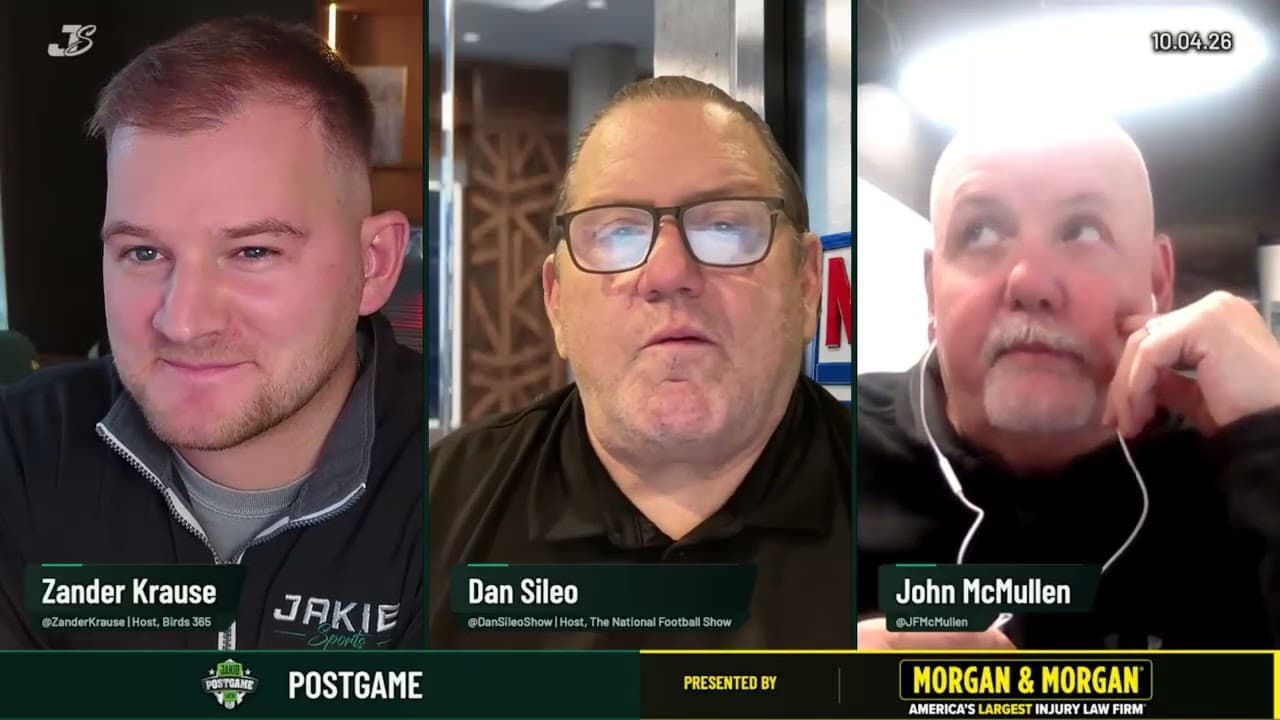
The postgame discussion identified missing top receiving options and Saquon Barkley’s early exit as factors that altered the offense. Those details matter to how a defense allocates attention. A coordinator facing a depleted group can press less proven targets, change coverage leverage and worry less about a familiar explosive threat. Philadelphia may then need longer drives with fewer easy yards. That changes the difficulty of each series without supplying a blanket defense for inaccurate throws or late reads.
The reverse is also true. Listing injuries cannot answer every question about the quarterback. Was the first read open? Did the ball arrive on time? Did Hurts move toward pressure or away from it? Could he take a shorter completion instead of forcing a low-percentage play? Those are visible football questions. If the answers show missed opportunities, the Eagles should own them even while acknowledging that the available alternatives were weaker than usual.
A clean review must also distinguish a target’s absence from the performance of the targets who did play. A substitute receiver can be in the right spot and still lose a contested catch. A quarterback can make a sound choice and get no separation. On another snap, he can miss the very answer the design created. Aggregating all those plays into one injury narrative or one quarterback narrative blurs the cause of the stalled drive.
The offense has to travel with a backup plan
Depth is supposed to be more than a list of names. When the preferred lineup changes, the offense needs a reduced but dependable set of concepts. That can mean quicker throws, clearer spacing, protection that acknowledges the defensive front and a running-game answer the staff trusts. It should not require pretending that reserves can duplicate every starter’s role. It should give Hurts a workable path to first downs and red-zone opportunities.
Philadelphia also needs its quarterback to stabilize that plan. A veteran leader can make the easy play on time, keep the offense out of avoidable long-yardage situations and protect the football when the explosive answer is unavailable. The standard is not perfection behind an imperfect lineup. It is disciplined execution of the plays that remain. If Hurts misses those chances, the coaching staff should say so internally and correct them.
The Rams game exposed how quickly the margin can disappear when both sides of that equation falter. A less threatening skill group can make a defense bolder. A quarterback pressing for an answer can then create harder downs. Those harder downs shrink the play menu, and the next drive begins under greater scoreboard pressure. It is a chain of causes. Removing one link helps; denying any link leaves the offense vulnerable to the same sequence.
The verdict should guide the next week of work
Film review should identify the snaps where Hurts had an available answer and did not use it, and the snaps where the design gave him too little. The staff should then build around the players who are actually available, not around a hypothetical fully healthy lineup. That is the only useful way to prepare for another opponent. An argument about whether the quarterback or the supporting cast was “really” at fault does not install a better third-down call.
Hurts played poorly enough to deserve direct criticism. His supporting cast still changed the conditions under which he played. The Eagles need both truths because each points to a different fix: better quarterback execution, and a sturdier offense when the familiar playmakers are not there. Treating either truth as an excuse for the other would make the next close game harder than it needs to be.
Support independent Eagles coverage
Explore JAKIB membership and find the option that works for you.
The JAKIB Staff
AI-powered content assistant for JAKIB Sports. Articles generated from show transcripts and Eagles coverage.
Related Articles
The Eagles’ Defensive Depth Bill Is Coming Due
Philadelphia’s defensive investments still require reliable players around them. The current injury report puts the value of specific replacement roles back in focus.
The Eagles’ Message to Jalen Hurts Reaches the Entire Locker Room
The Eagles and Nicole Lynn have issued a health update on Jalen Hurts. A direct ownership commitment could add a message about support that reaches his teammates, without claiming to resolve private or medical questions.
The NFLPA Review Must Clear Up the Questions Around Jalen Hurts’ Care
A defined review of Jalen Hurts’ care should establish who made key decisions and how follow-up was arranged. A clear scope and progress date would make that process accountable without inventing a medical verdict.
The NFL and NFLPA Are Asking Different Jalen Hurts Questions
The NFL has defended the handling of Jalen Hurts’ medical care while the NFLPA seeks a full investigation. A defined review process could address follow-up questions while respecting his privacy.
A One-Year Bridge Could Separate the Eagles’ Jalen Hurts Decisions
A proposed one-year bridge would let the Eagles separate immediate continuity from a long commitment to Jalen Hurts. Its value would depend on the football evidence and the agreement both sides could reach.
Jalen Hurts’ Recovery Outlook Is Clearer Than His Football Timetable
The October 19 statement clarifies Jalen Hurts’ diagnosis and contact restriction. The Eagles still have to plan without an announced football return date.