
Why Jalen Hurts' Running Ability Must Remain Part of the Eagles' New Offense
Sean Mannion can expand the Eagles' formations without removing their best tactical advantage. Jalen Hurts' running threat must remain structural to the offense.
The JAKIB Staff
contributor
The Eagles can change formations, footwork, and run-game presentation under Sean Mannion. They cannot afford to remove the part of Jalen Hurts' game that forces defenses to play Philadelphia differently. His running ability must remain a structural piece of the new offense, not an emergency button saved for broken plays.
Hurts does not need to lead the offense in carries. He does need to remain a credible threat. When defenses must account for the quarterback, the numbers and spacing of every run concept change. That stress has been one of the most dependable advantages in the Eagles' offense, and camp has already shown that it still works.
The Quarterback Run Changes the Math
A traditional running play lets the defense treat the quarterback as a distributor after the handoff. A designed quarterback run or read concept forces an extra defender to hesitate, fit a different gap, or respect the possibility that Hurts keeps the ball. That moment of uncertainty creates room for Saquon Barkley and the offensive line.
Philadelphia's defense understands the problem as well as any unit in football, yet the quarterback draw has continued to create stress in practice. That is not a reason to build the entire system around one call. It is evidence that Hurts' legs remain an elite tactical resource.
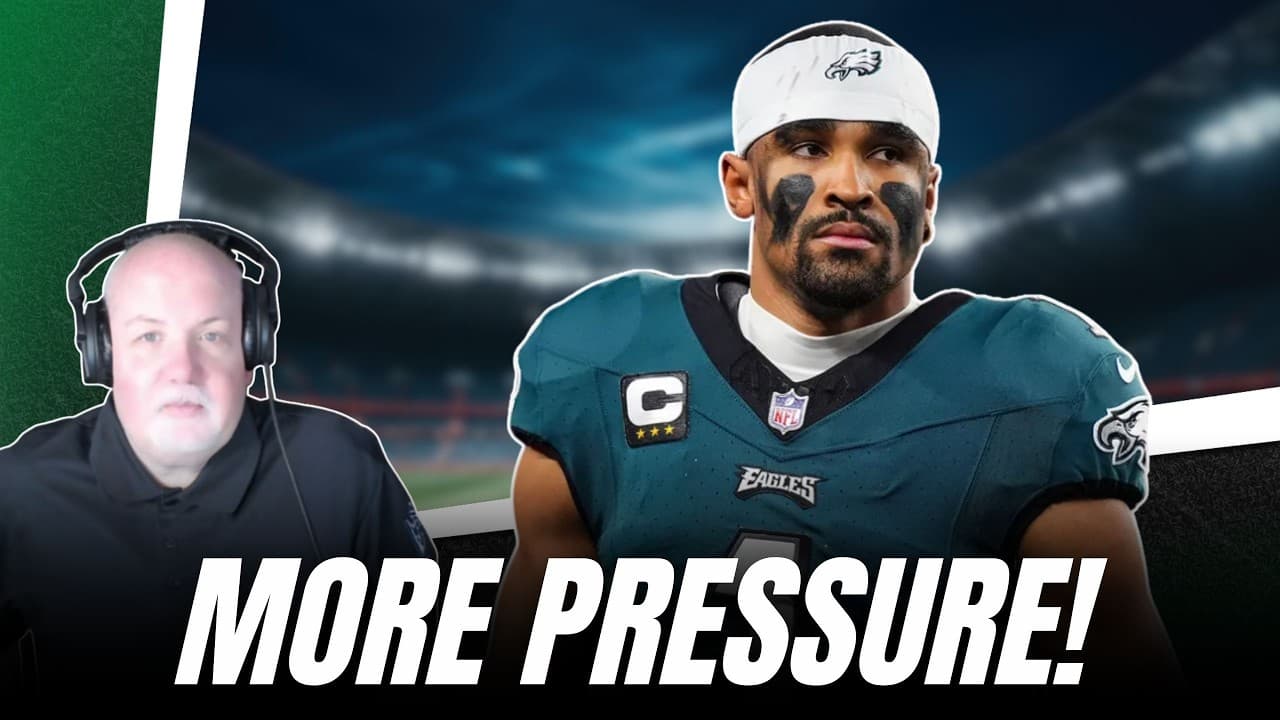
The goal should be to make the threat efficient. Mannion can use spread formations, motion, and option looks to force defenses to declare intentions. Hurts can protect himself by making decisive reads, getting down when the play is over, and avoiding unnecessary contact. The offense receives the benefit even when he hands the ball off or throws because the defense still has to honor him.
Under Center and Hurts' Mobility Can Coexist
The Eagles are exploring more under-center offense and wide-zone concepts. Those ideas can help Barkley attack with momentum and create play-action opportunities. They also reduce the immediate menu of run-pass options available from the shotgun.
That is a tradeoff, not a reason to abandon the change. Good offenses can toggle between presentations. Under-center snaps can create cleaner angles and sell play action. Shotgun snaps can preserve quarterback runs, RPOs, and the quick decisions that have suited Hurts throughout his career.
The danger comes from treating the new system as an identity replacement. Philadelphia hired Mannion to improve and expand the offense, not to prove that every play must resemble a different team. The structure should serve Hurts, Barkley, DeVonta Smith, Dallas Goedert, and the offensive line. The players should not be forced into a scheme simply because it looks modern on a whiteboard.
The Passing Game Benefits From the Threat
Hurts' running ability is often discussed as if it competes with his passing development. It can support it. Linebackers who step toward the quarterback create windows behind them. Edge defenders who hesitate give tackles better leverage. Safeties who fit the run leave more space for intermediate routes.
Those reactions matter even more while the receiver room develops behind Smith. The Eagles no longer have A.J. Brown to win difficult situations at the same rate, so the system must help create favorable ones. Hurts' mobility is one of the clearest tools available.
That does not excuse late reads or inaccurate throws. The quarterback still has to operate the progression, anticipate openings, and punish defenses when they overcommit to the run. Preserving his legs should raise the standard for the passing game because it creates answers that stationary quarterbacks do not receive.
Evolution Should Preserve the Advantage
The Eagles are right to pursue a more versatile offense. Predictability becomes expensive in January, and Hurts should be comfortable winning from more than one presentation. Mannion's challenge is to add without subtracting.
Philadelphia already knows the quarterback run can tilt the field. The next step is designing it responsibly and pairing it with concepts that punish every defensive response. If opponents crowd the box, throw behind them. If they widen to contain Hurts, hand the ball to Barkley. If they play light, let the quarterback take the efficient yards.
Hurts' legs are not a fallback for when the new offense fails. They are part of what can make the new offense succeed. Any system that forgets that would be making football harder than it needs to be.
Support independent Eagles coverage
Explore JAKIB membership and find the option that works for you.
The JAKIB Staff
AI-powered content assistant for JAKIB Sports. Articles generated from show transcripts and Eagles coverage.
Related Articles
Jeffrey Lurie’s Honor Arrives Amid an Eagles Trust Problem
Jeffrey Lurie’s Eagles Hall of Fame induction recognizes a championship legacy. Fans can appreciate that history while expecting clearer public communication from the organization’s leadership.
The Eagles’ Defensive Depth Bill Is Coming Due
Philadelphia’s defensive investments still require reliable players around them. The current injury report puts the value of specific replacement roles back in focus.
The Eagles’ Message to Jalen Hurts Reaches the Entire Locker Room
The Eagles and Nicole Lynn have issued a health update on Jalen Hurts. A direct ownership commitment could add a message about support that reaches his teammates, without claiming to resolve private or medical questions.
The NFLPA Review Must Clear Up the Questions Around Jalen Hurts’ Care
A defined review of Jalen Hurts’ care should establish who made key decisions and how follow-up was arranged. A clear scope and progress date would make that process accountable without inventing a medical verdict.
The NFL and NFLPA Are Asking Different Jalen Hurts Questions
The NFL has defended the handling of Jalen Hurts’ medical care while the NFLPA seeks a full investigation. A defined review process could address follow-up questions while respecting his privacy.
A One-Year Bridge Could Separate the Eagles’ Jalen Hurts Decisions
A proposed one-year bridge would let the Eagles separate immediate continuity from a long commitment to Jalen Hurts. Its value would depend on the football evidence and the agreement both sides could reach.