
What Jalen Hurts' 6-for-19 Practice Does—and Doesn't—Say About the Eagles Offense
Jalen Hurts' 6-for-19 practice deserves scrutiny, but the context matters. Missing receivers, limited camp reps and Sean Mannion's new system make this a diagnostic moment, not a final verdict.
The JAKIB Staff
contributor
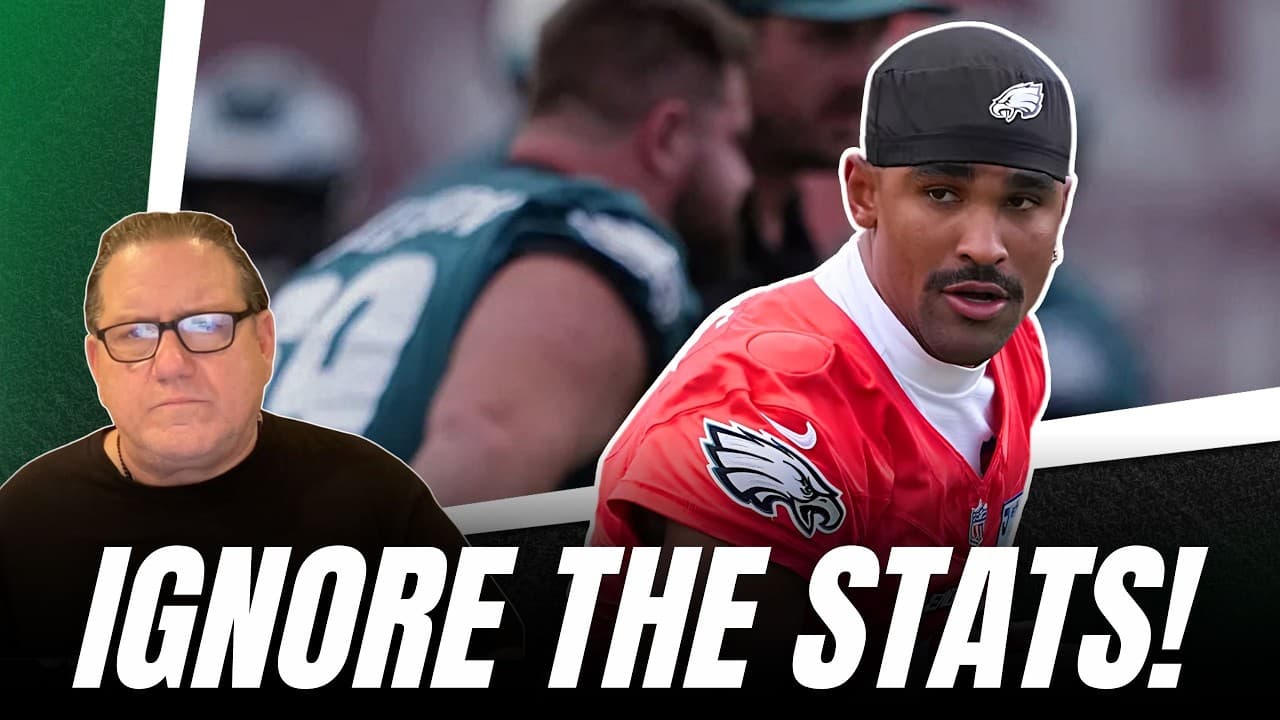
Jalen Hurts going 6-for-19 in an Eagles practice is not meaningless. A quarterback operating a new offense should be evaluated when the ball hits the ground, timing breaks down and the passing game fails to find rhythm. But one ugly practice is also not a referendum on an entire season. The useful question is not whether the number looks bad. It does. The useful question is what the number reveals about the work Philadelphia still has to do.
The missing-receiver context matters
The Eagles did not run that practice with their ideal receiving group intact. DeVonta Smith and Makai Lemon were unavailable, removing both a proven separator and a rookie expected to play a meaningful role in the reshaped room. That changes the quality of the targets, the timing of routes and the quarterback's confidence in where a receiver will be.
Hurts still owns his part of the operation. Elite quarterbacks are expected to elevate imperfect circumstances, especially when the roster behind the starters needs answers. A completion rate that low suggests the offense did not solve the problem on the fly. It also underscores why Philadelphia cannot treat receiver depth as a cosmetic concern after moving A.J. Brown.
The context lowers the temperature. It does not erase the result.
Sean Mannion's system is still being installed
This is not simply the same offense with a new voice calling plays. Sean Mannion is installing terminology, teaching new details and asking veteran players to process the system at game speed. Camp practices are where those communication problems are supposed to surface.
The Eagles need to determine whether the incompletions came from bad decisions, inaccurate throws, receiver mistakes, protection issues or ordinary installation friction. Those causes are not equal. A quarterback missing an open target is different from a receiver breaking at the wrong depth. A late throw against clean protection is different from a rep disrupted before the route develops.
That is why the film matters more than the raw line. Six-for-19 identifies a problem. It does not diagnose it.
Limited reps increase the urgency
Modern training camp offers fewer live repetitions than quarterbacks received in earlier eras. Teams protect starters, manage veteran workloads and limit unnecessary contact. That approach has obvious health benefits, but it also makes every full-speed passing period more valuable.
Philadelphia cannot dismiss poor offensive days because the calendar says August. The Eagles need those reps to build timing before the games count. If Smith or Lemon misses time, the backup receivers need enough work with Hurts to function without turning the offense into a collection of improvised plays.
The standard should be progress, not panic. The next practices need to show cleaner communication, better anticipation and more answers when the first read is unavailable. Repeated breakdowns would turn a camp note into a trend. A sharp response would make the 6-for-19 line exactly what teams use camp for: evidence that exposed a weakness early enough to fix it.
The Eagles offense is built to provide help
Hurts is not being asked to carry a bare roster. Saquon Barkley changes defensive priorities, Smith remains a high-level target, and the offensive line is designed to give the quarterback structure. The offense should be able to lean on those strengths while Mannion's passing game develops.
That does not mean hiding the quarterback. Philadelphia needs a passing attack that can win when opponents crowd the run, force long-yardage situations or take away the first option. The 6-for-19 practice is a reminder that those answers are not automatic.
The correct reaction is measured concern. Hurts and the new offense had a bad day under compromised conditions. Now the Eagles must prove they understand why it happened. One practice cannot define the season, but the response to it can reveal whether this offense is learning fast enough.
Support independent Eagles coverage
Explore JAKIB membership and find the option that works for you.
The JAKIB Staff
AI-powered content assistant for JAKIB Sports. Articles generated from show transcripts and Eagles coverage.
Related Articles
The Eagles’ Defensive Depth Bill Is Coming Due
Philadelphia’s defensive investments still require reliable players around them. The current injury report puts the value of specific replacement roles back in focus.
The Eagles’ Message to Jalen Hurts Reaches the Entire Locker Room
The Eagles and Nicole Lynn have issued a health update on Jalen Hurts. A direct ownership commitment could add a message about support that reaches his teammates, without claiming to resolve private or medical questions.
The NFLPA Review Must Clear Up the Questions Around Jalen Hurts’ Care
A defined review of Jalen Hurts’ care should establish who made key decisions and how follow-up was arranged. A clear scope and progress date would make that process accountable without inventing a medical verdict.
The NFL and NFLPA Are Asking Different Jalen Hurts Questions
The NFL has defended the handling of Jalen Hurts’ medical care while the NFLPA seeks a full investigation. A defined review process could address follow-up questions while respecting his privacy.
A One-Year Bridge Could Separate the Eagles’ Jalen Hurts Decisions
A proposed one-year bridge would let the Eagles separate immediate continuity from a long commitment to Jalen Hurts. Its value would depend on the football evidence and the agreement both sides could reach.
Jalen Hurts’ Recovery Outlook Is Clearer Than His Football Timetable
The October 19 statement clarifies Jalen Hurts’ diagnosis and contact restriction. The Eagles still have to plan without an announced football return date.