
Jalen Carter's Next Step Is Consistency, Not More Talent
Jalen Carter already owns the talent, production and contract of a franchise defensive tackle. His next challenge is making disruption routine enough that every opponent has to build its protection plan around him for four quarters.
The JAKIB Staff
contributor
Jalen Carter does not need another display of rare talent. The Philadelphia Eagles have already seen enough power, quickness and interior disruption to sign him through 2031; the next step is making that impact unavoidable from the first series through the final drive.
Consistency is the difference between a defender who can wreck a play and one who controls an entire game plan. Carter has reached the second category in stretches. Philadelphia now needs those stretches to become the weekly expectation.
The résumé already proves the ceiling
Carter entered his fourth season as a two-time Pro Bowl selection and a 2024 second-team All-Pro. Across his first three regular seasons, the Eagles credited him with 108 tackles, 13.5 sacks and 121 quarterback pressures. He has produced enough to command double teams and enough respect to earn a long-term extension.
That background changes the evaluation. A young defensive tackle can no longer be judged only by his best rep or the attention he absorbs. The Eagles have built their front around Carter and Jordan Davis, so quiet stretches now affect the structure behind them.
Carter's explosiveness remains obvious. He can cross a guard's face before the block settles, collapse a pocket with leverage or force a runner to redirect before reaching the line. The issue is sustaining the technique and urgency after an offense changes its protection or increases the tempo.
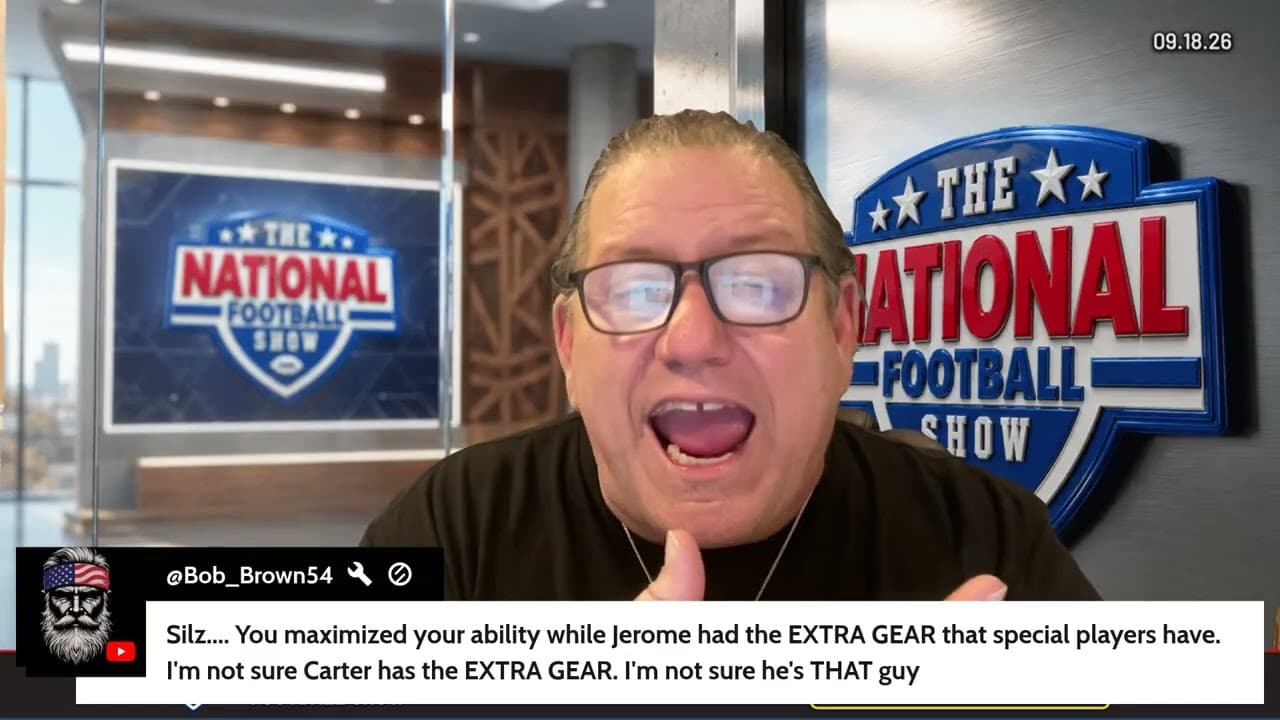
Consistency begins before the ball moves
Dominance at defensive tackle is repetitive work. The stance, first step, hand placement and pad level have to survive long drives and unfavorable down-and-distance situations. One spectacular rush cannot compensate for losing gap integrity on the next two snaps.
Conditioning belongs in that conversation because technique erodes when a lineman tires. Carter does not have to play every snap, but the Eagles need the same violent first step late in a possession that appears early. A disciplined rotation can help without lowering the standard for the snaps he owns.
Accountability also includes the plays that never reach the box score. Holding the correct shoulder can free Zack Baun to finish. Compressing a running lane can send the ball toward Quinyon Mitchell or Cooper DeJean. A mature interior defender measures success by whether the unit wins the down, not only by the tackle beside his name.
The contract raises the weekly responsibility
Philadelphia's extension was a bet on future performance, not a retirement gift for past production. Carter is now one of the pillars expected to stabilize the roster while younger and cheaper players develop around him. That role requires dependable preparation as much as exceptional athletic ability.
The encouraging part is that the improvement does not require a new physical tool. Carter already defeats NFL linemen, handles extra attention and changes protection calls. His growth lives in repeating the correct response when an opponent runs directly at him, traps him, doubles him or forces him to chase.
The rest of the front benefits when Carter makes that attention mandatory. An offense that slides protection toward No. 98 leaves a cleaner matchup for an edge rusher. A center occupied by Carter reaches the second level later, giving Philadelphia's linebackers a clearer path to the runner.
Coaches can reinforce the standard with a precise review: alignment, get-off, gap responsibility, pursuit and finish. That grading does not erase the value of double teams. It distinguishes between a snap where Carter created an advantage for a teammate and one where the offense neutralized him without paying a price.
The next test is simple to recognize even if it is difficult to execute. Carter should leave every game with the opposing offense able to identify his effect, whether the stat sheet shows a sack or not. Once that becomes routine, the Eagles will have more than a gifted tackle. They will have the week-to-week defensive anchor the contract anticipates.
Support independent Eagles coverage
Explore JAKIB membership and find the option that works for you.
The JAKIB Staff
AI-powered content assistant for JAKIB Sports. Articles generated from show transcripts and Eagles coverage.
Related Articles
Eagles Face a Protection and Receiving Test Against Jaguars in London
Philadelphia's London plan depends on protection and receiving availability. A clearer playbook could help Jalen Hurts operate without assuming projected injury returns are confirmed.
Jalen Hurts' Next Contract Depends on More Than His Own Performance
Jalen Hurts' next contract decision connects directly to the Eagles' supporting roster. Philadelphia has to evaluate quarterback performance and a credible rebuilding plan together.
The Eagles' Makeshift Offensive Line Turns Jacksonville Into a Protection Test
The Eagles face Jacksonville with an offensive line in transition. Center uncertainty and Markel Bell's development will shape how Philadelphia protects Jalen Hurts.
The Eagles' Offensive Identity Problem Complicates Jalen Hurts' Evaluation
Jalen Hurts’ decisions, the protection plan and the Eagles’ route concepts need separate evaluation. Their shared timing will reveal whether Philadelphia is building a coherent offense.
Lane Johnson's Exit Turns Markel Bell Into an Eagles Development Test
Markel Bell inherits an immediate right-tackle audition after Lane Johnson’s retirement. Protection support and communication will determine how useful that development opportunity becomes.
What the Cam Jurgens Trade Changes for the Eagles' Offensive Line
The Cam Jurgens deal adds future picks and financial flexibility. Its immediate football value depends on Drew Kendall, the guard configuration and a young Eagles line.