
Hurts' Sideline Evaluation Changed the Eagles' Goal-Line Options
Jalen Hurts’ concussion evaluation forced Andy Dalton into a first-and-goal series. Two stopped Barkley runs and an end-zone interception made the lost chance more complicated than one play call.
The JAKIB Staff
contributor
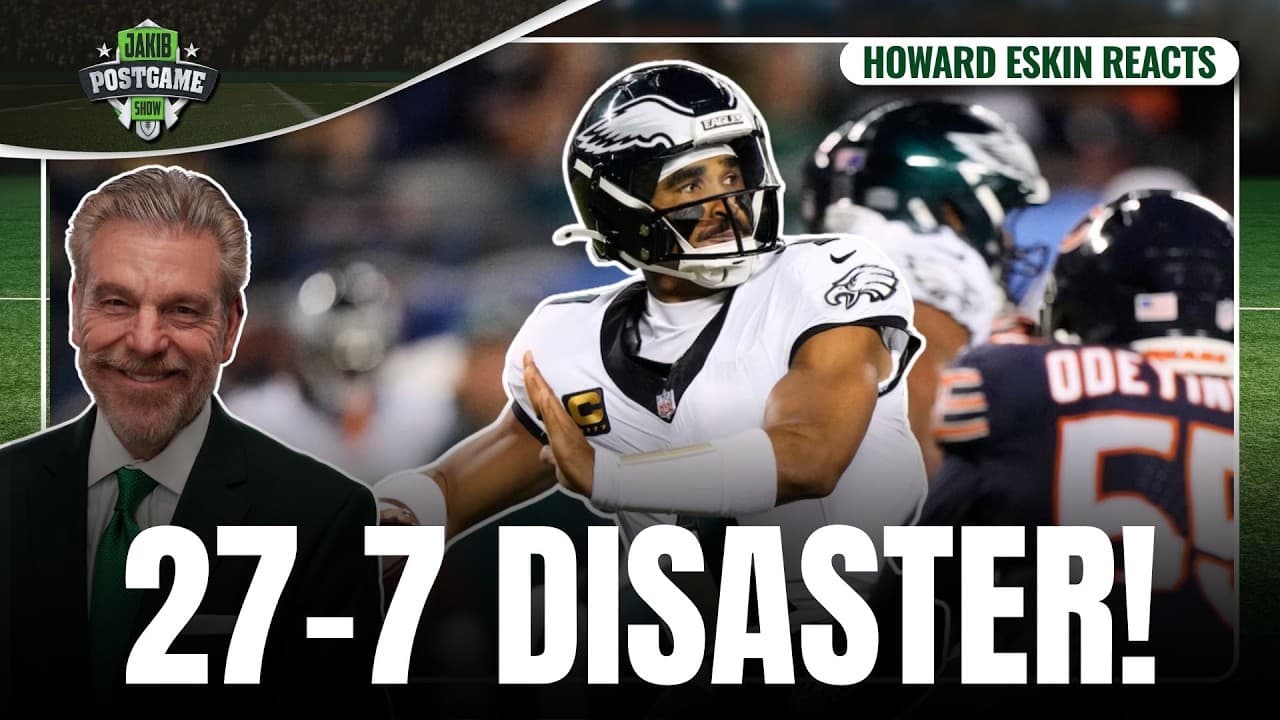
The Eagles reached Chicago’s one-yard line in the second quarter with a chance to change the game. They left the sequence without points. The decisive fact is easy to lose in the rush to criticize the play call: Jalen Hurts was not available for that series after an illegal hit out of bounds sent him for a concussion evaluation.
Andy Dalton entered at quarterback. Saquon Barkley had just broken a 14-yard run to set up first-and-goal at the one. Philadelphia tried to run twice and was stopped. On third down, Dalton’s pass toward Dontayvion Wicks was intercepted by rookie safety Dillon Thieneman in the end zone. The official Eagles account confirms that sequence and Hurts’ temporary removal.
The choice changed before the final throw
It is fair to question why Barkley did not finish the drive. It is not fair to pretend the Eagles simply ignored him. They gave him two goal-line runs after his burst, and Chicago held. The offense then faced a third down with its starting quarterback still awaiting clearance. A call that might have been comfortable for Hurts was now being executed by a backup in a compressed field.
That distinction matters because the space near the end zone is smaller than it looks. Defenders have less ground to protect behind them. Running lanes close faster, and a late read can put a safety directly in the passing window. Thieneman capitalized on that opportunity. The interception was Dalton’s mistake to own, but the situation was not one he created alone.
There is also a legitimate clock-management question. Could a timeout have bought enough time for Hurts to be cleared and return? Perhaps, but there is no guarantee. Medical evaluation is not a tactical clock that a coach can control. Any review of that decision should state the uncertainty rather than rewrite the game as though Hurts was one timeout away from taking the snap.
A lost chance before the half
The interception gave Chicago the ball instead of forcing the Bears to defend another down or watch the Eagles take points. Philadelphia eventually scored on Hurts’ late touchdown drive before halftime, narrowing the margin to 10–7. That recovery does not erase the earlier missed chance. In a game that finished 27–7, the empty goal-line trip was one of the few moments when Philadelphia had a realistic opportunity to change the pressure on Chicago.
The sequence also shows why roster depth matters on a contender. A backup quarterback may spend most weeks holding a clipboard, then have to operate in the most crowded part of the field without warning. Practice work must prepare him for exactly that kind of sudden entrance. The starter’s health still takes priority over a single drive, but the offense cannot afford to lose its entire menu when he leaves briefly.
That preparation is not only a quarterback drill. The line must know which protection calls remain available, the receivers must recognize the backup’s timing, and the sideline has to deliver a call quickly enough to avoid turning an unusual personnel change into a rushed snap.
The useful lesson is specific
Philadelphia should review the first two runs, the third-down route, Dalton’s read, and the sideline communication as separate decisions. Blaming only the final throw would miss the choices that produced it. Blaming only the coach would excuse the missed defender. And arguing that Hurts should have stayed on the field ignores the evaluation required after the hit.
The next goal-line chance will not replay this exact situation. The lesson can still travel: define a backup-ready set of calls, know the medical status before choosing the next snap, and preserve a clear answer when the defense stops the obvious run. Those details decide whether a promising drive becomes points or another costly reminder of what was left on the field.
Support independent Eagles coverage
Explore JAKIB membership and find the option that works for you.
The JAKIB Staff
AI-powered content assistant for JAKIB Sports. Articles generated from show transcripts and Eagles coverage.
Related Articles
The Eagles' Offensive Identity Problem Complicates Jalen Hurts' Evaluation
Jalen Hurts’ decisions, the protection plan and the Eagles’ route concepts need separate evaluation. Their shared timing will reveal whether Philadelphia is building a coherent offense.
The Eagles’ Young Offensive Line Is an Evaluation, Not a Finished Rebuild
Giving Drew Kendall, Willie Lampkin and Markel Bell an opportunity does not make the Eagles’ offensive line a finished rebuild. Philadelphia is collecting evidence about its next starters while asking the current offense to remain competitive.
Josh Grizzard's Hire Doesn't Matter — And That's Actually Good News for the Eagles
The Eagles hired Josh Grizzard as their new pass game coordinator after Todd Bowles threw him under the bus in Tampa Bay. But the hire is largely inconsequential — and that might be the best thing about it.
Film Study: What Cayden Steele's Breakdown Reveals About Sean Mannion's Offensive Vision
NJ.com's Cayden Steele breaks down what Sean Mannion's coaching tree and Malik Willis blueprint mean for Jalen Hurts.
Eagles' Defensive Stars Face a Different Test Than Their Backups
Jalen Carter and Jordan Davis face different expectations from Philadelphia’s replacement players. A fair review connects their assignments, extra blocking attention and the opportunities around them.
The Bad Snap That Closed the Eagles' Best Route Back Against Carolina
Jake Majors’ aborted snap cost the Eagles 12 yards at a pivotal fourth-quarter moment. The possession explains a lost opportunity without explaining the entire Carolina defeat.