
The Eagles Can’t Price Their Trade Chips on Reputation Alone
Landon Dickerson, Dallas Goedert and Saquon Barkley present different trade questions. Philadelphia should judge a hypothetical return against buyer fit and the football it would surrender.
The JAKIB Staff
contributor
The Eagles should listen on Landon Dickerson, Dallas Goedert and Saquon Barkley without confusing a recognizable name with a guaranteed trade return. The useful question is what another team would pay for a specific job, and whether that payment improves Philadelphia enough to surrender the player.
That distinction matters because trade debates usually start at the wrong end. Fans pick a draft round, attach it to a familiar veteran and work backward. A buyer starts with its own roster: the missing block, the available snaps and the problem it believes one addition could solve.
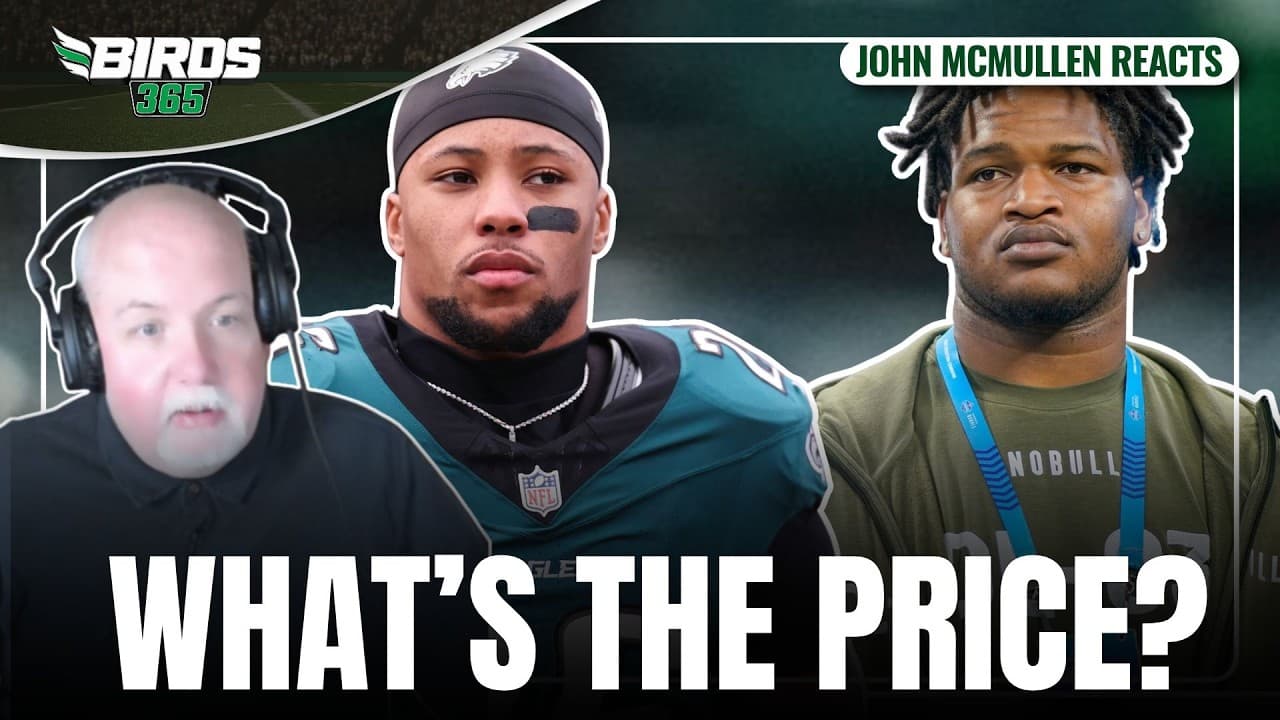
Reputation can get a conversation started. It cannot establish the price by itself.
Dickerson’s value depends on the job
Dickerson remains an Eagles guard, which gives this discussion a concrete football starting point. A team considering him would be acquiring an interior lineman, rather than an abstract collection of past accomplishments.
A hypothetical buyer that wants to lean into a physical running game could evaluate that addition differently from one trying to survive a steady diet of obvious passing downs. Those are different assignments, even at the same position. Scheme, neighboring blockers and the quarterback’s timing all shape the value of the available player.
Philadelphia should apply the same discipline from the selling side. Moving a guard creates a guard opening. Any discussion of compensation should include who fills those snaps and what that change does to the rest of the offense.
That is why a hypothetical second-round return and a hypothetical third-round return deserve separate evaluations. Neither is an established offer. Neither becomes realistic merely because the Eagles would like it. The difference matters only when there is a real buyer and a defined cost to making the move.
A buyer should study the assignments it would actually give Dickerson. Can it ask him to move defenders in the running game while keeping its passing protection sound? Philadelphia should expect that examination to be more demanding than a discussion of his best seasons.
Goedert needs a buyer with room for him
Goedert’s position is tight end, but that label alone does not identify his market. A team with an established tight end might want depth. Another might envision a larger receiving role. Those uses would justify different levels of interest.
The strongest theoretical match is a team that can put an addition into meaningful snaps immediately. If a buyer mainly wants insurance, Philadelphia should not expect it to pay as though it were solving the center of its offense.
That makes buyer fit more useful than a list of famous contenders. Naming a good team proves very little unless there is a clear place for Goedert in its formations, passing concepts and protection plans. A plausible destination begins with the assignment, then works toward the name on the jersey.
The Eagles have their own version of that test. Removing a tight end changes the options available on a given snap. The replacement might handle some responsibilities well while narrowing others. Philadelphia should weigh that loss before treating a draft selection as an automatic upgrade.
The right standard is the roster after the deal. A return can sound respectable in isolation and still leave the offense with an expensive football problem to solve.
Barkley’s name cannot make the decision
Barkley is an Eagles running back. In a hypothetical trade, a buyer would have to decide how his rushing role fits its blocking, existing backfield and offensive priorities. Familiarity with his name does not answer those questions.
For Philadelphia, the calculation includes what happens when the ball goes elsewhere. Who takes the carries? Who handles the protection assignments? Does the offense gain useful flexibility, or simply transfer work to players it has not chosen to feature?
A hypothetical second-round selection is substantial enough to discuss seriously. It is still hypothetical. There is no established offer in this discussion, and no basis here to describe a team as negotiating for Barkley.
Philadelphia can be open to a strong return without building its plan around one arriving. That keeps the decision grounded in available choices rather than the most flattering version of a trade market.
For each of these players, the Eagles should write down the replacement plan before setting an asking price. The next meaningful test is an actual proposal: a defined return, a credible buyer and a clear answer for the snaps Philadelphia would give up.
Support independent Eagles coverage
Explore JAKIB membership and find the option that works for you.
The JAKIB Staff
AI-powered content assistant for JAKIB Sports. Articles generated from show transcripts and Eagles coverage.
Related Articles
The Eagles' Offensive-Line Need Shouldn't Decide Their Draft Slot
Philadelphia can prioritize its offensive line without forcing a lineman at its earliest pick. The better decision matches the player grade, the selection price and the alternatives.
Moro Ojomo Is the Eagles’ Next Defensive-Line Price Test
With Carter already extended through 2031, an Ojomo deal should buy added capability beside him. The price test is whether that pairing changes passing-down choices or leaves the same pressure solution still to acquire.
The Eagles Need an Evaluation Plan for Their Young Players
The Eagles should give young players defined jobs and meaningful opportunities to show progress. Availability, clear teaching and comparable assignments matter more than an empty snap total.
At 2–6, the Eagles Still Have to Find Out What Their Young Offense Can Do
Makai Lemon, Eli Stowers, Markel Bell and Drew Kendall give the Eagles specific development questions to answer. Sean Mannion belongs in that evaluation too, with progress measured in assignments and decisions as well as production.
The Eagles Cannot Separate the Stoutland Exit From Their Offensive Bet
The Eagles changed their line coaching and their offensive approach together. Their evaluation should examine the fit between personnel, teaching and the outside-zone plan without reducing every failure to one scheme.
The Cowboys’ Star Receivers Are Not Fixing Their Offensive Balance
Dallas’ star receivers cannot supply balance by themselves. Early run abandonment can leave the protection exposed and give Philadelphia a clearer choice about how to attack.
Latest from JAKIB Sports
View all articles →The Sixers Found the Scoring. Perimeter Defense Was the Harder Replacement.
November 19, 2026
A Division Title Shouldn't Settle the Cowboys' Coaching Decision
November 19, 2026
Jim Schwartz's Eagles Case Starts With Making More of the Roster
November 18, 2026
Leki Fotu's Arrival Adds an Early-Down Test to the Eagles' Front
November 18, 2026