
Washington’s Blitz Puts the Eagles’ Backfield on the Spot
Washington’s pressure approach tests the Eagles’ running-back protection. Saquon Barkley is cleared to play, but Philadelphia still needs coordinated answers from its backfield and quarterback.
The JAKIB Staff
contributor
The Eagles’ backfield against Washington will be judged on more than rushing yards. Handling pressure means identifying the right defender, protecting the quarterback’s throwing space and giving the passing game an answer before a free rusher arrives.
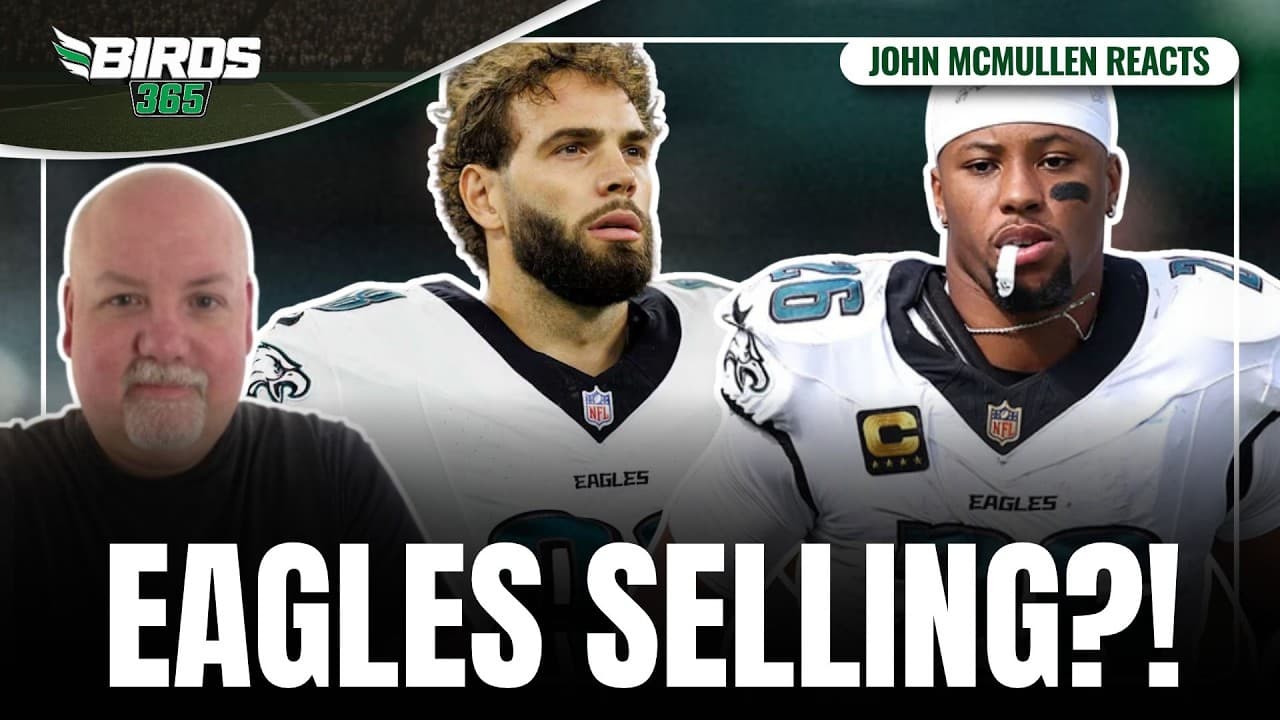
Jaydon Blue is also on the active roster after the Eagles placed Dameon Pierce on Injured Reserve. Elijah Mitchell remains a practice-squad option for another elevation. Philadelphia can prepare different backfield combinations without assuming that one player will handle every protection assignment.
Washington can test the assignment before the block
Daronte Jones is Washington’s defensive coordinator. His February discussion of defensive philosophy described influences from Brian Flores and Mike Zimmer, with varied alignments part of the approach.
That background gives Philadelphia a reason to prepare for uncertainty before the snap. Showing several possible rushers can force the offense to declare its answer before Washington reveals which defenders are actually coming.
A defense can threaten pressure without sending every player near the line. If the offense commits its protection to a defender who drops, another rusher can gain the matchup the defense wanted. The back’s first challenge may be deciding where to look rather than delivering a block.
Consider a pressure look with potential rushers on both sides of the formation. Depending on the protection call, the line could account for one threat while the back handles another. A late defensive movement can demand an adjustment. Hesitation alone can shrink the quarterback’s window, even when the back is willing to make contact.
This is the part of the matchup that a simple rushing-depth chart misses. Knowing which player gets the next carry does not tell us whether the protection has a shared answer.
Build a plan for each available back
With Barkley available, Philadelphia still needs clarity about his assignment on each passing snap. His presence does not remove the quarterback’s responsibility to recognize pressure or the line’s responsibility to communicate it.
If Blue takes a larger role, the Eagles should give him a coherent set of protection rules. That means connecting what he sees before the snap with the defender he is responsible for after it. Adding instructions for every conceivable disguise can be less useful than making the central assignment unmistakable.
Mitchell’s involvement remains conditional as well. A previous elevation does not by itself establish a place in the next game. If he is available, his work belongs in the same coordinated plan, with no assumption that changing backs automatically fixes a protection problem.
Keeping a back in to block can help, but it also removes a potential receiving option. Washington would welcome an offense that responds to every pressure threat by making its passing game smaller. Philadelphia should reserve that choice for situations where the extra protection earns its cost.
The alternative is not simply asking a back to win every collision. Formations, route spacing and a defined quick outlet can change what the defense gains by bringing pressure.
The quarterback needs an answer he can use
A quick throw only works when the receiver and quarterback understand the same adjustment. Releasing the ball early toward a route that has not reached its useful space can turn a protection solution into an incompletion or a dangerous throw.
The Eagles should therefore treat blitz preparation as a passing-game assignment shared by the entire unit. The back handles his responsibility, the quarterback knows when the protection is outnumbered, and the receiving option reaches a place the ball can safely go.
Nor does the ball always have to leave immediately. If Philadelphia has accounted for the rush, abandoning the play too early can surrender an opportunity. The point is to distinguish a pressure look from a protection that has actually broken down.
The game-day active list will complete the personnel picture. Once the game begins, watch the first obvious passing situation: where the back looks, which threat he takes and whether the quarterback has a usable throw when Washington changes the picture.
Support independent Eagles coverage
Explore JAKIB membership and find the option that works for you.
The JAKIB Staff
AI-powered content assistant for JAKIB Sports. Articles generated from show transcripts and Eagles coverage.
Related Articles
Jared Goff Gives Minnesota a Reason to Rethink the Blitz
Minnesota's pressure plan against Jared Goff depends on more than sending an extra rusher. Detroit's protection calls and quick answers can exploit the space an aggressive defense leaves behind.
Eagles–Rams Puts Defensive-Front Versatility Back in Focus
The Eagles’ defensive front needs more than recognizable names against the Rams. It needs enough versatility to keep pressure, run fits and linebacker protection working together when Los Angeles changes the picture.
The Eagles’ Third-Quarter Three-and-Out Problem Puts Sean Mannion Under Pressure
Philadelphia’s third-quarter three-and-out problem puts Sean Mannion’s job under a demanding microscope: the offense has to find usable answers after halftime, not merely look promising in its initial plan. A coordinator’s long-term potential does not keep the defense rested or rescue a possession that ends before the opponent feels any pressure.
Jihaad Campbell’s Development Puts the Eagles in a Linebacker Bind
Jihaad Campbell’s false-step problem creates a development-versus-execution decision for the Eagles. The Trotter alternative brings its own run-defense and coverage tradeoffs.
Cam Jurgens' Exit Puts the Eagles' Interior Line Depth Under the Microscope
Cam Jurgens' early exit created Jake Majors' first first-team opportunity at center. The concern on Jurgens should remain measured, but Philadelphia's interior depth now has a meaningful test.
Dan Sileo Puts the Eagles at 8-9 — Here's His Full Breakdown
Dan Sileo went game by game and landed on 8-9 for the Eagles in 2026. It's the most pessimistic mainstream prediction yet — and his reasoning is hard to argue with.