
The Cowboys’ Star Receivers Are Not Fixing Their Offensive Balance
Dallas’ star receivers cannot supply balance by themselves. Early run abandonment can leave the protection exposed and give Philadelphia a clearer choice about how to attack.
The JAKIB Staff
contributor
CeeDee Lamb and George Pickens give Dallas attractive passing options. They do not solve an offense that lets the defense stop respecting the run, and that is the decision Philadelphia’s defense should try to force.
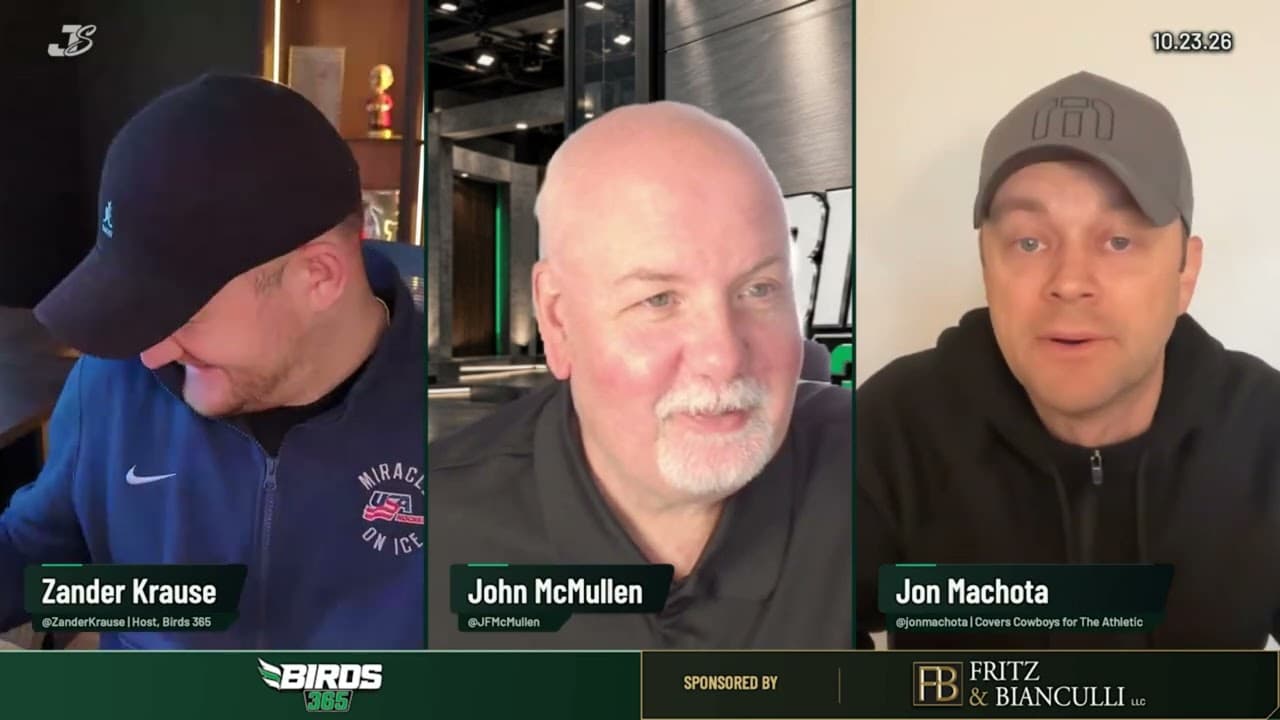
Cowboys reporter Jon Machota offered a pointed explanation on Birds 365: Dallas has moved away from the run too quickly, leaving its offensive line in predictable passing situations. He sees that line as better suited to run blocking than to repeatedly protecting a quarterback against an opponent expecting a throw.
That assessment frames the matchup more usefully than counting star receivers. The question is whether Brian Schottenheimer can keep enough of the offense available to make those receivers harder to defend.
The run disappeared before the game did
There is a concrete example behind the concern. The Cowboys’ follow-up reporting after the Green Bay loss noted only one rushing attempt after Javonte Williams’ touchdown with 9:19 remaining in the third quarter. Schottenheimer said that was not the intended plan.
That leaves a useful coaching question: how does an offense move so far from its intended balance while there is still substantial football to play? A stalled drive does not eliminate the run from the next possession. The next first down offers another chance to make the defense account for it.
Dallas lost that game 23–13. Trailing affects play selection, but the score alone does not explain every choice made along the way. Down and distance, protection and available personnel all matter. So does how quickly the play caller decides the running game can no longer help.
Balance does not require an equal number of runs and passes. It requires enough credible options that a defense has to honor more than one answer. An offense can throw often and remain difficult to anticipate. It can also abandon its own useful answers before the opponent has truly taken them away.
For Dallas, the relevant issue is whether Williams remains part of the plan between scoring opportunities. An occasional handoff does little to change a defense’s behavior if the surrounding situations keep announcing pass.
Receiver touches do not replace structure
Machota sees a desire to involve Lamb and Pickens contributing to the early retreat from the run; that remains his interpretation of the play calling.
The decision facing Schottenheimer is more concrete. Second-and-manageable can preserve a handoff, a quick throw or a deeper concept. Repeated long-yardage situations narrow that menu and give the rush a simpler job. Keeping both options available begins before the obvious passing down.
The football tradeoff is still worth examining. A receiver can get a target on a difficult throw after the quarterback has been hurried. Another possession might produce a cleaner opportunity if the defense first has to account for the running game.
Touches are an output. The conditions around those touches determine how valuable they become.
Machota’s run-blocking assessment points toward the same problem. If the offensive line is more comfortable moving defenders than repeatedly absorbing a rush, predictable passing downs can expose a weakness while reducing access to a strength.
That does not mean Dallas should hand the ball off regardless of the front or the score. It means Schottenheimer has to weigh what each abandoned option gives the defense. Keeping a running threat credible can help the passing game without requiring the receivers to disappear.
Philadelphia can test the commitment
For the Eagles, the choice is how aggressively to challenge Dallas’ protection once the Cowboys begin leaning toward the pass. Extra pressure can hurry a throw, but it also removes a defender from coverage. Lamb and Pickens are reasons to account for that cost.
Philadelphia does not need to choose one approach for an entire game. It can test whether Dallas identifies pressure, then decide whether another rusher is worth the coverage tradeoff. A four-man rush that disrupts the pocket would allow more help behind it. That is an attractive starting point against talented receivers: force Prescott to move or release early while keeping defenders available to close passing lanes. If four rushers cannot create that discomfort, the value of an extra rusher rises alongside the coverage cost.
The first obligation remains stopping the run well enough to earn that choice. If Dallas can hand the ball to Williams and stay in manageable situations, the Eagles cannot simply treat every formation as a passing invitation.
That makes the early response to a stalled possession revealing on Monday night. Does Schottenheimer return to the run with a workable situation, or does Dallas keep asking its protection to hold up while everyone expects a throw? Philadelphia should make the Cowboys prove they can keep both parts of the offense alive before committing extra resources to the stars outside.
Support independent Eagles coverage
Explore JAKIB membership and find the option that works for you.
The JAKIB Staff
AI-powered content assistant for JAKIB Sports. Articles generated from show transcripts and Eagles coverage.
Related Articles
Dallas’ Coaching Problem Runs Deeper Than Replacing Brian Schottenheimer
Dallas won despite 14 accepted penalties for 153 yards against Indianapolis. Schottenheimer’s next test is whether reviewing those mistakes helps the Cowboys preserve the next advantage they create.
Joe Milton’s First Start Exposed an Offense That Needs to Get Simpler
Joe Milton’s first start put the Eagles’ protection and teaching under scrutiny. A simpler offense can give an inexperienced quarterback clearer answers without hiding the tradeoffs.
Caleb Williams’ Improvement Starts With the Structure Around Him
Caleb Williams completed 70.9 percent of his passes across five starts through Week 8. Protection, run-game connections and continuity offer a framework for examining the improvement without taking credit away from the quarterback or treating a small sample as causal proof.
The Eagles’ Backup Quarterback Problem Is Bigger Than One Bad Start
The Eagles invested in backup quarterbacks. The harder question is whether practice work, scheme fit and a usable replacement plan prepared the offense to function when the quarterback changed.
The DeVonta Smith Trade Question Starts With the Eagles’ Next Quarterback
Keeping DeVonta Smith should be the starting position. The case for a trade depends on the next quarterback, the rebuilding timeline and an actual return.
The Cowboys’ Reset Problem Goes Beyond Another Coaching Change
Dallas needs its roster, coaching authority and offensive deployment to fit together. Another coaching change would need a coherent plan around it.